ANALYZING THE WORLD FROM A RUSSOCENTRIC VIEW.
This site will be attractive and a motivational experience to those who want to learn the real image of Russia, from its history, millenary culture and its identity discourse. It is relevant that we are in the Southern Cone, where our perceptions are similar to the whole Global South, so far from the Western capitals. MARCELO MONTES
JANE KINNINMONT, Investigadora adjunta y subdirectora del programa de Oriente Medio y Norte de África, Chatham House
ANUARIO INTERNACIONAL CIDOB, BARCELONA, ESPAÑA, 2016.
Introducción
Arabia Saudí es uno de los actores más influyentes del mundo árabe e islámico, y actualmente, está transformando con rapidez su política exterior como resultado de la renovación generacional de sus dirigentes, así como por el vacío de autoridad en la región de Oriente Medio. Mantiene unas relaciones estrechas con potencias occidentales clave, especialmente con Estados Unidos, Reino Unido y Francia, lo que genera tensiones entre su persistente dependencia de poderes externos en materia de la seguridad, y su creciente deseo de seguir un curso político independiente. La política exterior saudí –especialmente en Yemen y en Siria– es muy polémica a ojos de la opinión pública europea. Esto seguirá creando dificultades a aquellos gobiernos europeos que persigan ampliar sus relaciones de defensa y seguridad con la que es una potencia regional clave.
La tradicional dependencia en cuestiones de seguridad de potencias exteriores es una de las cuestiones clave de la política exterior saudí. (…) Esto puede disuadir a Arabia Saudí de adoptar posturas activas contrarias a las políticas occidentales que desaprueba
Se calcula que 300 suecos han marchado a combatir en Siria e Irak, cien de ellos partieron del barrio sueco de Angered.
En este barrio reside la segunda generación de musulmanes suecos. A diferencia de sus progenitores ellos se sienten discriminados y fuera del sistema.
Suecia, ese Estado pacífico que ha sido durante mucho tiempo un refugio seguro para aquellos que huyen del conflictoes ahora un exportador de yihadistas. Se calcula que más de300 personas se han marchado a combatir a Siria e Irak, convirtiendo a Suecia en uno de los mayores exportadores de yihadistas en Europa.
Entre las ciudades con mayor presencia de elementos radicales estáGotemburgodonde se lleva a cabo la mayor parte del reclutamiento para la yihad. Con una población de poco más de medio millón, esta ciudad portuaria y antigua potencia industrial ha visto cómoal menos 100 hombres y mujeres se han ido para enrolarse en las filas de los yihadistas.
También es una de las ciudades más diversas del país: un tercio de la población tiene orígenes inmigrantes, muchos musulmanes, y en concreto, en el suburbio de Angered, la proporción supera el 70 por ciento. Entre ellos, algunos de los 160.000 personas que pidieron asilo en Suecia el años pasado. En este contexto,el barrio de Angered es ya conocido por ser el Molenbeek de Suecia.
Según publica la BBC, algunas partes son clasificadas como "vulnerables", lo que en la terminología de la policía sueca indica una ruptura de la ley y el orden. Hay acusaciones de que hostigan e intimidan a las personas, muchas veces mujeres, por la forma en que se visten y por ir a fiestas con música y baile, lo cual consideran prohibido por el Islam.
EL AUTOR DEL ATENTADO EN SAN PETERSBURGO PODRIA SER UN JOVEN DE KIRGUISTAN
Se busca a dos sospechosos. Uno de ellos es un ciudadano de Kirguistán nacionalizado ruso: Akbarjon Yalilov. Los muertos ascienden a 14. Hay medio centenar de heridos
La pista de Asia Central se abre paso en relación alatentadoen la red de metro deSan Petersburgo. Al menos 14 personas murieron y medio centenar resultaron heridas cuando un artefacto casero, escondido en una maleta que fue abandonada en el tercer vagón de uno de los trenes, explotó ayer entre las estaciones de Sennaya Ploshchad y Tekhnologichesky Institut,dos de las más concurridasde la segunda ciudad de Rusia. Los servicios secretos de Kirguistán aseguran que el supuesto autor del ataque -cuya imagen fue difundida ayer- sería un joven de la república centroasiáticay nacionalizado ruso, de 22 años y que responde al nombre deAkbarzhon Djaliliv.Medios rusos señalan que está relacionado con elislamismo radical.
Anteriormente, el servicio de seguridad deKazajistáninformó también de que estaba trabajando activamente con el FSB ruso para localizar a los culpables del atentado. Poco después, el vicedirector de este servicio, Nurgali Bilisbekov, desmintió que el terrorista fuera el kazajoMaxim Arishev, nacido en 1996. "Esta información no se corresponde con la realidad", dijo.
Atacante de Westminster: el lobo solitario con viejos problemas con la ley
DIARIO LA TERCERA, SANTIAGO DE CHILE, 23/03/2017.
Se trata de Khalid Maseeod, un británico de 52 años que dejó a tres muertos luego de atropellar y apuñalar a sus víctimas.
El autor del atentado de Londres, Khalid Masood, tuvo muchos problemas con la ley de joven, pero hace 13 años que no se metía en líos hasta que sembró el terror en Westminster, solo, con un coche y un cuchillo.
Una vecina suya lo describió, en declaraciones a la prensa, como “un tipo amable”, aunque su historial judicial ofrece una imagen diferente, al menos hasta hace un tiempo.
“Masood, de 52 años (25/12/1964), nació en Kent”, en el sudeste del Reino Unido, “y los detectives creen que últimamente vivía en West Midlands”, la región de Birmingham, en el centro de Inglaterra, explicó la policía en un comunicado.
El hombre, cuya edad aparece como inusual para este tipo de actitudes, “no era objeto de ninguna investigación en la actualidad y no hay constancia de información anterior sobre su intento de organizar un atentado terrorista”.
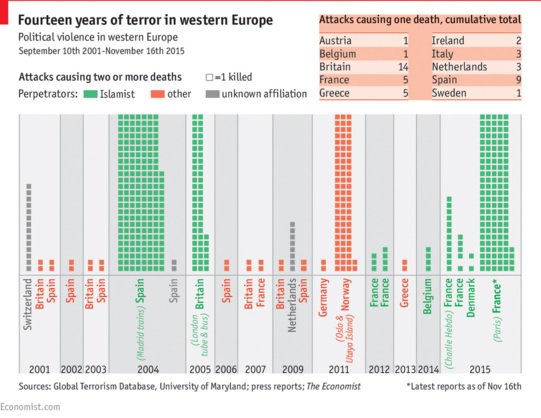
Cuando alguien se refiere a Bélgica, de inmediato, la apelación ilustra una imagen de pequeñez, homegeneidad y tranquilidad. Sin embargo, la realidad se encarga una y otra vez de contrarrestar esa percepción incial.
Estado federal, donde sus 11,2 millones de habitantes hablan tres idiomas (nederlandés, francés y alemán) convive un 60 % de flamencos y un casi un 40 % de valones, con vecinos históricos influyentes como Holanda, Francia y Alemania, el Reino de Bélgica cuenta con una monarquía constitucional y parlamentarista, que le ha acarreado no poca inestabilidad política. Tras las crisis y demoras en la formación de los gobiernos de Leterme en 2007-2008 (284 días) y Di Rupo en
2010-201 (540 días), en 2014, los belgas tardaron 139 días en ungir finalmente, al gobierno en forma de coalición cuatripartita (liberales valones, nacionalistas, democristianos y nederlandófonos), liderada por quien fuera el Primer Ministro más joven de la historia belga desde 1841, Charles Michel, hijo del ex Canciller belga y ex Comisario europeo, Louis Michel, casado con su ex asesora Amélie Derbaudrenghien, con quien no tiene hijos.
Pero Bélgica tiene otros dos significados políticos que contribuyen a pensar las razones de su elección como nuevo epicentro de los atentados terroristas de ISIS. Primero, su capital también lo es de la Unión Europea, sede de sus principales organismos y una usina de tecnócratas y funcionarios de primer y segundo nivel al organismo supratestatal mencionado. Europa representa el principal objetivo de ISIS considerando su necesidad no sólo de infundir miedo sino de provocar una especie de "Jihad" popular favorecido por el racismo y la xenofobia que desde hace un tiempo, se reproduce crecientemente en el Viejo Continente. El otro fundamento que permite unir la lógica de ISIS con Bélgica, es el hecho de que se trata de uno de los núcleos más relevantes de la inmigración norafricana y musulmana, sobre territorio europeo. En efecto, Bruselas cuenta con barrios enteros, fundamentalmente Molenbeeck-Saint Jean, cuyo 40 % es de origen musulmán (básicamente, marroquíes y turcos), contra un promedio de 10 % del país y, donde el pasado viernes, fue detenido Salah Abdeslam, uno de los cerebros de los atentados de París en noviembre de 2015. Precisamente, una eventual represalia contra esta mediática detención, pudo haber sido una de las causas inmediatas de los ataques de hoy.
En esas barriadas europeas, donde además del consumo de hachís, proliferan la desesperanza, el hastío, el resentimiento y sólo -llámese- el fanatismo religioso o la reislamización logran quebrar esa angustiante inercia, ISIS encuentra no sólo sus reclutados sino los entornos apropiados para que su red de terror se consolide o expanda. Contra tales enemigos, la paranoia securitizadora, que vulnere libertades civiles; los cierres de fronteras y las declaraciones políticas sobreactuantes de "guerras al terrorismo", no parecen ser las terapias más adecuadas. En cambio, políticas públicas que mejoren sustancialmente la calidad de vida de los inmigrantes, sin condenarlos a "ghettos" urbanos; una mejor coordinación de la inteligencia antiterrorista; una cultura cívica que promueva un sincero diálogo interreligioso y un rol más político y mucho más sabio y prudente de las potencias en el Medio Oriente, entre otros sentidos, con la finalidad de acrecentar las oportunidades de vida y progreso en tales regiones, pueden constituir sí, el mejor antídoto contra la nostalgia de los califatos y así, permitir que Bélgica y toda Europa recobren su tranquilidad placentera.
Marcelo Montes, Doctor en Relaciones Internacionales (UNR), Integrante de la Cátedra Rusia (IRI, UNLP) y del Grupo Euroasiático del CARI. Profesor de Política Internacional (UNVM).
Los acontecimientos en este mundo en transición, donde no alcanza a vislumbrarse lo enteramente nuevo y tampoco se aleja lo viejo, es decir, donde lo actual es, en realidad, efecto –y no retorno- de aquella Guerra Fría que nos dejó hace 24 años, son vertiginosos. Pocas horas después de una histórica 70 Asamblea de la ONU, por su inusual desfile de primeros mandatarios de las potencias y el regreso de otros que hacía tiempo, no aparecían por New York, con un trasfondo de gestos y acuerdos mutuos, el ruido de las bombas y misiles volvió a estallar en Medio Oriente. Los modernos Sukhoi rusos volvieron a bombardear como no lo hacían desde la invasión soviética a Afganistán o más recientemente, en Georgia 2008. Para muchos, es el retorno del viejo enfrentamiento pero una vez más, se equivocan. El contexto, los actores pero también los intereses, son absolutamente diferentes.
Desde la crisis ucraniana, tras la hora y media que demandó la reunión Putin-Obama, por fin, Estados Unidos admitió que no puede ser un “llanero solitario” en el mundo actual y que Rusia, al igual que antes y después de los atentados del 2001, puede brindar una decisiva ayuda con el fin de reordenar lo desordenado por Washington mismo, tanto con sus “neocons” y “unipolaristas” tras la gestión Bush (hijo) como por los “neoidealistas” del propio Obama, tras la “Primavera Arabe” en 2011. De todos modos, tal reconocimiento no implica unanimidad de criterios en relación a la crisis siria, sus causales y desenlace, sino por el contrario, un mero “impasse”.
Varias razones justifican el involucramiento ruso. Putin interpreta hace tiempo que su eternamente incomprendido país, tanto o más custodio histórico de la cristiandad que el Viejo Mundo, tiene el cáncer del fanatismo musulmán tanto wahabista como sunita, en su propio territorio desde la primera guerra chechena en los noventa, mucho antes que Occidente. Por ello, miles de voluntarios de origen eslavo, pelean en territorios sirio e iraquí, financiados insólitamente por Washington, desde hace más de dos años, con la excusa –irreal- de la lucha contra el despotismo de Bashir Al Assad. Rusia puede exportar su “know how” en la materia, brindar su ayuda militar y al mismo tiempo, proteger, al igual que en Crimea, tras el estallido de la crisis ucraniana, sus intereses geopolíticos, es decir, su base naval de Tartus, instalada en Siria, con 1.700 hombres, desde 1971, ese acceso tan deseado desde Pedro El Grande, a los mares cálidos, en este caso, el Mediterráneo. Al ingresar en la guerra civil siria, Moscú tampoco oculta su propósito de romper con el semiaislamiento internacional que le propinaron la UE y Estados Unidos, con sus sanciones comerciales a raíz del “Euromaidan” ucraniano, forjadas a la luz de la enorme ignorancia histórica, cultural y geopolítica del lugar que ocupa aun una Ucrania independiente para Rusia.
Sin embargo, el involucramiento ruso no es ni será como en los viejos tiempos, amplio, extenso, duradero e imperialista militar. Ya hace dos años, y aunque nadie se lo reconociera, Rusia intervino con “soft power”, mediando para la eliminación de armas químicas de Bashir Al Assad, salvándolo del ataque masivo occidental y logrando lo que Obama, con su Premio Nobel, no había alcanzado: la paz transitoria. Ahora, tras el pedido oficial del propio Bashir Al Assad, Putin ha recibido del Consejo de la Federación, la autorización legal correspondiente para ingresar militarmente a Siria, pero ha expresado de modo oficial que sólo usa aviones para realizar raids contra posiciones de Al Qaeda e ISIS, es decir, grupos terroristas, aunque conociendo la picardía putinista, es obvio que también destruirá objetivos de la escasa oposición armada “racional” o prooccidental –si es que la hubiere-. De esta manera, resguarda al gobierno de Al Assad, ya que el realista líder del Kremlin, al estilo de un Kissinger o un Bush (padre) en ocasión de la primera Guerra del Golfo con Saddam Hussein, considera en términos prácticos que la decisión escogida es la única forma de terminar con la amenaza yihadista, salvando la integridad territorial siria, hoy a merced de las ambiciones no sólo de las bandas terroristas citadas sino de Turquía, Irán y las monarquías árabes.
Precisamente, está en juego de modo adicional, aunque no de menor jerarquía, en la crisis siria, la dominación del mundo musulmán y la disputa feroz entre un 30 % de shiitas (la Irak post invasión americana, Irán ahora cooperativo con Washington, Siria y El Líbano-Hezbollah) y un 70 % de sunitas (monarquías árabes, Pakistán, ISIS, Al Qaeda, Hermandad Musulmana), con la paradoja de que entre estos últimos, conviven aliados circunstanciales y enemigos acérrimos de Estados Unidos.
En su fuero íntimo, Vladimir Putin sabe pero no puede expresarlo públicamente, que la actual Rusia no está en condiciones militares de competir con Estados Unidos, por muchas razones pero sí lo puede hacer en el tablero político, aprovechando las dudas del jefe de Washington y sus colegas europeos. En tal sentido, en una nueva muestra de audacia cierta extorsión, Putin no apoyará coaliciones prooccidentalistas junto a árabes, pakistaníes y turcos, sino que planteará su propio eje junto con sirios, iraníes e iraquíes, sobre todo, hasta no asegurarse que Occidente le levante las sanciones por Ucrania. Será Obama ahora, quien exhiba una enorme incomodidad, al acabar de consensuar con Irán, su desarme nuclear. Las críticas de los “neocons” y “neoidealistas” sobre éste, recrudecerán en los próximos meses, acusándolo de debilidad ante el “Zar Vladimir”.
Este reposicionamiento internacional le otorga a Putin, aun mayor aprobación doméstica que la que ostenta hasta aquí, en un país orgulloso de su pasado y, en un momento de dificultades macroeconómicas, producto de la baja del precio del crudo, promovido por los propios árabes sauditas, entre otros.
En términos humanistas, podría criticarse el accionar de Putin, quien antepone objetivos geopolíticos o electoralistas, al drama gestado desde -y a pesar- de Damasco, pero si su estrategia de detener al yihadismo resulta exitosa, su credibilidad mundial crecerá todavía más, incluso a expensas de la pobre imagen de su propio país. A diferencia de Obama, abrumado por sus contradicciones y las de su propia sociedad, a medio camino entre las preocupaciones humanistas, las ínfulas imperiales moralistas y el cambio demográfico, el ajedrecista Putin, nostálgico del orden internacional posnapoleónico de 1815, concertado y multipolar, no trepida en aprovechar las oportunidades para salvar al Estado ruso y volver a un statu quo, mucho más previsible y beneficioso para sus intereses que el actual tembladeral, al cual condujo la primacía excluyente norteamericana, con terribles efectos humanitarios que asolan media Europa.
Como se acaba de percibir, no hay soluciones fáciles en este mundo en transición. Puede lamentarse la ausencia de ideologías como otrora pero al menos, tampoco hay ilusiones utopistas ni expectativas desmesuradas como en 1992. Los líderes que sepan anticipar crisis como la siria o la ucraniana, resolubles previamente con una inteligencia que finalmente faltó, escasean a pesar de que muchos altos dirigentes sentados en los estrados de la ONU esta semana, tienen el título de tales, excepto tal vez, el Papa Francisco. Sobran los decisores lentos de reflejos, que actúan a posteriori, con los hechos consumados, como el Presidente francés Hollande o la Canciller germánica Merkel, que no deja de apagar los incendios que le provoca Washington por doquier, sin provocar jamás su rebeldía, cuando ellos mismos fueron cómplices de los mismos dictadores asiáticos o africanos que hoy vituperan o desprecian. Como expresó con singular crudeza, un niño refugiado sirio frente a las cámaras de TV hace unas semanas: “estamos aquí por nuestro país está en guerra: ahora ayuden a parar la guerra”. Es ni más ni menos, lo que intenta Putin con sus propios métodos (fríos y descarnados), tal vez, similares a los empleados hace años, en la escuela de Beslan o en el Teatro Dubrovka de Moscú. Ante la ineficacia e hipocresía occidental de esta última década, sobre el mundo árabe, bien cabe darle una chance a la emergente Rusia, aunque no esperemos moralidad ni clemencia porque puede que ya resulte tarde para ello.
Conscientes del peso específico que tienen sobre el devenir de las ideas del mundo moderno, Prodavinci aborda un ciclo de entrevistas con los grandes pensadores de la actualidad. Iniciamos este proyecto con Francis Fukuyama, politólogo, egresado de Cornell y de Harvard y actual profesor de Stanford, célebre por su título El fin de la historia y el último hombre (1992), el cual generara gran conmoción internacional, y quien acaba de presentar su último estudio:Orden político y decadencia política. La transcripción de la grabación y la traducción al español estuvo a cargo de Flaviana Sandoval y Diego Marcano Arciniegas.
Recordamos The end of history, cuán prístina era su lógica, y cómo la izquierda latinoamericana se molestó al respecto, al menos con las ideas fundamentales. No sé si usted lo pretendió así, pero la forma en que lo entendimos fue que era el fin de la ideología: que repentinamente las cosas iban a estar bien, iban a ser perfectas por el camino de las democracias liberales. Ahora, la promesa de Prometeo parece haberse convertido en un Frankenstein en cierta manera. ¿Cuál es su perspectiva ahora en relación a cómo veía su tesis en aquel entonces?Creo que la tesis básica todavía es correcta. Como los marxistas, tengo una visión progresiva de la historia. Así que pienso que hay un proceso de modernización. Las instituciones evolucionan con el tiempo y, eventualmente, la vida mejora. Pero la pregunta es: ¿hacia dónde va ese proceso? Y creo que la mayor parte de la izquierda progresista, durante los últimos ciento cincuenta años, realmente creyó que sería hacia alguna forma de socialismo. Mi tesis era simplemente que no me parecía que eso en realidad fuera a suceder: que más bien íbamos a terminar con alguna forma de democracia liberal, con una economía de mercado, y que no se podía imaginar una forma de organizar una economía y un sistema político en torno a los principios del socialismo, aunque había algunas alternativas, pero ninguna que tuviera el potencial de ser muy exitosa. Escribí esto justo antes del colapso del comunismo, cuando las contradicciones en las economías planificadas importantes se estaban haciendo evidentes para todos. Y creo que ese sigue siendo el caso. Es decir, todavía creo que no existe una alternativa socialista genuina que vaya a llevar a la prosperidad, a un sistema político que realmente trate a la gente de forma igualitaria, con respeto y sin dictadura. Pero varias cosas han cambiado para mí. Primero que nada, una conciencia aguda de lo difícil que es llegar a ese punto en el que se tienen instituciones buenas y fuertes; y segundo, la decadencia política, que es muy importante en mi último libro, en el que considero que los países van hacia atrás así como hacia adelante, y esto es algo a lo que realmente no le di cabida en el libro original.
Tony Judt, al final de su carrera y de su vida, fue un gran defensor de la socialdemocracia, en lugar del socialismo como lo conocemos. ¿Es eso a lo que usted apunta también?Bueno, supongo que es un tema de definición. Todas las democracias liberales modernas son socialdemocracias hasta cierto punto. Incluso en los Estados Unidos, que tiene la reputación de ser un país bastante liberal y anti estatista, recolectamos cerca del 40% del Producto Interno Bruto (PIB) en impuestos, si se cuentan los locales y federales, y gran parte de ellos se distribuye a través del gobierno. De manera que hay socialismo en ese sentido. Los republicanos constantemente atacan a Obama y su política de salud, que tiene algo de socialista. Si se considera la seguridad social como socialismo, cosa que no apoyo, entonces Estados Unidos se inscribe allí. Creo que ese es un gran problema en este momento, con los avances de la tecnología y la globalización, que han producido enormes niveles de desigualdad en las sociedades industrializadas, y creo que la única forma de lidiar con eso es con algún grado de democracia social. Tiene que haber algún tipo de redistribución, un modelo de seguridad social y demás. Pero eso es diferente al socialismo clásico en el que el gobierno es propietario de los medios de producción, donde hay una dictadura del proletariado y otros elementos destacados por Marx. Creo que eso no es una alternativa viable y China es probablemente el mejor ejemplo de por qué no funciona.
Esa desigualdad de la que habla nos lleva a algo que podría parecer un poco contradictorio con su tesis inicial: el retorno del Estado. En su último libro, usted analiza el tema de política y Estado, elementos que parecían iban a ser dejados de lado por el desarrollo, los mercados y las sociedades libres. ¿Significa eso que esta redistribución que necesita ser implementada, esta presencia de un Estado con mayores recursos, constituye el retorno del Estado?Supongo que éste es el otro tema esencial en mis últimos dos libros. El Estado es importante. No creo haberme olvidado nunca de éste, pero muchos de quienes ahora me consideran un ideólogo liberal sí lo olvidaron. Hay un período en las décadas de los ochenta y los noventa, que es también el período del consenso de Washington, en el que prevalece una visión de que los mercados lo pueden todo y el Estado sólo se interpone en el camino del crecimiento económico. Eso fue un gran error. Creo que el Estado es muy importante, pero también lo es delimitar acertadamente qué es lo que éste debe hacer y de qué cosas no es apropiado que el Estado se ocupe. Esa distinción es realmente crucial.
¿Cuál es el rol de la política dentro de este contexto? ¿Cómo define la política? En Latinoamérica tendemos a culpar a los políticos de los problemas, sin embargo ellos son necesarios para dirigir el Estado.La política es central para la vida humana. Se trata de generar poder y luego, como comunidad, tomar la decisión de qué hacer con ese poder, esperando que sea para alcanzar el bien común. En la actualidad, la gran línea divisoria no es necesariamente entre democracia y no democracia, sino entre lo que yo llamo Estados modernos y Estados patrimoniales, siendo éste último un Estado en el que la política es básicamente un camino al enriquecimiento personal. La razón por la que alguien entra en la política es para enriquecerse a sí mismo y a su familia, capturando poderes y utilizando recursos del Estado. El Estado Moderno busca ser impersonal, en el sentido de que trata a los ciudadanos con igualdad y respeto; no se necesita ser amigo o pariente del presidente para seguir adelante. Y creo que esa es la forma apropiada de la política. Pero es extremadamente difícil de lograr, porque la mayoría de la gente quiere usar el poder político para propósitos personales: no tienen una noción del interés público o del bien común en términos de servicio público. Esa es la razón por la que mucha gente odia a los políticos, porque los ven básicamente como actores privados con intereses individuales que han logrado hacerse con una posición pública. Y eso es justamente de lo que la política se trató durante siglos. Sólo en la era moderna hemos desarrollado instituciones que tratan de neutralizar este personalismo.
Sin embargo, parece haber dos problemas allí. En esta modernidad, e inclusive post modernidad, tenemos situaciones como Rusia o China, e incluso algunas en Latinoamérica, en donde este Estado moderno no parece haber alcanzado su forma perfecta. Y también hay situaciones como la de Estados Unidos, donde el exceso de modernidad del Estado está empezando a crear algunos problemas. ¿Cómo se alcanza esta modernidad en su forma ideal?Primero diría que hay una gran diferencia entre Rusia y China. China viene de una larga tradición histórica de modernidad estatal. De hecho, los chinos inventaron el examen de servicios civiles y la burocracia. Muchas de las instituciones que asociamos con el Estado moderno realmente se originaron en China, mientras que Rusia es mucho más patrimonial: nunca logró alcanzar lo que los chinos lograron. Creo que el modelo chino es un competidor mucho más serio que cualquier sistema que los rusos hayan podido utilizar con éxito. Pero de alguna forma, un Estado moderno puede existir en democracia, y en el caso de China, también existir en un régimen autoritario. De manera que hay dos elementos diferenciados: uno es si en realidad se tiene un sistema de responsabilidad democrática que limite al Estado, pero independientemente de eso, el Estado mismo puede ser patrimonial o moderno.
¿Cómo se alcanza ese “camino a Dinamarca”? ¿Cómo se logra la modernidad? ¿Cuáles son los medios?Históricamente, uno de los grandes motores es de hecho la competencia militar, porque si estás peleando una batalla existencial por sobrevivir y contratas a un primo incompetente como general, vas a morir, y tu familia va a morir. Si miras los orígenes históricos de la meritocracia, ellos se encuentran de hecho en algo parecido a la competencia militar. Sin embargo, en el mundo moderno, creo que la respuesta fundamental es a través de una lucha política. Si se tiene una sociedad patrimonial en la que una élite domina el sistema político, lo que debe suceder es que el sector que no pertenece a la élite debe crear una coalición política para cambiar el modelo. Eso significa que deben movilizar a las personas que no buscan una renta. La clave es explicarles que el Estado no se trata de una renta económica, sino de un trato igualitario de los ciudadanos. Se debe tener liderazgo y se deben utilizar métodos políticos para ganar poder.
Esta es la historia que cuento de Estados Unidos en el siglo XIX. El sistema político en ese momento era absolutamente patrimonial. Cada funcionario público estaba ahí a causa de favores políticos de otros políticos, que intercambiaban influencia por votos, esencialmente. A finales del siglo XIX hay un movimiento progresivo que movilizó a personas que estaban fuera de ese sistema para crear una comisión civil, una especie de burocracia moderna, que estaba basada en el mérito, en lugar del soborno político. Y con el liderazgo adecuado, con gente como Theodore Roosevelt, Woodrow Wilson, eventualmente ese sistema logró alcanzar el poder. Considero que estamos viendo el comienzo de esto en los países más desarrollados de Latinoamérica como Brasil, en el que hay una gran clase media que manifiesta contra la corrupción tradicional en el sistema político brasileño. La gente se está movilizando, mostrando sus molestias y presionando a los políticos para que cambien la forma en la que hacen negocios.
¿Cómo ve el ambiente internacional en este contexto? ¿Vamos en camino a la decadencia política o estamos en un proceso de modernización?Los elementos fundamentales de la modernización siempre han estado presentes en la economía global. Desde finales de 1970 hasta el comienzo de los 2000, el tamaño de la economía global se cuadruplicó. Así que nuevas riquezas han aparecido y este fenómeno ha permitido la movilidad social. Ahora hay clase media en muchos países en los que antes no existía. Además, mucha gente ha salido de la pobreza. Considero que todo ese proceso de cambio económico conlleva al aumento de las expectativas políticas, porque la gente quiere más. Por el contrario, la gente que se encuentra en la pobreza y tiene que sobrevivir día a día, tiende a apoyar a cualquier político que le pague lo suficiente para que sus familiares puedan seguir adelante. Cuando alcanzas un nivel más alto de ingresos y educación, quieres algo más que eso. Quieres reconocimiento personal, dignidad, el derecho de participar y hablar. Creo que este cambio se está produciendo en muchos países del mundo.
Desde esa perspectiva, ¿estamos listos para seguir adelante? En las noticias internacionales encontramos los ataques de ISIS, Estados Unidos movilizando material militar hacia Europa Oriental, Putin diciendo que va a movilizar sus misiles; tenemos el retorno de un gobierno pretoriano en Egipto, Pakistán no ha mejorado mucho…No hay garantía de que esta modernización social vaya a producir estabilidad política. De hecho, mi mentor, Samuel Huntington, escribió un libro clásico llamado El orden político en las sociedades en cambio, en el que argumenta que la modernización socio-económica es muy desestabilizadora, básicamente porque en muchas sociedades aparece esta clase media con altas expectativas, pero el sistema político no puede satisfacerlas. No puede garantizar empleos, no puede ofrecer oportunidades para la gente. Y es por eso que tenemos este colapso en el Medio Oriente, por ejemplo. Túnez y Egipto producían muchos graduados de universidades sin empleo, y sus gobiernos, pertenecientes al antiguo régimen, no pudieron ofrecer oportunidades. Por eso se produce la crisis.
Otro ejemplo interesante es Chile. En términos económicos es probablemente el país más exitoso en Latinoamérica. Ha tenido un crecimiento económico estable desde los años de Pinochet. Aún así, se han generado huelgas y protestas estudiantiles que consideraban que el Gobierno no estaba trabajando para satisfacer sus necesidades en términos de igualdad de oportunidades educativas. Estas acciones sometieron a un alto nivel de presión a un Gobierno que considero muy bueno, democrático y legítimo, que mejora su desempeño constantemente. Estos cambios son la base para la democracia moderna, pero también son una fuente de inestabilidad, hasta llegar a ese estado final de modernización.
Parecemos estar, especialmente en Latinoamérica, viendo nuevas formas de corrupción. FIFA es un ejemplo impresionante de esto. También el retorno de la violencia criminal se ha visto presente. ¿Estos elementos forman parte de este cambio?Pienso que si nos detenemos un segundo y pensamos en Latinoamérica, ha aumentado la consciencia sobre la corrupción en muchos países. Es cierto que en todos lados hay una gran cantidad de corrupción. Pero la gente ahora lo identifica como un problema político que les molesta. Y ese es el comienzo de un cambio a largo plazo. Creo que el principal problema de la violencia criminal tiene que ver con la economía global, con las drogas. Tiene que ver con el dinero que se mueve constantemente a nivel internacional y puede caer en manos de organizaciones criminales, lo que es muy desestabilizador.
¿Es un retorno a un sistema depredador?
En cierta manera. En la economía criminal no hay realmente una forma legal de producir cocaína u otras drogas ilegales. En consecuencia tiende a instaurarse un sistema depredador.
Usted también habla sobre la importancia de la dignidad, que está relacionada con las protestas sociales como las que sucedieron en la llamada “Primavera Árabe”.Pienso que las personas no son simplemente animales consumidores. Las personas buscan reconocimiento y dignidad como seres humanos. Y una de las formas en las que esta dignidad es otorgada, es a través de la política. Creo que ese es el significado de tener derechos fundamentales políticos, como el derecho del libre discurso, el derecho a votar, el derecho a participar. Lo que significa es que un ciudadano es un adulto capaz de discernir. Por el contrario, en los regímenes autoritarios, se trata a los ciudadanos como si fueran niños. Con sus acciones, los gobernantes le dicen al pueblo: “sabemos mejor que tú lo que deberías querer. No tienes elección”. En la democracia, el niño crece y toma las decisiones con autonomía. Idealmente, eso es lo que hace la democracia: permite que todos sus ciudadanos tengan la dignidad de participar y tomar elecciones políticas.
Usted ha dicho que le preocupan los peligros de los perdedores de la globalización, lo cual tiene que ver con la cuota de dignidad que estos estados otorgan sus ciudadanos, al tratarlos como niños. ¿Qué tan peligroso puede llegar a ser eso?La globalización tiene dos caras. En ciertos países como India y China tiene un efecto beneficioso, porque les ha permitido tener una gran estabilidad y exportar a otros mercados. Por otro lado, la globalización resta decisiones importantes a las personas locales. Alguien puede perder su empleo porque una empresa hace competencia a larga distancia. No tenemos un sistema político global que permita pensar que las personas tienen auténtico control de su destino.
¿Cómo ve Latinoamérica en este punto? Hay países que se encuentran en modernización y desarrollo, pero con un alto grado de desigualdad, pese a sus altos niveles de producción.Hay dos elementos sobre la agenda de Latinoamérica. En el siglo pasado, el continente luchó para lograr la democracia, y a grandes rasgos, la democracia ganó. Aunque hay países en los que la democracia está amenazada o es mal practicada. Ahora, la democracia básicamente tiene que lidiar con la inequidad. Pienso que el populismo es el sistema de la desigualdad. Si no se tuviera esa desigualdad, no existirían las políticas populistas. En consecuencia, hay que tener políticas sostenibles que ataquen el problema de la desigualdad y la pobreza de forma directa: una forma de redistribución y políticas sociales que puedan ser sostenibles en el tiempo. La diferencia entre una buena política social y una política populista está en la sostenibilidad del modelo. Las políticas populistas redistribuyen recursos en una medida que no se puede costear a largo plazo, y por lo tanto resultan en una solución sólo en el corto plazo. Estas políticas tienen que ser bien pensadas y ser compatibles con la economía de largo plazo.
El otro elemento de la agenda para Latinoamérica es la ausencia de un Estado impersonal capaz de proveer acceso a la salud, a la educación, a los servicios básicos, a todos estos aspectos que demandan los ciudadanos. Latinoamérica debe garantizar esto con una política de institucionalización impersonal, en la que todos los ciudadanos deben beneficiarse de las políticas de Estado, en vez de hacerlo de forma patrimonial, beneficiando principalmente a los que apoyan al Gobierno de turno.
¿Qué puede decir sobre los países del ALBA? Morales, Correa, Kirchner, Chávez-Maduro. ¿Cree que ellos representan algo de estas políticas sociales?Los países del ALBA guardan ciertas diferencias entre ellos. Ecuador y Bolivia lo han hecho mucho mejor que Venezuela. Creo que el problema principal de Venezuela es que su economía es demasiado dependiente del petróleo, lo que genera una trampa política, problemática que no enfrentan los otros. Pero esencialmente los países del ALBA carecen de sistemas sostenibles. No son compatibles con políticas económicas de largo plazo. La redistribución que se ha realizado no es eficiente.
El problema parece ser que las élites en Latinoamérica rechazan la aplicación de estas políticas…Hay problemas tanto en la izquierda como en la derecha. Usted está en lo correcto. El problema clásico en Latinoamérica era que el sector privado y los intereses conservadores utilizaban el poder de forma patrimonial, para protegerse a sí mismos y a sus ingresos. Este es un hábito que en realidad viene de España, si lo rastreamos históricamente. El problema con la izquierda, en este caso los países del ALBA, es que ellos hacen lo mismo. Ven al Estado como una fuente de recursos que pueden utilizar para garantizar la sostenibilidad de su popularidad. En Argentina, los peronistas implementan una serie de programas sociales, pero los que se ven beneficiados por estos programas sociales son aquellos que acudieron al llamado del voto peronista. No es un beneficio que se distribuya de forma impersonal, a cualquiera que califique en un estatus de pobreza. En esencia, esa es la diferencia entre un Estado Impersonal y un Estado Patrimonial. Ese es el problema que Latinoamérica necesita resolver.
Venezuela parece encajar perfectamente en este problema. Es un Estado Patrimonial, que implementa políticas populistas que parecen no llevar al país a ningún lado. ¿Cómo ve a Venezuela?El problema con Venezuela y el chavismo no es la idea de que es necesario actuar por los pobres, sino la forma en la que se acomete la iniciativa. En primer lugar, los recursos del Estado no son distribuidos de forma impersonal. Por el contrario, son otorgados a los partidarios políticos. Adicionalmente, los recursos distribuidos sobrepasan la capacidad efectiva de operación del Estado. Anteriormente, Venezuela tenía una industria petrolera efectiva que contrataba a sus ingenieros según su calificación profesional. Pero estas personas fueron despedidas y reemplazadas por clientes políticos, suplantando la calificación profesional por lealtad política hacia el partido del Gobierno. En consecuencia, toda la producción ha decaído de forma sostenida, y el país ha sufrido como resultado de estas políticas. Este es un caso clásico que utiliza el patrocinio en lugar de un mecanismo de Estado moderno.
Entonces, según su tesis, esto sería típico de la decadencia política. Es decir, va en una dirección opuesta en la historia: en lugar de avanzar hacia adelante, da un salto hacia atrás.Bueno, el viejo Estado venezolano tenía ciertos aspectos del Estado moderno, pero estaba construido sobre una sociedad altamente desigual. En el proceso de tratar de solventar el problema de la desigualdad, el sistema político ha retrocedido y toda esa estructura estatal ha sido casi completamente desmantelada. El poder es más importante, y el poder político es visto en cierta forma como un fin en sí mismo. El Estado es percibido como una fuente de recursos que puede ser usada para perpetuar a las personas que ostentan el poder.
Y también esta actitud permanente que tienen de responsabilizar a alguien más por los problemas que enfrentan, ¿cierto? Guerra económica, imperialismo, Uribe. En cierta forma, al escuchar la retórica del chavismo, parecer ser más del siglo XX que del siglo XXI.Creo que el chavismo ha estado peleando con dragones que hace ya mucho tiempo dejaron de existir. A los países que realmente han aceptado los términos de la globalización, como China, les ha ido extremadamente bien. Se han impuesto a la pobreza, han reducido el número de personas en la indigencia, han proporcionado servicios sociales, porque aceptan el hecho de que el mundo globalizado ofrece muchas oportunidades para hacer justamente eso.
Pero China quizá tenga problemas eventualmente, cuando se muestre que la eficiencia económica no es el punto central.Todos los países tienen problemas, y el modelo chino tal vez no sea sostenible. Pero comparado con Venezuela, es un modelo mucho mejor, porque al menos la economía está creciendo y la gente está caminando hacia adelante.
Usted es un estudioso de Hegel, y a los hegelianos no parece gustarles hablar del futuro, pero, ¿qué prevé para un país como Venezuela? ¿La democracia liberal es posible en un país como Venezuela? Una vez que se ha caído en la decadencia política, ¿se puede salir de allí?El gran problema que ocurre en Venezuela es el alto grado de polarización que existe en la sociedad. Para llegar a la democracia liberal, creo que tiene que haber una forma de superar eso, porque esas personas en los extremos ideológicos no van a desaparecer, y lo que se necesita es un sistema político que realmente les permita trabajar juntos, hacer concesiones y crear una serie de políticas que no satisfarán a todos, pero al menos permitirán a la mayoría expresar sus intereses y puntos de vista. Creo que eso es posible en cualquier país si se tiene el liderazgo adecuado. Hay otros lugares que han logrado superar altos niveles de polarización. Sudáfrica es un ejemplo de eso; Chile, después de Pinochet es otro ejemplo de una sociedad altamente polarizada. Costa Rica, para tomar un ejemplo más antiguo, atravesó una guerra civil en los últimos años de la década de 1940, pero tuvo una élite visionaria que pudo llevar al país por un camino diferente. De manera que hay algunos precedentes importantes.
Usted no es un pesimista, es más como un médico que dice lo que está mal pero no se da por vencido con el paciente. ¿Es usted un optimista?Bueno, supongo que creo en el progreso a largo plazo. El problema es que el largo plazo es muy largo, y muchas cosas terribles pueden pasar en el corto plazo. Es como el mercado bursátil: con el tiempo va hacia arriba, pero en cualquier momento dado puede colapsar. La primera mitad del siglo XX fue un enorme retroceso. Pero creo que la segunda mitad fue de considerable progreso, tanto material como político, en todo el mundo, y muchas veces la gente no reconoce cuánto progreso ha habido. No sólo en lo económico. En 1970, sólo un tercio de los países del mundo vivían en regímenes democráticos, mientras que hoy son cerca de dos tercios. Eso es una mejora importante.
¿Cómo define usted progreso y desarrollo?Económicamente, creo que tiene que ver con progreso material en términos de ingreso per cápita, y si éste es distribuido equitativamente, mucho mejor que si sólo va a un pequeño número de personas. En política, creo que es institucionalización. En mi opinión, se necesitan tres grupos de instituciones: un Estado, un estado de derecho, y responsabilidad política. Cada uno de ellos debe desarrollarse, manteniendo cierto balance, para que el sistema sea justo y legítimo.
Usted trabajó con Huntington, lo que fue muy relevante en el desarrollo de su trabajo. ¿Cómo fue trabajar con él?No estuve de acuerdo con él en muchas cosas. Especialmente, considero que sobreestimó la cultura y la identidad en sus últimos libros. Pero, comparado con muchos estudiosos de las ciencias políticas, él fue un gran pensador: tomó grandes ideas y no tuvo miedo de especular, de mostrar ideas que quizá no eran correctas, pero que fueron un punto focal de debate. Creo que muchos científicos sociales están tan interesados en el rigor científico que no quieren estudiar ningún problema complejo. Creo que eso fue lo principal que tomé de él.
The Islamic State is no mere collection of psychopaths. It is a religious group with carefully considered beliefs, among them that it is a key agent of the coming apocalypse. Here’s what that means for its strategy—and for how to stop it.
Where did it come from, and what are its intentions? The simplicity of these questions can be deceiving, and few Western leaders seem to know the answers. In December, The New York Times published confidential comments by Major General Michael K. Nagata, the Special Operations commander for the United States in the Middle East, admitting that he had hardly begun figuring out the Islamic State’s appeal. “We have not defeated the idea,” he said. “We do not even understand the idea.” In the past year, President Obama has referred to the Islamic State, variously, as “not Islamic” and as al-Qaeda’s “jayvee team,” statements that reflected confusion about the group, and may have contributed to significant strategic errors.
The group seized Mosul, Iraq, last June, and already rules an area larger than the United Kingdom. Abu Bakr al-Baghdadi has been its leader since May 2010, but until last summer, his most recent known appearance on film was a grainy mug shot from a stay in U.S. captivity at Camp Bucca during the occupation of Iraq. Then, on July 5 of last year, he stepped into the pulpit of the Great Mosque of al-Nuri in Mosul, to deliver a Ramadan sermon as the first caliph in generations—upgrading his resolution from grainy to high-definition, and his position from hunted guerrilla to commander of all Muslims. The inflow of jihadists that followed, from around the world, was unprecedented in its pace and volume, and is continuing.
Our ignorance of the Islamic State is in some ways understandable: It is a hermit kingdom; few have gone there and returned. Baghdadi has spoken on camera only once. But his address, and the Islamic State’s countless other propaganda videos and encyclicals, are online, and the caliphate’s supporters have toiled mightily to make their project knowable. We can gather that their state rejects peace as a matter of principle; that it hungers for genocide; that its religious views make it constitutionally incapable of certain types of change, even if that change might ensure its survival; and that it considers itself a harbinger of—and headline player in—the imminent end of the world.
The Islamic State, also known as the Islamic State of Iraq and al-Sham (ISIS), follows a distinctive variety of Islam whose beliefs about the path to the Day of Judgment matter to its strategy, and can help the West know its enemy and predict its behavior. Its rise to power is less like the triumph of the Muslim Brotherhood in Egypt (a group whose leaders the Islamic State considers apostates) than like the realization of a dystopian alternate reality in which David Koresh or Jim Jones survived to wield absolute power over not just a few hundred people, but some 8 million.
We have misunderstood the nature of the Islamic State in at least two ways. First, we tend to see jihadism as monolithic, and to apply the logic of al‑Qaeda to an organization that has decisively eclipsed it. The Islamic State supporters I spoke with still refer to Osama bin Laden as “Sheikh Osama,” a title of honor. But jihadism has evolved since al-Qaeda’s heyday, from about 1998 to 2003, and many jihadists disdain the group’s priorities and current leadership.
Bin Laden viewed his terrorism as a prologue to a caliphate he did not expect to see in his lifetime. His organization was flexible, operating as a geographically diffuse network of autonomous cells. The Islamic State, by contrast, requires territory to remain legitimate, and a top-down structure to rule it. (Its bureaucracy is divided into civil and military arms, and its territory into provinces.)
We are misled in a second way, by a well-intentioned but dishonest campaign to deny the Islamic State’s medieval religious nature. Peter Bergen, who produced the first interview with bin Laden in 1997, titled his first book Holy War, Inc. in part to acknowledge bin Laden as a creature of the modern secular world. Bin Laden corporatized terror and franchised it out. He requested specific political concessions, such as the withdrawal of U.S. forces from Saudi Arabia. His foot soldiers navigated the modern world confidently. On Mohammad Atta’s last full day of life, he shopped at Walmart and ate dinner at Pizza Hut.
Nearly all the Islamic State’s decisions adhere to what it calls, on its billboards, license plates, and coins, “the Prophetic methodology.”
There is a temptation to rehearse this observation—that jihadists are modern secular people, with modern political concerns, wearing medieval religious disguise—and make it fit the Islamic State. In fact, much of what the group does looks nonsensical except in light of a sincere, carefully considered commitment to returning civilization to a seventh-century legal environment, and ultimately to bringing about the apocalypse.
The most-articulate spokesmen for that position are the Islamic State’s officials and supporters themselves. They refer derisively to “moderns.” In conversation, they insist that they will not—cannot—waver from governing precepts that were embedded in Islam by the Prophet Muhammad and his earliest followers. They often speak in codes and allusions that sound odd or old-fashioned to non-Muslims, but refer to specific traditions and texts of early Islam.
To take one example: In September, Sheikh Abu Muhammad al-Adnani, the Islamic State’s chief spokesman, called on Muslims in Western countries such as France and Canada to find an infidel and “smash his head with a rock,” poison him, run him over with a car, or “destroy his crops.” To Western ears, the biblical-sounding punishments—the stoning and crop destruction—juxtaposed strangely with his more modern-sounding call to vehicular homicide. (As if to show that he could terrorize by imagery alone, Adnani also referred to Secretary of State John Kerry as an “uncircumcised geezer.”)
But Adnani was not merely talking trash. His speech was laced with theological and legal discussion, and his exhortation to attack crops directly echoed orders from Muhammad to leave well water and crops alone—unless the armies of Islam were in a defensive position, in which case Muslims in the lands of kuffar, or infidels, should be unmerciful, and poison away.
The reality is that the Islamic State is Islamic. Very Islamic. Yes, it has attracted psychopaths and adventure seekers, drawn largely from the disaffected populations of the Middle East and Europe. But the religion preached by its most ardent followers derives from coherent and even learned interpretations of Islam.
Virtually every major decision and law promulgated by the Islamic State adheres to what it calls, in its press and pronouncements, and on its billboards, license plates, stationery, and coins, “the Prophetic methodology,” which means following the prophecy and example of Muhammad, in punctilious detail. Muslims can reject the Islamic State; nearly all do. But pretending that it isn’t actually a religious, millenarian group, with theology that must be understood to be combatted, has already led the United States to underestimate it and back foolish schemes to counter it. We’ll need to get acquainted with the Islamic State’s intellectual genealogy if we are to react in a way that will not strengthen it, but instead help it self-immolate in its own excessive zeal.
Control of territory is an essential precondition for the Islamic State’s authority in the eyes of its supporters. This map, adapted from the work of the Institute for the Study of War, shows the territory under the caliphate’s control as of January 15, along with areas it has attacked. Where it holds power, the state collects taxes, regulates prices, operates courts, and administers services ranging from health care and education to telecommunications.
I. Devotion
In November, the Islamic State released an infomercial-like video tracing its origins to bin Laden. It acknowledged Abu Musa’b al Zarqawi, the brutal head of al‑Qaeda in Iraq from roughly 2003 until his killing in 2006, as a more immediate progenitor, followed sequentially by two other guerrilla leaders before Baghdadi, the caliph. Notably unmentioned: bin Laden’s successor, Ayman al Zawahiri, the owlish Egyptian eye surgeon who currently heads al‑Qaeda. Zawahiri has not pledged allegiance to Baghdadi, and he is increasingly hated by his fellow jihadists. His isolation is not helped by his lack of charisma; in videos he comes across as squinty and annoyed. But the split between al-Qaeda and the Islamic State has been long in the making, and begins to explain, at least in part, the outsize bloodlust of the latter.
Zawahiri’s companion in isolation is a Jordanian cleric named Abu Muhammad al Maqdisi, 55, who has a fair claim to being al-Qaeda’s intellectual architect and the most important jihadist unknown to the average American newspaper reader. On most matters of doctrine, Maqdisi and the Islamic State agree. Both are closely identified with the jihadist wing of a branch of Sunnism called Salafism, after the Arabic al salaf al salih, the “pious forefathers.” These forefathers are the Prophet himself and his earliest adherents, whom Salafis honor and emulate as the models for all behavior, including warfare, couture, family life, even dentistry.
The Islamic State awaits the army of “Rome,” whose defeat at Dabiq, Syria, will initiate the countdown to the apocalypse.
Maqdisi taught Zarqawi, who went to war in Iraq with the older man’s advice in mind. In time, though, Zarqawi surpassed his mentor in fanaticism, and eventually earned his rebuke. At issue was Zarqawi’s penchant for bloody spectacle—and, as a matter of doctrine, his hatred of other Muslims, to the point of excommunicating and killing them. In Islam, the practice of takfir, or excommunication, is theologically perilous. “If a man says to his brother, ‘You are an infidel,’ ” the Prophet said, “then one of them is right.” If the accuser is wrong, he himself has committed apostasy by making a false accusation. The punishment for apostasy is death. And yet Zarqawi heedlessly expanded the range of behavior that could make Muslims infidels.
Maqdisi wrote to his former pupil that he needed to exercise caution and “not issue sweeping proclamations of takfir” or “proclaim people to be apostates because of their sins.” The distinction between apostate and sinner may appear subtle, but it is a key point of contention between al-Qaeda and the Islamic State.
Denying the holiness of the Koran or the prophecies of Muhammad is straightforward apostasy. But Zarqawi and the state he spawned take the position that many other acts can remove a Muslim from Islam. These include, in certain cases, selling alcohol or drugs, wearing Western clothes or shaving one’s beard, voting in an election—even for a Muslim candidate—and being lax about calling other people apostates. Being a Shiite, as most Iraqi Arabs are, meets the standard as well, because the Islamic State regards Shiism as innovation, and to innovate on the Koran is to deny its initial perfection. (The Islamic State claims that common Shiite practices, such as worship at the graves of imams and public self-flagellation, have no basis in the Koran or in the example of the Prophet.) That means roughly 200 million Shia are marked for death. So too are the heads of state of every Muslim country, who have elevated man-made law above Sharia by running for office or enforcing laws not made by God.
Following takfiri doctrine, the Islamic State is committed to purifying the world by killing vast numbers of people. The lack of objective reporting from its territory makes the true extent of the slaughter unknowable, but social-media posts from the region suggest that individual executions happen more or less continually, and mass executions every few weeks. Muslim “apostates” are the most common victims. Exempted from automatic execution, it appears, are Christians who do not resist their new government. Baghdadi permits them to live, as long as they pay a special tax, known as the jizya, and acknowledge their subjugation. The Koranic authority for this practice is not in dispute.
Musa Cerantonio, an Australian preacher reported to be one of the Islamic State’s most influential recruiters, believes it is foretold that the caliphate will sack Istanbul before it is beaten back by an army led by the anti-Messiah, whose eventual death— when just a few thousand jihadists remain—will usher in the apocalypse. (Paul Jeffers/Fairfax Media)
Centuries have passed since the wars of religion ceased in Europe, and since men stopped dying in large numbers because of arcane theological disputes. Hence, perhaps, the incredulity and denial with which Westerners have greeted news of the theology and practices of the Islamic State. Many refuse to believe that this group is as devout as it claims to be, or as backward-looking or apocalyptic as its actions and statements suggest.
Their skepticism is comprehensible. In the past, Westerners who accused Muslims of blindly following ancient scriptures came to deserved grief from academics—notably the late Edward Said—who pointed out that calling Muslims “ancient” was usually just another way to denigrate them. Look instead, these scholars urged, to the conditions in which these ideologies arose—the bad governance, the shifting social mores, the humiliation of living in lands valued only for their oil.
Without acknowledgment of these factors, no explanation of the rise of the Islamic State could be complete. But focusing on them to the exclusion of ideology reflects another kind of Western bias: that if religious ideology doesn’t matter much in Washington or Berlin, surely it must be equally irrelevant in Raqqa or Mosul. When a masked executioner says Allahu akbar while beheading an apostate, sometimes he’s doing so for religious reasons.
Many mainstream Muslim organizations have gone so far as to say the Islamic State is, in fact, un-Islamic. It is, of course, reassuring to know that the vast majority of Muslims have zero interest in replacing Hollywood movies with public executions as evening entertainment. But Muslims who call the Islamic State un-Islamic are typically, as the Princeton scholar Bernard Haykel, the leading expert on the group’s theology, told me, “embarrassed and politically correct, with a cotton-candy view of their own religion” that neglects “what their religion has historically and legally required.” Many denials of the Islamic State’s religious nature, he said, are rooted in an “interfaith-Christian-nonsense tradition.”
Every academic I asked about the Islamic State’s ideology sent me to Haykel. Of partial Lebanese descent, Haykel grew up in Lebanon and the United States, and when he talks through his Mephistophelian goatee, there is a hint of an unplaceable foreign accent.
According to Haykel, the ranks of the Islamic State are deeply infused with religious vigor. Koranic quotations are ubiquitous. “Even the foot soldiers spout this stuff constantly,” Haykel said. “They mug for their cameras and repeat their basic doctrines in formulaic fashion, and they do it all the time.” He regards the claim that the Islamic State has distorted the texts of Islam as preposterous, sustainable only through willful ignorance. “People want to absolve Islam,” he said. “It’s this ‘Islam is a religion of peace’ mantra. As if there is such a thing as ‘Islam’! It’s what Muslims do, and how they interpret their texts.” Those texts are shared by all Sunni Muslims, not just the Islamic State. “And these guys have just as much legitimacy as anyone else.”
All Muslims acknowledge that Muhammad’s earliest conquests were not tidy affairs, and that the laws of war passed down in the Koran and in the narrations of the Prophet’s rule were calibrated to fit a turbulent and violent time. In Haykel’s estimation, the fighters of the Islamic State are authentic throwbacks to early Islam and are faithfully reproducing its norms of war. This behavior includes a number of practices that modern Muslims tend to prefer not to acknowledge as integral to their sacred texts. “Slavery, crucifixion, and beheadings are not something that freakish [jihadists] are cherry-picking from the medieval tradition,” Haykel said. Islamic State fighters “are smack in the middle of the medieval tradition and are bringing it wholesale into the present day.”
The Koran specifies crucifixion as one of the only punishments permitted for enemies of Islam. The tax on Christians finds clear endorsement in the Surah Al-Tawba, the Koran’s ninth chapter, which instructs Muslims to fight Christians and Jews “until they pay the jizya with willing submission, and feel themselves subdued.” The Prophet, whom all Muslims consider exemplary, imposed these rules and owned slaves.
Leaders of the Islamic State have taken emulation of Muhammad as strict duty, and have revived traditions that have been dormant for hundreds of years. “What’s striking about them is not just the literalism, but also the seriousness with which they read these texts,” Haykel said. “There is an assiduous, obsessive seriousness that Muslims don’t normally have.”
Before the rise of the Islamic State, no group in the past few centuries had attempted more-radical fidelity to the Prophetic model than the Wahhabis of 18th‑century Arabia. They conquered most of what is now Saudi Arabia, and their strict practices survive in a diluted version of Sharia there. Haykel sees an important distinction between the groups, though: “The Wahhabis were not wanton in their violence.” They were surrounded by Muslims, and they conquered lands that were already Islamic; this stayed their hand. “ISIS, by contrast, is really reliving the early period.” Early Muslims were surrounded by non-Muslims, and the Islamic State, because of its takfiri tendencies, considers itself to be in the same situation.
If al-Qaeda wanted to revive slavery, it never said so. And why would it? Silence on slavery probably reflected strategic thinking, with public sympathies in mind: when the Islamic State began enslaving people, even some of its supporters balked. Nonetheless, the caliphate has continued to embrace slavery and crucifixion without apology. “We will conquer your Rome, break your crosses, and enslave your women,” Adnani, the spokesman, promised in one of his periodic valentines to the West. “If we do not reach that time, then our children and grandchildren will reach it, and they will sell your sons as slaves at the slave market.”
In October, Dabiq, the magazine of the Islamic State, published “The Revival of Slavery Before the Hour,” an article that took up the question of whether Yazidis (the members of an ancient Kurdish sect that borrows elements of Islam, and had come under attack from Islamic State forces in northern Iraq) are lapsed Muslims, and therefore marked for death, or merely pagans and therefore fair game for enslavement. A study group of Islamic State scholars had convened, on government orders, to resolve this issue. If they are pagans, the article’s anonymous author wrote,
Yazidi women and children [are to be] divided according to the Shariah amongst the fighters of the Islamic State who participated in the Sinjar operations [in northern Iraq] … Enslaving the families of the kuffar [infidels] and taking their women as concubines is a firmly established aspect of the Shariah that if one were to deny or mock, he would be denying or mocking the verses of the Koran and the narrations of the Prophet … and thereby apostatizing from Islam.
II. Territory
Tens of thousands of foreign Muslims are thought to have immigrated to the Islamic State. Recruits hail from France, the United Kingdom, Belgium, Germany, Holland, Australia, Indonesia, the United States, and many other places. Many have come to fight, and many intend to die.
Peter R. Neumann, a professor at King’s College London, told me that online voices have been essential to spreading propaganda and ensuring that newcomers know what to believe. Online recruitment has also widened the demographics of the jihadist community, by allowing conservative Muslim women—physically isolated in their homes—to reach out to recruiters, radicalize, and arrange passage to Syria. Through its appeals to both genders, the Islamic State hopes to build a complete society.
In November, I traveled to Australia to meet Musa Cerantonio, a 30-year-old man whom Neumann and other researchers had identified as one of the two most important “new spiritual authorities” guiding foreigners to join the Islamic State. For three years he was a televangelist on Iqraa TV in Cairo, but he left after the station objected to his frequent calls to establish a caliphate. Now he preaches on Facebook and Twitter.
Cerantonio—a big, friendly man with a bookish demeanor—told me he blanches at beheading videos. He hates seeing the violence, even though supporters of the Islamic State are required to endorse it. (He speaks out, controversially among jihadists, against suicide bombing, on the grounds that God forbids suicide; he differs from the Islamic State on a few other points as well.) He has the kind of unkempt facial hair one sees on certain overgrown fans of The Lord of the Rings, and his obsession with Islamic apocalypticism felt familiar. He seemed to be living out a drama that looks, from an outsider’s perspective, like a medieval fantasy novel, only with real blood.
Last June, Cerantonio and his wife tried to emigrate—he wouldn’t say to where (“It’s illegal to go to Syria,” he said cagily)—but they were caught en route, in the Philippines, and he was deported back to Australia for overstaying his visa. Australia has criminalized attempts to join or travel to the Islamic State, and has confiscated Cerantonio’s passport. He is stuck in Melbourne, where he is well known to the local constabulary. If Cerantonio were caught facilitating the movement of individuals to the Islamic State, he would be imprisoned. So far, though, he is free—a technically unaffiliated ideologue who nonetheless speaks with what other jihadists have taken to be a reliable voice on matters of the Islamic State’s doctrine.
We met for lunch in Footscray, a dense, multicultural Melbourne suburb that’s home to Lonely Planet, the travel-guide publisher. Cerantonio grew up there in a half-Irish, half-Calabrian family. On a typical street one can find African restaurants, Vietnamese shops, and young Arabs walking around in the Salafi uniform of scraggly beard, long shirt, and trousers ending halfway down the calves.
Cerantonio explained the joy he felt when Baghdadi was declared the caliph on June 29—and the sudden, magnetic attraction that Mesopotamia began to exert on him and his friends. “I was in a hotel [in the Philippines], and I saw the declaration on television,” he told me. “And I was just amazed, and I’m like, Why am I stuck here in this bloody room?”
The last caliphate was the Ottoman empire, which reached its peak in the 16th century and then experienced a long decline, until the founder of the Republic of Turkey, Mustafa Kemal Atatürk, euthanized it in 1924. But Cerantonio, like many supporters of the Islamic State, doesn’t acknowledge that caliphate as legitimate, because it didn’t fully enforce Islamic law, which requires stonings and slavery and amputations, and because its caliphs were not descended from the tribe of the Prophet, the Quraysh.
Baghdadi spoke at length of the importance of the caliphate in his Mosul sermon. He said that to revive the institution of the caliphate—which had not functioned except in name for about 1,000 years—was a communal obligation. He and his loyalists had “hastened to declare the caliphate and place an imam” at its head, he said. “This is a duty upon the Muslims—a duty that has been lost for centuries … The Muslims sin by losing it, and they must always seek to establish it.” Like bin Laden before him, Baghdadi spoke floridly, with frequent scriptural allusion and command of classical rhetoric. Unlike bin Laden, and unlike those false caliphs of the Ottoman empire, he is Qurayshi.
The caliphate, Cerantonio told me, is not just a political entity but also a vehicle for salvation. Islamic State propaganda regularly reports the pledges of baya’a (allegiance) rolling in from jihadist groups across the Muslim world. Cerantonio quoted a Prophetic saying, that to die without pledging allegiance is to die jahil (ignorant) and therefore die a “death of disbelief.” Consider how Muslims (or, for that matter, Christians) imagine God deals with the souls of people who die without learning about the one true religion. They are neither obviously saved nor definitively condemned. Similarly, Cerantonio said, the Muslim who acknowledges one omnipotent god and prays, but who dies without pledging himself to a valid caliph and incurring the obligations of that oath, has failed to live a fully Islamic life. I pointed out that this means the vast majority of Muslims in history, and all who passed away between 1924 and 2014, died a death of disbelief. Cerantonio nodded gravely. “I would go so far as to say that Islam has been reestablished” by the caliphate.
I asked him about his own baya’a, and he quickly corrected me: “I didn’t say that I’d pledged allegiance.” Under Australian law, he reminded me, giving baya’a to the Islamic State was illegal. “But I agree that [Baghdadi] fulfills the requirements,” he continued. “I’m just going to wink at you, and you take that to mean whatever you want.”
To be the caliph, one must meet conditions outlined in Sunni law—being a Muslim adult man of Quraysh descent; exhibiting moral probity and physical and mental integrity; and having ’amr, or authority. This last criterion, Cerantonio said, is the hardest to fulfill, and requires that the caliph have territory in which he can enforce Islamic law. Baghdadi’s Islamic State achieved that long before June 29, Cerantonio said, and as soon as it did, a Western convert within the group’s ranks—Cerantonio described him as “something of a leader”—began murmuring about the religious obligation to declare a caliphate. He and others spoke quietly to those in power and told them that further delay would be sinful.
Cerantonio said a faction arose that was prepared to make war on Baghdadi’s group if it delayed any further. They prepared a letter to various powerful members of ISIS, airing their displeasure at the failure to appoint a caliph, but were pacified by Adnani, the spokesman, who let them in on a secret—that a caliphate had already been declared, long before the public announcement. They had their legitimate caliph, and at that point there was only one option. “If he’s legitimate,” Cerantonio said, “you must give him the baya’a.”
After Baghdadi’s July sermon, a stream of jihadists began flowing daily into Syria with renewed motivation. Jürgen Todenhöfer, a German author and former politician who visited the Islamic State in December, reported the arrival of 100 fighters at one Turkish-border recruitment station in just two days. His report, among others, suggests a still-steady inflow of foreigners, ready to give up everything at home for a shot at paradise in the worst place on Earth.
Bernard Haykel, the foremost secular authority on the Islamic State’s ideology, believes the group is trying to re-create the earliest days of Islam and is faithfully reproducing its norms of war. “There is an assiduous, obsessive seriousness” about the group’s dedication to the text of the Koran, he says. (Peter Murphy)
In London, aweek before my meal with Cerantonio, I met with three ex-members of a banned Islamist group called Al Muhajiroun (The Emigrants): Anjem Choudary, Abu Baraa, and Abdul Muhid. They all expressed desire to emigrate to the Islamic State, as many of their colleagues already had, but the authorities had confiscated their passports. Like Cerantonio, they regarded the caliphate as the only righteous government on Earth, though none would confess having pledged allegiance. Their principal goal in meeting me was to explain what the Islamic State stands for, and how its policies reflect God’s law.
Choudary, 48, is the group’s former leader. He frequently appears on cable news, as one of the few people producers can book who will defend the Islamic State vociferously, until his mike is cut. He has a reputation in the United Kingdom as a loathsome blowhard, but he and his disciples sincerely believe in the Islamic State and, on matters of doctrine, speak in its voice. Choudary and the others feature prominently in the Twitter feeds of Islamic State residents, and Abu Baraa maintains a YouTube channel to answer questions about Sharia.
Since September, authorities have been investigating the three men on suspicion of supporting terrorism. Because of this investigation, they had to meet me separately: communication among them would have violated the terms of their bail. But speaking with them felt like speaking with the same person wearing different masks. Choudary met me in a candy shop in the East London suburb of Ilford. He was dressed smartly, in a crisp blue tunic reaching nearly to his ankles, and sipped a Red Bull while we talked.
Before the caliphate, “maybe 85 percent of the Sharia was absent from our lives,” Choudary told me. “These laws are in abeyance until we have khilafa”—a caliphate—“and now we have one.” Without a caliphate, for example, individual vigilantes are not obliged to amputate the hands of thieves they catch in the act. But create a caliphate, and this law, along with a huge body of other jurisprudence, suddenly awakens. In theory, all Muslims are obliged to immigrate to the territory where the caliph is applying these laws. One of Choudary’s prize students, a convert from Hinduism named Abu Rumaysah, evaded police to bring his family of five from London to Syria in November. On the day I met Choudary, Abu Rumaysah tweeted out a picture of himself with a Kalashnikov in one arm and his newborn son in the other. Hashtag: #GenerationKhilafah.
The caliph is required to implement Sharia. Any deviation will compel those who have pledged allegiance to inform the caliph in private of his error and, in extreme cases, to excommunicate and replace him if he persists. (“I have been plagued with this great matter, plagued with this responsibility, and it is a heavy responsibility,” Baghdadi said in his sermon.) In return, the caliph commands obedience—and those who persist in supporting non-Muslim governments, after being duly warned and educated about their sin, are considered apostates.
Choudary said Sharia has been misunderstood because of its incomplete application by regimes such as Saudi Arabia, which does behead murderers and cut off thieves’ hands. “The problem,” he explained, “is that when places like Saudi Arabia just implement the penal code, and don’t provide the social and economic justice of the Sharia—the whole package—they simply engender hatred toward the Sharia.” That whole package, he said, would include free housing, food, and clothing for all, though of course anyone who wished to enrich himself with work could do so.
Abdul Muhid, 32, continued along these lines. He was dressed in mujahideen chic when I met him at a local restaurant: scruffy beard, Afghan cap, and a wallet outside of his clothes, attached with what looked like a shoulder holster. When we sat down, he was eager to discuss welfare. The Islamic State may have medieval-style punishments for moral crimes (lashes for boozing or fornication, stoning for adultery), but its social-welfare program is, at least in some aspects, progressive to a degree that would please an MSNBC pundit. Health care, he said, is free. (“Isn’t it free in Britain, too?,” I asked. “Not really,” he said. “Some procedures aren’t covered, such as vision.”) This provision of social welfare was not, he said, a policy choice of the Islamic State, but a policy obligation inherent in God’s law.
III. The Apocalypse
All Muslims acknowledge that God is the only one who knows the future. But they also agree that he has offered us a peek at it, in the Koran and in narrations of the Prophet. The Islamic State differs from nearly every other current jihadist movement in believing that it is written into God’s script as a central character. It is in this casting that the Islamic State is most boldly distinctive from its predecessors, and clearest in the religious nature of its mission.
In broad strokes, al-Qaeda acts like an underground political movement, with worldly goals in sight at all times—the expulsion of non-Muslims from the Arabian peninsula, the abolishment of the state of Israel, the end of support for dictatorships in Muslim lands. The Islamic State has its share of worldly concerns (including, in the places it controls, collecting garbage and keeping the water running), but the End of Days is a leitmotif of its propaganda. Bin Laden rarely mentioned the apocalypse, and when he did, he seemed to presume that he would be long dead when the glorious moment of divine comeuppance finally arrived. “Bin Laden and Zawahiri are from elite Sunni families who look down on this kind of speculation and think it’s something the masses engage in,” says Will McCants of the Brookings Institution, who is writing a book about the Islamic State’s apocalyptic thought.
During the last years of the U.S. occupation of Iraq, the Islamic State’s immediate founding fathers, by contrast, saw signs of the end times everywhere. They were anticipating, within a year, the arrival of the Mahdi—a messianic figure destined to lead the Muslims to victory before the end of the world. McCants says a prominent Islamist in Iraq approached bin Laden in 2008 to warn him that the group was being led by millenarians who were “talking all the time about the Mahdi and making strategic decisions” based on when they thought the Mahdi was going to arrive. “Al-Qaeda had to write to [these leaders] to say ‘Cut it out.’ ”
For certain true believers—the kind who long for epic good-versus-evil battles—visions of apocalyptic bloodbaths fulfill a deep psychological need. Of the Islamic State supporters I met, Musa Cerantonio, the Australian, expressed the deepest interest in the apocalypse and how the remaining days of the Islamic State—and the world—might look. Parts of that prediction are original to him, and do not yet have the status of doctrine. But other parts are based on mainstream Sunni sources and appear all over the Islamic State’s propaganda. These include the belief that there will be only 12 legitimate caliphs, and Baghdadi is the eighth; that the armies of Rome will mass to meet the armies of Islam in northern Syria; and that Islam’s final showdown with an anti-Messiah will occur in Jerusalem after a period of renewed Islamic conquest.
The Islamic State has attached great importance to the Syrian city of Dabiq, near Aleppo. It named its propaganda magazine after the town, and celebrated madly when (at great cost) it conquered Dabiq’s strategically unimportant plains. It is here, the Prophet reportedly said, that the armies of Rome will set up their camp. The armies of Islam will meet them, and Dabiq will be Rome’s Waterloo or its Antietam.
“Dabiq is basically all farmland,” one Islamic State supporter recently tweeted. “You could imagine large battles taking place there.” The Islamic State’s propagandists drool with anticipation of this event, and constantly imply that it will come soon. The state’s magazine quotes Zarqawi as saying, “The spark has been lit here in Iraq, and its heat will continue to intensify … until it burns the crusader armies in Dabiq.” A recent propaganda video shows clips from Hollywood war movies set in medieval times—perhaps because many of the prophecies specify that the armies will be on horseback or carrying ancient weapons.
Now that it has taken Dabiq, the Islamic State awaits the arrival of an enemy army there, whose defeat will initiate the countdown to the apocalypse. Western media frequently miss references to Dabiq in the Islamic State’s videos, and focus instead on lurid scenes of beheading. “Here we are, burying the first American crusader in Dabiq, eagerly waiting for the remainder of your armies to arrive,” said a masked executioner in a November video, showing the severed head of Peter (Abdul Rahman) Kassig, the aid worker who’d been held captive for more than a year. During fighting in Iraq in December, after mujahideen (perhaps inaccurately) reported having seen American soldiers in battle, Islamic State Twitter accounts erupted in spasms of pleasure, like overenthusiastic hosts or hostesses upon the arrival of the first guests at a party.
The Prophetic narration that foretells the Dabiq battle refers to the enemy as Rome. Who “Rome” is, now that the pope has no army, remains a matter of debate. But Cerantonio makes a case that Rome meant the Eastern Roman empire, which had its capital in what is now Istanbul. We should think of Rome as the Republic of Turkey—the same republic that ended the last self-identified caliphate, 90 years ago. Other Islamic State sources suggest that Rome might mean any infidel army, and the Americans will do nicely.
After its battle in Dabiq, Cerantonio said, the caliphate will expand and sack Istanbul. Some believe it will then cover the entire Earth, but Cerantonio suggested its tide may never reach beyond the Bosporus. An anti-Messiah, known in Muslim apocalyptic literature as Dajjal, will come from the Khorasan region of eastern Iran and kill a vast number of the caliphate’s fighters, until just 5,000 remain, cornered in Jerusalem. Just as Dajjal prepares to finish them off, Jesus—the second-most-revered prophet in Islam—will return to Earth, spear Dajjal, and lead the Muslims to victory.
“Only God knows” whether the Islamic State’s armies are the ones foretold, Cerantonio said. But he is hopeful. “The Prophet said that one sign of the imminent arrival of the End of Days is that people will for a long while stop talking about the End of Days,” he said. “If you go to the mosques now, you’ll find the preachers are silent about this subject.” On this theory, even setbacks dealt to the Islamic State mean nothing, since God has preordained the near-destruction of his people anyway. The Islamic State has its best and worst days ahead of it.
Abu Bakr al-Baghdadi was declared caliph by his followers last summer. The establishment of a caliphate awakened large sections of Koranic law that had lain dormant, and required those Muslims who recognized the caliphate to immigrate. (Associated Press)
IV. The Fight
The ideological purity of the Islamic State has one compensating virtue: it allows us to predict some of the group’s actions. Osama bin Laden was seldom predictable. He ended his first television interview cryptically. CNN’s Peter Arnett asked him, “What are your future plans?” Bin Laden replied, “You’ll see them and hear about them in the media, God willing.” By contrast, the Islamic State boasts openly about its plans—not all of them, but enough so that by listening carefully, we can deduce how it intends to govern and expand.
In London, Choudary and his students provided detailed descriptions of how the Islamic State must conduct its foreign policy, now that it is a caliphate. It has already taken up what Islamic law refers to as “offensive jihad,” the forcible expansion into countries that are ruled by non-Muslims. “Hitherto, we were just defending ourselves,” Choudary said; without a caliphate, offensive jihad is an inapplicable concept. But the waging of war to expand the caliphate is an essential duty of the caliph.Choudary took pains to present the laws of war under which the Islamic State operates as policies of mercy rather than of brutality. He told me the state has an obligation to terrorize its enemies—a holy order to scare the shit out of them with beheadings and crucifixions and enslavement of women and children, because doing so hastens victory and avoids prolonged conflict.
Choudary’s colleague Abu Baraa explained that Islamic law permits only temporary peace treaties, lasting no longer than a decade. Similarly, accepting any border is anathema, as stated by the Prophet and echoed in the Islamic State’s propaganda videos. If the caliph consents to a longer-term peace or permanent border, he will be in error. Temporary peace treaties are renewable, but may not be applied to all enemies at once: the caliph must wage jihad at least once a year. He may not rest, or he will fall into a state of sin.
One comparison to the Islamic State is the Khmer Rouge, which killed about a third of the population of Cambodia. But the Khmer Rouge occupied Cambodia’s seat at the United Nations. “This is not permitted,” Abu Baraa said. “To send an ambassador to the UN is to recognize an authority other than God’s.” This form of diplomacy is shirk, or polytheism, he argued, and would be immediate cause to hereticize and replace Baghdadi. Even to hasten the arrival of a caliphate by democratic means—for example by voting for political candidates who favor a caliphate—is shirk.
It’s hard to overstate how hamstrung the Islamic State will be by its radicalism. The modern international system, born of the 1648 Peace of Westphalia, relies on each state’s willingness to recognize borders, however grudgingly. For the Islamic State, that recognition is ideological suicide. Other Islamist groups, such as the Muslim Brotherhood and Hamas, have succumbed to the blandishments of democracy and the potential for an invitation to the community of nations, complete with a UN seat. Negotiation and accommodation have worked, at times, for the Taliban as well. (Under Taliban rule, Afghanistan exchanged ambassadors with Saudi Arabia, Pakistan, and the United Arab Emirates, an act that invalidated the Taliban’s authority in the Islamic State’s eyes.) To the Islamic State these are not options, but acts of apostasy.
The United States and its allies have reacted to the Islamic State belatedly and in an apparent daze. The group’s ambitions and rough strategic blueprints were evident in its pronouncements and in social-media chatter as far back as 2011, when it was just one of many terrorist groups in Syria and Iraq and hadn’t yet committed mass atrocities. Adnani, the spokesman, told followers then that the group’s ambition was to “restore the Islamic caliphate,” and he evoked the apocalypse, saying, “There are but a few days left.” Baghdadi had already styled himself “commander of the faithful,” a title ordinarily reserved for caliphs, in 2011. In April 2013, Adnani declared the movement “ready to redraw the world upon the Prophetic methodology of the caliphate.” In August 2013, he said, “Our goal is to establish an Islamic state that doesn’t recognize borders, on the Prophetic methodology.” By then, the group had taken Raqqa, a Syrian provincial capital of perhaps 500,000 people, and was drawing in substantial numbers of foreign fighters who’d heard its message.
If we had identified the Islamic State’s intentions early, and realized that the vacuum in Syria and Iraq would give it ample space to carry them out, we might, at a minimum, have pushed Iraq to harden its border with Syria and preemptively make deals with its Sunnis. That would at least have avoided the electrifying propaganda effect created by the declaration of a caliphate just after the conquest of Iraq’s third-largest city. Yet, just over a year ago, Obama told The New Yorker that he considered ISIS to be al-Qaeda’s weaker partner. “If a jayvee team puts on Lakers uniforms that doesn’t make them Kobe Bryant,” the president said.
Our failure to appreciate the split between the Islamic State and al-Qaeda, and the essential differences between the two, has led to dangerous decisions. Last fall, to take one example, the U.S. government consented to a desperate plan to save Peter Kassig’s life. The plan facilitated—indeed, required—the interaction of some of the founding figures of the Islamic State and al-Qaeda, and could hardly have looked more hastily improvised.
It entailed the enlistment of Abu Muhammad al Maqdisi, the Zarqawi mentor and al-Qaeda grandee, to approach Turki al-Binali, the Islamic State’s chief ideologue and a former student of Maqdisi’s, even though the two men had fallen out due to Maqdisi’s criticism of the Islamic State. Maqdisi had already called for the state to extend mercy to Alan Henning, the British cabbie who had entered Syria to deliver aid to children. In December, The Guardian reported that the U.S. government, through an intermediary, had asked Maqdisi to intercede with the Islamic State on Kassig’s behalf.
Maqdisi was living freely in Jordan, but had been banned from communicating with terrorists abroad, and was being monitored closely. After Jordan granted the United States permission to reintroduce Maqdisi to Binali, Maqdisi bought a phone with American money and was allowed to correspond merrily with his former student for a few days, before the Jordanian government stopped the chats and used them as a pretext to jail Maqdisi. Kassig’s severed head appeared in the Dabiq video a few days later.
Maqdisi gets mocked roundly on Twitter by the Islamic State’s fans, and al‑Qaeda is held in great contempt for refusing to acknowledge the caliphate. Cole Bunzel, a scholar who studies Islamic State ideology, read Maqdisi’s opinion on Henning’s status and thought it would hasten his and other captives’ death. “If I were held captive by the Islamic State and Maqdisi said I shouldn’t be killed,” he told me, “I’d kiss my ass goodbye.”
Kassig’s death was a tragedy, but the plan’s success would have been a bigger one. A reconciliation between Maqdisi and Binali would have begun to heal the main rift between the world’s two largest jihadist organizations. It’s possible that the government wanted only to draw out Binali for intelligence purposes or assassination. (Multiple attempts to elicit comment from the FBI were unsuccessful.) Regardless, the decision to play matchmaker for America’s two main terrorist antagonists reveals astonishingly poor judgment.
Chastened by our earlier indifference, we are now meeting the Islamic State via Kurdish and Iraqi proxy on the battlefield, and with regular air assaults. Those strategies haven’t dislodged the Islamic State from any of its major territorial possessions, although they’ve kept it from directly assaulting Baghdad and Erbil and slaughtering Shia and Kurds there.
Some observers have called for escalation, including several predictable voices from the interventionist right (Max Boot, Frederick Kagan), who have urged the deployment of tens of thousands of American soldiers. These calls should not be dismissed too quickly: an avowedly genocidal organization is on its potential victims’ front lawn, and it is committing daily atrocities in the territory it already controls.
One way to un-cast the Islamic State’s spell over its adherents would be to overpower it militarily and occupy the parts of Syria and Iraq now under caliphate rule. Al‑Qaeda is ineradicable because it can survive, cockroach-like, by going underground. The Islamic State cannot. If it loses its grip on its territory in Syria and Iraq, it will cease to be a caliphate. Caliphates cannot exist as underground movements, because territorial authority is a requirement: take away its command of territory, and all those oaths of allegiance are no longer binding. Former pledges could of course continue to attack the West and behead their enemies, as freelancers. But the propaganda value of the caliphate would disappear, and with it the supposed religious duty to immigrate and serve it. If the United States were to invade, the Islamic State’s obsession with battle at Dabiq suggests that it might send vast resources there, as if in a conventional battle. If the state musters at Dabiq in full force, only to be routed, it might never recover.
Abu Baraa, who maintains a YouTube channel about Islamic law, says the caliph, Baghdadi, cannot negotiate or recognize borders, and must continually make war, or he will remove himself from Islam.And yet the risks of escalation are enormous. The biggest proponent of an American invasion is the Islamic State itself. The provocative videos, in which a black-hooded executioner addresses President Obama by name, are clearly made to draw America into the fight. An invasion would be a huge propaganda victory for jihadists worldwide: irrespective of whether they have given baya’a to the caliph, they all believe that the United States wants to embark on a modern-day Crusade and kill Muslims. Yet another invasion and occupation would confirm that suspicion, and bolster recruitment. Add the incompetence of our previous efforts as occupiers, and we have reason for reluctance. The rise of ISIS, after all, happened only because our previous occupation created space for Zarqawi and his followers. Who knows the consequences of another botched job? Given everything we know about the Islamic State, continuing to slowly bleed it, through air strikes and proxy warfare, appears the best of bad military options. Neither the Kurds nor the Shia will ever subdue and control the whole Sunni heartland of Syria and Iraq—they are hated there, and have no appetite for such an adventure anyway. But they can keep the Islamic State from fulfilling its duty to expand. And with every month that it fails to expand, it resembles less the conquering state of the Prophet Muhammad than yet another Middle Eastern government failing to bring prosperity to its people.
The humanitarian cost of the Islamic State’s existence is high. But its threat to the United States is smaller than its all too frequent conflation with al-Qaeda would suggest. Al-Qaeda’s core is rare among jihadist groups for its focus on the “far enemy” (the West); most jihadist groups’ main concerns lie closer to home. That’s especially true of the Islamic State, precisely because of its ideology. It sees enemies everywhere around it, and while its leadership wishes ill on the United States, the application of Sharia in the caliphate and the expansion to contiguous lands are paramount. Baghdadi has said as much directly: in November he told his Saudi agents to “deal with the rafida [Shia] first … then al-Sulul [Sunni supporters of the Saudi monarchy] … before the crusaders and their bases.”
The foreign fighters (and their wives and children) have been traveling to the caliphate on one-way tickets: they want to live under true Sharia, and many want martyrdom. Doctrine, recall, requires believers to reside in the caliphate if it is at all possible for them to do so. One of the Islamic State’s less bloody videos shows a group of jihadists burning their French, British, and Australian passports. This would be an eccentric act for someone intending to return to blow himself up in line at the Louvre or to hold another chocolate shop hostage in Sydney.
A few “lone wolf” supporters of the Islamic State have attacked Western targets, and more attacks will come. But most of the attackers have been frustrated amateurs, unable to immigrate to the caliphate because of confiscated passports or other problems. Even if the Islamic State cheers these attacks—and it does in its propaganda—it hasn’t yet planned and financed one. (The Charlie Hebdo attack in Paris in January was principally an al‑Qaeda operation.) During his visit to Mosul in December, Jürgen Todenhöfer interviewed a portly German jihadist and asked whether any of his comrades had returned to Europe to carry out attacks. The jihadist seemed to regard returnees not as soldiers but as dropouts. “The fact is that the returnees from the Islamic State should repent from their return,” he said. “I hope they review their religion.”Properly contained, the Islamic State is likely to be its own undoing. No country is its ally, and its ideology ensures that this will remain the case. The land it controls, while expansive, is mostly uninhabited and poor. As it stagnates or slowly shrinks, its claim that it is the engine of God’s will and the agent of apocalypse will weaken, and fewer believers will arrive. And as more reports of misery within it leak out, radical Islamist movements elsewhere will be discredited: No one has tried harder to implement strict Sharia by violence. This is what it looks like.
Even so, the death of the Islamic State is unlikely to be quick, and things could still go badly wrong: if the Islamic State obtained the allegiance of al‑Qaeda—increasing, in one swoop, the unity of its base—it could wax into a worse foe than we’ve yet seen. The rift between the Islamic State and al-Qaeda has, if anything, grown in the past few months; the December issue of Dabiq featured a long account of an al‑Qaeda defector who described his old group as corrupt and ineffectual, and Zawahiri as a distant and unfit leader. But we should watch carefully for a rapprochement.
Without a catastrophe such as this, however, or perhaps the threat of the Islamic State’s storming Erbil, a vast ground invasion would certainly make the situation worse.
V. Dissuasion
It would be facile, even exculpatory, to call the problem of the Islamic State “a problem with Islam.” The religion allows many interpretations, and Islamic State supporters are morally on the hook for the one they choose. And yet simply denouncing the Islamic State as un-Islamic can be counterproductive, especially if those who hear the message have read the holy texts and seen the endorsement of many of the caliphate’s practices written plainly within them.
Muslims can say that slavery is not legitimate now, and that crucifixion is wrong at this historical juncture. Many say precisely this. But they cannot condemn slavery or crucifixion outright without contradicting the Koran and the example of the Prophet. “The only principled ground that the Islamic State’s opponents could take is to say that certain core texts and traditional teachings of Islam are no longer valid,” Bernard Haykel says. That really would be an act of apostasy.
The Islamic State’s ideology exerts powerful sway over a certain subset of the population. Life’s hypocrisies and inconsistencies vanish in its face. Musa Cerantonio and the Salafis I met in London are unstumpable: no question I posed left them stuttering. They lectured me garrulously and, if one accepts their premises, convincingly. To call them un-Islamic appears, to me, to invite them into an argument that they would win. If they had been froth-spewing maniacs, I might be able to predict that their movement would burn out as the psychopaths detonated themselves or became drone-splats, one by one. But these men spoke with an academic precision that put me in mind of a good graduate seminar. I even enjoyed their company, and that frightened me as much as anything else.
Non-muslims cannot tell Muslims how to practice their religion properly. But Muslims have long since begun this debate within their own ranks. “You have to have standards,” Anjem Choudary told me. “Somebody could claim to be a Muslim, but if he believes in homosexuality or drinking alcohol, then he is not a Muslim. There is no such thing as a nonpracticing vegetarian.”
There is, however, another strand of Islam that offers a hard-line alternative to the Islamic State—just as uncompromising, but with opposite conclusions. This strand has proved appealing to many Muslims cursed or blessed with a psychological longing to see every jot and tittle of the holy texts implemented as they were in the earliest days of Islam. Islamic State supporters know how to react to Muslims who ignore parts of the Koran: with takfir and ridicule. But they also know that some other Muslims read the Koran as assiduously as they do, and pose a real ideological threat.
Baghdadi is Salafi. The term Salafi has been villainized, in part because authentic villains have ridden into battle waving the Salafi banner. But most Salafis are not jihadists, and most adhere to sects that reject the Islamic State. They are, as Haykel notes, committed to expanding Dar al-Islam, the land of Islam, even, perhaps, with the implementation of monstrous practices such as slavery and amputation—but at some future point. Their first priority is personal purification and religious observance, and they believe anything that thwarts those goals—such as causing war or unrest that would disrupt lives and prayer and scholarship—is forbidden.
They live among us. Last fall, I visited the Philadelphia mosque of Breton Pocius, 28, a Salafi imam who goes by the name Abdullah. His mosque is on the border between the crime-ridden Northern Liberties neighborhood and a gentrifying area that one might call Dar al-Hipster; his beard allows him to pass in the latter zone almost unnoticed.
Pocius converted 15 years ago after a Polish Catholic upbringing in Chicago. Like Cerantonio, he talks like an old soul, exhibiting deep familiarity with ancient texts, and a commitment to them motivated by curiosity and scholarship, and by a conviction that they are the only way to escape hellfire. When I met him at a local coffee shop, he carried a work of Koranic scholarship in Arabic and a book for teaching himself Japanese. He was preparing a sermon on the obligations of fatherhood for the 150 or so worshipers in his Friday congregation.
Pocius said his main goal is to encourage a halal life for worshipers in his mosque. But the rise of the Islamic State has forced him to consider political questions that are usually very far from the minds of Salafis. “Most of what they’ll say about how to pray and how to dress is exactly what I’ll say in my masjid [mosque]. But when they get to questions about social upheaval, they sound like Che Guevara.”
When Baghdadi showed up, Pocius adopted the slogan “Not my khalifa.” “The times of the Prophet were a time of great bloodshed,” he told me, “and he knew that the worst possible condition for all people was chaos, especially within the umma [Muslim community].” Accordingly, Pocius said, the correct attitude for Salafis is not to sow discord by factionalizing and declaring fellow Muslims apostates.Instead, Pocius—like a majority of Salafis—believes that Muslims should remove themselves from politics. These quietist Salafis, as they are known, agree with the Islamic State that God’s law is the only law, and they eschew practices like voting and the creation of political parties. But they interpret the Koran’s hatred of discord and chaos as requiring them to fall into line with just about any leader, including some manifestly sinful ones. “The Prophet said: as long as the ruler does not enter into clear kufr [disbelief], give him general obedience,” Pocius told me, and the classic “books of creed” all warn against causing social upheaval. Quietist Salafis are strictly forbidden from dividing Muslims from one another—for example, by mass excommunication. Living without baya’a, Pocius said, does indeed make one ignorant, or benighted. But baya’a need not mean direct allegiance to a caliph, and certainly not to Abu Bakr al‑Baghdadi. It can mean, more broadly, allegiance to a religious social contract and commitment to a society of Muslims, whether ruled by a caliph or not.
Quietist Salafis believe that Muslims should direct their energies toward perfecting their personal life, including prayer, ritual, and hygiene. Much in the same way ultra-Orthodox Jews debate whether it’s kosher to tear off squares of toilet paper on the Sabbath (does that count as “rending cloth”?), they spend an inordinate amount of time ensuring that their trousers are not too long, that their beards are trimmed in some areas and shaggy in others. Through this fastidious observance, they believe, God will favor them with strength and numbers, and perhaps a caliphate will arise. At that moment, Muslims will take vengeance and, yes, achieve glorious victory at Dabiq. But Pocius cites a slew of modern Salafi theologians who argue that a caliphate cannot come into being in a righteous way except through the unmistakable will of God.
The Islamic State, of course, would agree, and say that God has anointed Baghdadi. Pocius’s retort amounts to a call to humility. He cites Abdullah Ibn Abbas, one of the Prophet’s companions, who sat down with dissenters and asked them how they had the gall, as a minority, to tell the majority that it was wrong. Dissent itself, to the point of bloodshed or splitting the umma, was forbidden. Even the manner of the establishment of Baghdadi’s caliphate runs contrary to expectation, he said. “The khilafa is something that Allah is going to establish,” he told me, “and it will involve a consensus of scholars from Mecca and Medina. That is not what happened. ISIS came out of nowhere.”
The Islamic State loathes this talk, and its fanboys tweet derisively about quietist Salafis. They mock them as “Salafis of menstruation,” for their obscure judgments about when women are and aren’t clean, and other low-priority aspects of life. “What we need now is fatwa about how it’s haram [forbidden] to ride a bike on Jupiter,” one tweeted drily. “That’s what scholars should focus on. More pressing than state of Ummah.” Anjem Choudary, for his part, says that no sin merits more vigorous opposition than the usurpation of God’s law, and that extremism in defense of monotheism is no vice. Pocius doesn’t court any kind of official support from the United States, as a counterweight to jihadism. Indeed, official support would tend to discredit him, and in any case he is bitter toward America for treating him, in his words, as “less than a citizen.” (He alleges that the government paid spies to infiltrate his mosque and harassed his mother at work with questions about his being a potential terrorist.)
Still, his quietist Salafism offers an Islamic antidote to Baghdadi-style jihadism. The people who arrive at the faith spoiling for a fight cannot all be stopped from jihadism, but those whose main motivation is to find an ultraconservative, uncompromising version of Islam have an alternative here. It is not moderate Islam; most Muslims would consider it extreme. It is, however, a form of Islam that the literal-minded would not instantly find hypocritical, or blasphemously purged of its inconveniences. Hypocrisy is not a sin that ideologically minded young men tolerate well.
Western officials would probably do best to refrain from weighing in on matters of Islamic theological debate altogether. Barack Obama himself drifted into takfiri waters when he claimed that the Islamic State was “not Islamic”—the irony being that he, as the non-Muslim son of a Muslim, may himself be classified as an apostate, and yet is now practicing takfir against Muslims. Non-Muslims’ practicing takfir elicits chuckles from jihadists (“Like a pig covered in feces giving hygiene advice to others,” one tweeted).
I suspect that most Muslims appreciated Obama’s sentiment: the president was standing with them against both Baghdadi and non-Muslim chauvinists trying to implicate them in crimes. But most Muslims aren’t susceptible to joining jihad. The ones who are susceptible will only have had their suspicions confirmed: the United States lies about religion to serve its purposes.
Within the narrow bounds of its theology, the Islamic State hums with energy, even creativity. Outside those bounds, it could hardly be more arid and silent: a vision of life as obedience, order, and destiny. Musa Cerantonio and Anjem Choudary could mentally shift from contemplating mass death and eternal torture to discussing the virtues of Vietnamese coffee or treacly pastry, with apparent delight in each, yet to me it seemed that to embrace their views would be to see all the flavors of this world grow insipid compared with the vivid grotesqueries of the hereafter.
I could enjoy their company, as a guilty intellectual exercise, up to a point. In reviewing Mein Kampf in March 1940, George Orwell confessed that he had “never been able to dislike Hitler”; something about the man projected an underdog quality, even when his goals were cowardly or loathsome. “If he were killing a mouse he would know how to make it seem like a dragon.” The Islamic State’s partisans have much the same allure. They believe that they are personally involved in struggles beyond their own lives, and that merely to be swept up in the drama, on the side of righteousness, is a privilege and a pleasure—especially when it is also a burden.
Fascism, Orwell continued, is
psychologically far sounder than any hedonistic conception of life … Whereas Socialism, and even capitalism in a more grudging way, have said to people “I offer you a good time,” Hitler has said to them, “I offer you struggle, danger, and death,” and as a result a whole nation flings itself at his feet … We ought not to underrate its emotional appeal.
Nor, in the case of the Islamic State, its religious or intellectual appeal. That the Islamic State holds the imminent fulfillment of prophecy as a matter of dogma at least tells us the mettle of our opponent. It is ready to cheer its own near-obliteration, and to remain confident, even when surrounded, that it will receive divine succor if it stays true to the Prophetic model. Ideological tools may convince some potential converts that the group’s message is false, and military tools can limit its horrors. But for an organization as impervious to persuasion as the Islamic State, few measures short of these will matter, and the war may be a long one, even if it doesn’t last until the end of time.
Graeme Wood is a contributing editor at The Atlantic. His personal site is gcaw.net.