Showing posts with label war. Show all posts

Saturday, October 25, 2025

TRUMP ON RUSSIA: FROM ONE EXTREME TO ANOTHER

Everything is possible un the Trump's real world. In less than a week, we can go from a possible Summit with Putin in Budapest -Hungary- to new sanctions on Russian economy -added to the 19 th battery of new ones from Brussels-. Sooner, he menaced Moscow with the decision of providing Tomahawks to Kyiv.

So we can ask again and again, which is the real Trump?  

Differently, Putin sent his peace adviser Kirill Dmitriev once again to Washington and minimized the impact of Western sanctions. 

DMITRIEV'S LAST DECLARATION

Saturday, October 4, 2025

WAR OF DRONES IN RUSSIA AND UKRAINE BUT ALSO IN EUROPE


From Europe:

German Interior Minister Alexander Dobrindt said Friday that the temporary closure of Munich airport after drone sightings was a "wake-up call" about the threat from drones, which have caused a string of similar aviation disruptions across Europe. Airports in Denmark, Norway and Poland have recently suspended flights due to unidentified drones, while Romania and Estonia have pointed the finger at Russia, which has brushed off the allegations.


Also in Sochi, Black Sea:

Internet blackouts have become a fact of daily life in the Russian city of Sochi, which is coming under increasing threat of retaliatory Ukrainian drone strikes. Russia's authorities have tried to shield their citizens from the Moscow's offensive on Ukraine, launched in 2022, but as Kyiv ups its own long-range drone attacks on Russian territory, disruptions to daily life have become more and more frequent.“The last few months have been difficult. We are being constantly disconnected. Usually during the night and morning, there are alerts about drones,” Nadezhda Gorshanova, a 23-year-old sports coach from the city told AFP.


 THE "ATLANTICIST" PARTY IN EUROPE 


Tuesday, September 23, 2025

HOW IS THE LAST STRATEGY OF PUTIN ABOUT TRUMP POST-SUMMIT?

According to the Institute for Study of War, Putin announced on September 22 that Russia will adhere to the New Strategic Arms Reduction Treaty (New START) for one year following its expiration in February 2026 and used threats to urge the United States to do the same. 

Putin blamed the West for undermining Russian-US arms cooperation and violating bilateral arms agreements—ignoring how Russia has violated numerous multilateral and bilateral treaties in the past decades. 

Putin is attempting to pressure the Trump administration to engage in arms control talks to facilitate US-Russian rapprochement and extract concessions from the United States about the war in Ukraine, as ISW forecasted Russia would in August 2025. 

Ukrainian forces recently advanced in the Dobropillya tactical area. Russian forces recently advanced near Lyman and Pokrovsk and in the Kostyantynivka-Druzhkivka tactical area.


Saturday, August 22, 2020

LEBANON'S EXPLOSION: A NEW HUMANITARIAN DRAMA?

Beirut Explosion Imperils Lebanon’s Refugee Population—and Aid Routes to Syria

Reeling from the aftermath of a chemical explosion in the city’s port, Lebanon’s most vulnerable are bracing for even more anguish.


The massive explosion that rocked Beirut and destroyed much of the Lebanese capital’s port last week threatens to have disastrous consequences for the roughly 1.5 million Syrian and Palestinian refugees who have long relied on humanitarian aid in the country, according to officials and aid workers who spoke to Foreign Policy. 

Lebanon hosts one of the highest populations of refugees in the world. The blast last week came on the heels of months of civil unrest, an economy on the brink of collapse if not beyond it, and a resurgent coronavirus pandemic. Experts and humanitarian workers say it further imperils Lebanon’s refugee population, half of whom lived in deep poverty before all the crises began. More than half of Palestinian refugees are unemployed, and over two-thirds of Syrian refugees in Lebanon live below the poverty line

“They were already vulnerable, not just because of their situation as refugees but also because of the spiraling economic crisis and coronavirus crisis and measures that had impacted the whole country,” said Ruth Hetherington, the Middle East spokesperson for the International Committee of the Red Cross. “For everybody, this catastrophe layers more misery on top of already very deep crises.”

Many refugees from the nearly decadelong civil war in Syria are spread out across Lebanon’s farmlands, but without the prospect of a flow of international aid to help them in Lebanon, things will get worse—for them and for their host country.

“It’s hard to see how they can absorb any more, and it will be increasingly difficult to take care of those they have been hosting,” said Andrew Miller, a former National Security Council director during the Obama administration. “It really does make the absence of an off-ramp to these conflicts and the return of refugees a ticking time bomb, at least from Lebanon’s perspective,” said Miller, now the deputy director for policy at Project on Middle East Democracy. 

The Lebanese government had already sought to repatriate refugees in recent years, despite lingering dangers in their home countries. Now, some fear that Lebanon, faced with no money, little food, and a massive reconstruction bill, will take it out on that vulnerable population.

“The situation for a full-fledged citizen in Lebanon was already extremely dire,” said Bachir Ayoub, a Beirut-based expert with the humanitarian organization Oxfam. “You can only imagine the impact it would have on the refugee community.” 

The biggest immediate problem in the wake of the explosion is food, at a time when prices for food and other goods had nearly doubled in Lebanon over the past year. The Beirut port, an entry point for much of what Lebanon consumes and a key hub for other shipments throughout the region, will be inoperable for at least a month, a United Nations spokesperson said. Lebanon imports 80 to 85 percent of its food, and one of its largest grain silos was among the wreckage. 

U.N. and humanitarian officials also fear the knock-on effects of the explosion on the aid pipeline to Syria, where over 11 million people rely on international aid to survive as the country’s civil war grinds into its ninth year. 

The Beirut port “was one of the main logistical hubs” through which the U.N. and other aid organizations sent supplies to Syria, Ayoub said. Now humanitarian officials are scrambling to find ways to keep the supply chain open as the dust settles on the destroyed port.

Aid officials are looking to Lebanon’s other main port, Tripoli, where aid will continue to arrive via air freight or ship. But it’s unclear whether the U.N. and other aid organizations that had used Beirut’s port as a gateway to provide aid to the region can do the same from Tripoli, which has only about one-third the capacity of the port in Beirut.

Another problem is the lack of a proper government in Lebanon, after the entire leadership resigned en masse on Monday. The resignation of Prime Minister Hassan Diab and his entire cabinet won’t stop the flow of humanitarian aid into the country, but it could make efforts to unlock long-term international aid pledges more challenging, experts told Foreign Policy. Diab’s resignation means that his government will have caretaker status, giving it just enough legal power to run day-to-day functions but not allowing it to enact reforms demanded by Western nations. 

“The Lebanese financial system is completely broken, you cannot transfer money in and out of the country,” said Heiko Wimmen, a project director for the International Crisis Group overseeing Iraq, Syria, and Lebanon. “The banks are completely bankrupt.” 

So far, Lebanon has seen a muted response from the United States and the international community. A French-backed online conference over the weekend garnered nearly $300 million in donations, well short of the $15 billion in damage wreaked by last week’s blast, and potential contributors have pushed for reforms to Lebanon’s government, accused of endemic corruption. 

The U.S. Embassy in Beirut reported on Tuesday that the Trump administration had so far provided $2 million in food and medical supplies. But the Trump administration, which supplies hundreds of millions of dollars annually in military and economic aid to Lebanon, never embraced the Diab government, and has called for reforms before pitching in major contributions. The National reported that a U.S.-led delegation to the country will make the push for an independent government and other reforms when it visits the country later this week.

Another potential hurdle to more aid from Washington is the Trump administration’s antipathy to the United Nations.

“They’re deeply distrustful of the U.N. Their preference is to provide aid bilaterally or through orgs that are not part of the U.N. structure,” Miller said. “Unless you already have the mechanisms in place to provide aid, you have to build them from scratch.”

If there’s one tiny silver lining to the short-term government vacuum, aid experts say, it’s an easing of restrictions that normally apply to imported goods. Lebanon, for instance, used to reject medicine that had expiration dates more than a year away. That restriction may be lifted, allowing for the import of medicines a little closer to expiration. 

“One thing we want to make sure we do is obviously take advantage of any relaxation of some of the restrictions but also make sure that we’re still sending in quality and relevant and needed goods,” said Sean Carroll, the president and CEO of the humanitarian organization Anera. He suspects that there will be an even greater reliance on outside aid due to the country’s ongoing political strife and economic tailspin. 

At least 43 Syrian workers were among the victims of the blast, which killed more than 200 people and wounded thousands, and many refugee families who lived along the industrial neighborhoods near the port have seen their homes and savings destroyed. Despite these setbacks, neighboring Palestinian refugee camps have reportedly opened their hospitals to outside cases, and residents within these camps have reportedly come in to help with cleanup.

“Up until now, we don’t know their names and stories. They are victims as much as everyone else,” said Sawssan Abou-Zahr, an independent journalist based in Beirut whose home was destroyed in the blast.

For Abou-Zahr, the blast, caused by explosive chemicals left for years in a portside warehouse, is a punctuation mark to years of government neglect and misrule that have suddenly gone from making daily life unmanageable to making it deadly.

“I despise—and you can quote me on this—I despise every single one among this rotten political system. Every single one,” Abou-Zahr said. “Perhaps COVID-19 will not kill us, but they will kill us.”


Tuesday, June 16, 2020

WHY CHINA AND INDIA ARE SPARRING?


Why Are India and China Fighting?

Nuclear powers New Delhi and Beijing engage in a skirmish marking the first combat deaths along their border in more than four decades.

FOREIGN POLICY, BY JAMES PALMER, RAVI AGRAWAL | JUNE 16, 2020, 3:41 PM

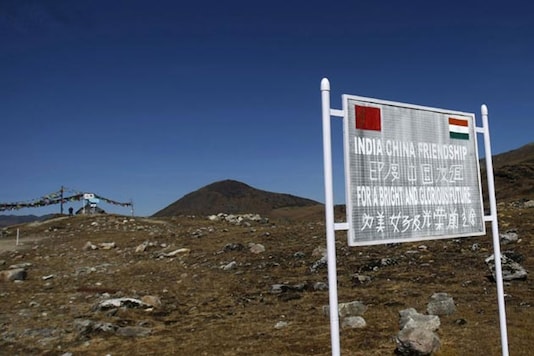
 Fierce Face-off Between Indian, Chinese Troops Near Naku La in ...

In a major setback to recent measures to de-escalate tensions, India and China engaged in a deadly skirmish along their border on Monday night. While details of the clash are still emerging, the incident marks the first combat deaths in the area since 1975.
An Indian Army statement acknowledged the death of an officer and two soldiers, with subsequent reports attributed to officials confirming 17 other soldiers succumbed to injuries—reports that Foreign Policy has not independently verified. Both sides confirm that Chinese soldiers were also killed, but the number is unknown. (China is traditionally reluctant to report casualty figures, and it erases some clashes from official history.) Critically, neither side is reported so far to have fired actual weapons; the deaths may have resulted from fistfights and possibly the use of rocks and iron rods. It’s also possible, given the extreme heights involved—the fighting took place in Ladakh, literally “the land of high passes”—that some of those killed died due to falls.

What is the origin of the conflict?

Despite their early friendship in the 1950s, relations between India and China rapidly degenerated over the unresolved state of their Himalayan border. The border lines, largely set by British surveyors, are unclear and heavily disputed—as was the status of Himalayan kingdoms such as Tibet, Sikkim, Bhutan, and Nepal. That led to a short war in 1962, won by China. China also backs Pakistan in its own disputes with India, and China’s Belt and Road Initiative has stirred Indian fears, especially the so-called China-Pakistan Economic Corridor, a collection of large infrastructure projects.
The current border is formally accepted by neither side but simply referred to as the Line of Actual Control. In 2017, an attempt by Chinese engineers to build a new road through disputed territory on the Bhutan-India-China border led to a 73-day standoff on the Doklam Plateau, including fistfights between Chinese and Indian soldiers. Following Doklam, both countries built new military infrastructure along the border. India, for example, constructed roads and bridges to improve its connectivity to the Line of Actual Control, dramatically improving its ability to bring in emergency reinforcements in the event of a skirmish. In early May this year, a huge fistfight along the border led to both sides boosting local units, and there have been numerous light skirmishes—with no deaths—since then. Both sides have accused the other of deliberately crossing the border on numerous occasions. Until Monday’s battle, however, diplomacy seemed to be slowly deescalating the crisis: The two sides had opened high-level diplomatic communications and appeared ready to find convenient off-ramps for each side to maintain face. And both countries’ foreign ministers were scheduled for a virtual meeting next week.
Both countries also have a highly jingoistic media—state-run in China’s case, and mostly private in India’s—that can escalate conflicts and drum up a public mood for a fight. Press jingoism, however, can also open strange opportunities for de-escalation: After an aerial dogfight between India and Pakistan in 2019, media on both sides claimed victory of sorts for their respective countries, allowing their leaders to move on.
Compounding the problems is the physically shifting nature of the border, which represents the world’s longest unmarked boundary line; snowfalls, rockslides, and melting can make it literally impossible to say just where the line is, especially as climate change wreaks havoc in the mountains. It’s quite possible for two patrols to both be convinced they’re on their country’s side of the border.

Has there been similar violence in the past?

There have been no deaths—or shots fired—along the border since an Indian patrol was ambushed by a Chinese one in 1975.There have been no deaths—or shots fired—along the border since an Indian patrol was ambushed by a Chinese one in 1975. But China saw significant clashes with both India and the Soviet Union during the late 1960s, at the height of the Cultural Revolution. In India’s case, that culminated in a brief but bloody clash on the Sikkim-Tibet border, with around hundreds of dead and injured on each side. On the Soviet border, fighting along the Ussuri River saw similar numbers of dead, but tensions escalated far higher than with India, leading to fears of a full-blown war and a possible nuclear exchange that were only alleviated by the highest-level diplomacy. In part, those clashes were driven by political needs on the Chinese side; officers and soldiers alike felt the need to demonstrate their Maoist enthusiasm, leading to such actions as swimming across the river waving Mao Zedong’s Little Red Book.

What could happen next?

India has announced that “both sides” are trying to de-escalate the situation, but it has accused China of deliberately violating the border and reneging on agreements made in recent talks between the two sides. China’s response was more demanding, accusing India of “deliberately initiating physical attacks” in a territory—the Galwan Valley in Ladakh that is claimed by both sides—that has “always been ours.” Army officers are meeting to try to resolve the situation.

Why India and China Are Sparring

The two nuclear powers have long had their differences. But the pandemic has led to some frayed nerves—and revealed longer-term ambitions.
While the 2017 Doklam crisis was successfully defused—and was followed by a summit between Chinese President Xi Jinping and Indian Prime Minister Narendra Modi in Wuhan, China—recent events could easily spiral out of control. If there are indeed a high number of deaths from Monday’s skirmish, pressure to react and exact revenge may build. The coronavirus has produced heightened political uncertainty in China, leading to a newly aggressive form of “Wolf Warrior” diplomacy—named after a Rambo-esque film that was a blockbuster in China but a flop elsewhere. Chinese officials are under considerable pressure to be performatively nationalist; moderation and restraint are becoming increasingly dangerous for careers.
On the Indian side, there is increasing nervousness about how Beijing has encircled the subcontinent. China counts Pakistan as a key ally; it has growing stakes in Sri Lanka and Nepal, two countries that have drifted away from India in recent years; and it has made huge infrastructure investments in Bangladesh. Meanwhile, much has changed since the last time India and China had deadly clashes in the 1960s and ’70s, when the two countries had similarly sized economies; today, China’s GDP is five times that of India, and it spends four times as much on defense.
There will likely be a business impact following the latest clash. Indians, for example, have recently mobilized to boycott Chinese goods, as evidenced by a recent app “Remove China Apps” that briefly topped downloads on India’s Google Play Store before the Silicon Valley giant stepped in to ban the app.
Heightened tensions also put Indians in China at risk. Although numbers are somewhat reduced due to the coronavirus crisis, there is a substantial business and student community in the country. During the Doklam crisis, the Beijing police lightly monitored and made home visits to Indians in the city.
An escalated crisis doesn’t necessarily mean a full-blown war.An escalated crisis doesn’t necessarily mean a full-blown war. It could mean months of skirmishes and angry exchanges along the border, likely with more accidental deaths. But any one of those could explode into a real exchange of fire between the two militaries. The conditions in the Himalayas themselves severely limit military action; it takes up to two weeks for troops to acclimate to the altitude, logistics and provisioning are extremely limited, and air power is severely restrained. (One worrying possibility for more deaths is helicopter crashes, such as the one that killed a Nepalese minister last year.)
In the event of a serious military conflict, most analysts believe the Chinese military would have the advantage. But unlike China, which hasn’t fought a war since its 1979 invasion of Vietnam, India sees regular fighting with Pakistan and has an arguably more experienced military force.

Is there a permanent solution?

China resolved its border squabbles with Russia and other Soviet successor states in the 1990s and 2000s through a serious diplomatic push on both sides and mass exchanges of territory, and they’ve been essentially a nonissue since then. But although the area involved was much larger, the Himalayan territorial disputes are much more sensitive and harder to resolve.
For one thing, control of the heights along the borders gives a military advantage in future conflicts. Resource issues, especially water, are critical: 1.4 billion people depend on water drawn from Himalayan-fed rivers. And unlike the largely bilateral conflicts along the northern border, multiple parties are involved: Nepal, Bhutan, China, Pakistan, and, of course, India. Add on top of that China’s increasing power and nationalism, matched by jingoism on the Indian side, and the prospects of a long-term solution look small.

James Palmer is a deputy editor at Foreign Policy. Twitter: @BeijingPalmer
Ravi Agrawal is the managing editor of Foreign Policy. Twitter: @RaviReports