Showing posts with label Trump. Show all posts

Thursday, December 4, 2025

AMERICANS IN MOSCOW

Trump's envoys for peace in Ukraine, Steve Witkoff and Jared Kushner visited Moscow but the negotiations did not have significant advances. 

Maybe President of United States remembered his glorious days with models and other night women in the nineties but he must recognize that Russia now is very different form that one, thanks to Putin. 
 

Thursday, November 6, 2025

WHY ORBAN AVOIDS TO CONFRONT WITH PUTIN


HUNGARY'S REJECTION OF CONFRONTATION WITH RUSSIA

 TRENDS RESEARCH & ADVISORY, OCTOBER, 26, 2025.

Giorgio Cafiero

CEO of Gulf State Analytics - USA 


Since Russia launched its “special military operation” in Ukraine in February 2022, most European Union (EU) and North Atlantic Treaty Organization (NATO) member states have aligned behind a common policy of supporting Kyiv and confronting Moscow through economic sanctions, military assistance to Ukraine, and diplomatic isolation. Yet Hungary, under Prime Minister Viktor Orbán, has consistently diverged from this “consensus” and emerged as the EU and NATO’s most prominent advocate for a more cautious approach to Russia. Budapest has resisted strict sanctions, maintained close economic ties with Russia, especially in energy, and advocated dialogue over confrontation. In doing so, Hungary has carved out a distinct and complex role within Europe’s evolving geopolitical landscape: one that presents itself as a moderating voice amid growing East-West polarization, but often at the cost of alienating Western allies who see Budapest’s stance as undermining the unity needed to counter Russia in Ukraine.

As a frontline NATO country bordering Ukraine’s western flank, Hungary occupies a strategically sensitive position in the alliance. At the same time, its heavy dependence on Russian energy significantly constrains its foreign policy options and grants Moscow a degree of leverage over Budapest. Hungary’s position illustrates the internal frictions within NATO and the EU, where divergent national interests complicate efforts to present a unified front against Russia amid this ongoing war in Ukraine. More broadly, Budapest’s approach reflects deeper tensions within the West about how to balance national sovereignty, economic pragmatism, and collective security commitments in an era of renewed geopolitical confrontation between great powers.

From Soviet Satellite to NATO Member

Like many nations in Central and Eastern Europe, Hungary spent the decades following World War II firmly under the Soviet Union’s authoritarian grip. Yet by the 1970s, a distinct shift in national discourse had emerged, increasingly oriented toward engagement with the West.[1] This pivot was closely tied to Hungary’s neo-liberal economic policies, which sought growth through limited market reforms and greater openness to Western trade and finance.[2] The 1980s marked a deepening of this Western orientation. Hungary joined the International Monetary Fund and the World Bank, and despite opposition from Moscow, it established formal diplomatic relations with the European Economic Community—the forerunner of today’s EU.[3] These moves signaled Budapest’s growing desire to assert a more autonomous foreign policy, particularly during the twilight years of Soviet rule, when Mikhail Gorbachev’s policies of Glasnost and Perestroika loosened Moscow’s hold on its satellite states.[4]

Capitalizing on this moment of relative liberalization, Hungary accelerated its westward turn. The watershed moment came in 1990, when the country held its first multi-party democratic elections in over four decades.[5] Under Prime Minister József Antall, the new government prioritized Euro-Atlantic integration as a pillar of its foreign and security policy.[6] While NATO membership remained a longer-term ambition at the time, the dissolution of the Warsaw Pact in 1991 was a pivotal turning point that cleared the way for Hungary to pursue deeper strategic ties with the West.

This trajectory culminated on 12 March 1999, when Hungary, Poland, and the Czech Republic became the first former Warsaw Pact members to join NATO.[7] Its accession marked both a symbolic and practical transformation in Hungary’s security posture—from a Soviet satellite to a committed member of the Transatlantic Alliance. In the years that followed, Hungary actively participated in NATO-led missions, including the Kosovo Force (KFOR) and the International Security Assistance Force (ISAF) in Afghanistan after the launch of the U.S.-led “War on Terror” in 2001.[8] Today, Hungary remains one of only a handful of NATO countries to meet the alliance’s two percent GDP defense spending benchmark.[9] This legacy of westward integration continues to shape Budapest’s strategic outlook, including its complex stance on the ongoing conflict in Ukraine.

Despite Hungary’s membership in NATO and the EU since 1999 and 2004, respectively, there are multipolar dimensions to Budapest’s foreign policy with Orbán at the helm.[10] Hungary’s ties with the Organization of Turkic States (OTS), which is part of its “Eastern Opening” policy aimed at diversifying international partnerships beyond the EU, is one case in point.[11] In a grander geopolitical and geoeconomic context, Hungary aspires to act as a “keystone state,” skillfully navigating the competing interests of major global powers—namely the United States, Russia, and China—while at times positioning itself as a bridge among them.[12] This strategic posture aims to enhance Hungary’s autonomy and consolidate its role as a sovereign actor within a shifting geopolitical landscape. Hungary’s geography lends itself naturally to this ambition: situated at the crossroads of East and West, the country is well-placed to serve as a critical gateway for energy transit and trade routes essential to the broader project of Eurasian integration. Infrastructure initiatives such as the Budapest-Belgrade-Piraeus cargo railway and the East-West Gate Terminal exemplify Hungary’s efforts to cement its status as a logistics and commercial hub connecting European markets with Eurasia’s expanding economic networks.[13] In times of geopolitical volatility—particularly in the wake of the Ukraine conflict beginning in February 2022—Hungary’s role as a Central European transit point pursuing a “connectivity-based strategy” becomes all the more strategic, enabling it to leverage both geography and diplomacy to maintain relevance and flexibility on the international stage.[14]

Saturday, October 25, 2025

TRUMP ON RUSSIA: FROM ONE EXTREME TO ANOTHER

Everything is possible un the Trump's real world. In less than a week, we can go from a possible Summit with Putin in Budapest -Hungary- to new sanctions on Russian economy -added to the 19 th battery of new ones from Brussels-. Sooner, he menaced Moscow with the decision of providing Tomahawks to Kyiv.

So we can ask again and again, which is the real Trump?  

Differently, Putin sent his peace adviser Kirill Dmitriev once again to Washington and minimized the impact of Western sanctions. 

DMITRIEV'S LAST DECLARATION

Monday, September 22, 2025

MILEI LIKE ZELENSKY?

Receiving in these times, US loan from Trump Administracion, is not free of charge. It is similar to the situation faced by Ukrainian President Voldymyr Zelensky last February when he was under siege by the American leader, in order to exchange its "rare earths" by arms, for continuing the war against Russia. 


Now, Argentina of Javier Milei probably needs an urgent financial help from Washington but instead of a swap or other kind of support, national government is ready to auction everything, including our sovereignty? 

SOME DOUBTS IN THE TRUMP CABINET 

Wednesday, January 8, 2020

TRUMP: WAR AGAINST IRAN?

The Killing of Qassem Suleimani Is Tantamount to an Act of War

By Robin Wright, The New Yorker, 2020, January 3


On orders from President Trump, the United States killed Major General Qassem Suleimani, the leader of Iran’s élite Quds Force and the mastermind of its military operations across the Middle East, in an overnight air strike at Baghdad’s International Airport. The assassination was the boldest U.S. act in confronting Iran since the 1979 revolution, tantamount to an act of war. A brief statement from the Pentagon described it as a “decisive defensive action” designed to protect U.S. personnel abroad. But the strike represented a stunning escalation between Washington and Tehran, and it may well have the reverse effect. Iran almost certainly will want to respond in some lethal form, whether directly or through its powerful network of proxies in the region. U.S. embassies and military bases—and thousands of American personnel across the Middle East and South Asia, and potentially beyond—were instantly vulnerable. On Friday, the State Department ordered all Americans to leave Iraq.

On Friday, Iran’s Supreme Leader, Ayatollah Ali Khamenei, declared three days of public mourning and warned that “harsh vengeance awaits those criminals behind martyrdom of General Suleimani.” He moved quickly to name Brigadier General Esmail Gha’ani, who had worked closely with Suleimani, as the new Quds Force commander. Mohammad Javad Zarif, Iran’s U.S.-educated Foreign Minister, who spent two years negotiating the 2015 nuclear deal with the United States, called the American air strike an act of international terrorism. “The US bears responsibility for all consequences of its rogue adventurism,” he tweeted. Iran’s state-controlled television characterized the assassination as the U.S.’s “biggest miscalculation” since the Second World War. “The people of the region will no longer allow Americans to stay,” it said.

Iran’s revolutionary regime often makes boastful threats, but the murder of Suleimani alarmed veteran U.S. military and diplomatic officials who have served in the Middle East. “It is almost impossible to overstate the importance of this,” the retired general David Petraeus, who led U.S. forces in Iraq and later served as the director of the C.I.A., told me. Suleimani was Petraeus’s nemesis during the eight-year U.S. war in Iraq. “Iran has to be in shock right now. Its version of the National Security Council will be on overdrive,” he said. “But there’s a whole universe of possibilities now, everything from proxy retaliation, kidnappings of American citizens, actions against coalition partners, even an attempt to do something in the U.S. We certainly have large force concentrations in the region, too.”

Was the U.S. attack an act of war? Douglas Silliman, who was the U.S. Ambassador to Iraq until last winter and is now the president of the Arab Gulf States Institute in Washington, told me that the death of Suleimani was the equivalent of Iran killing the commander of U.S. military operations in the Middle East and South Asia. “If Iran had killed the commander of U.S. Central Command, what would we consider it to be?” he said. John Limbert, one of fifty-two Americans who were taken hostage in Iran in 1979, told me that he was happy Suleimani was gone, but quickly added, “This is not going to end well.”

Suleimani, a flamboyant former construction worker and bodybuilder with snowy white hair, a dapper beard, and arching salt-and-pepper eyebrows, gained notice during the eight-year war with Iraq, in the nineteen eighties. He rose through the Revolutionary Guard to become head of the Quds Force—an Iranian unit of commandos comparable to the U.S. seals, Delta Force, and Rangers combined—in 1998. He was the most feared and most admired military leader in the region. He famously rallied followers with flowery jihadi rhetoric about the glories of martyrdom. “The war front is mankind’s lost paradise,” Suleimani was quoted as saying, in 2009. “One type of paradise that is portrayed for mankind is streams, beautiful nymphs and greeneries. But there is another kind of paradise.” The front, he said, was “the lost paradise of the human beings.” Thousands of followers died under his leadership.

Over more than two decades, Suleimani, a Shiite, had more impact than the leaders of either Al Qaeda or isis, which are both Sunni movements, in shaping the face of the Middle East. To counter U.S. influence in Iraq between 2003 and 2011, he provided Iraqi militants with rockets, bombs, and explosively formed projectiles that could slice through the armor of an American M1 tank. “He has the blood of hundreds of Americans on his hands,” Petraeus said. The United States designated the Quds Force as a supporter of terrorism, in 2007, and Suleimani was personally sanctioned for complicity in a plot to kill the Saudi Ambassador to the United States, in 2011. That same year, he spearheaded a campaign, now in its ninth year, to save President Bashar al-Assad’s regime after civil war erupted in Syria. Suleimani also channelled arms and aid to Hezbollah in Lebanon, orchestrating its franchise operations in other Middle Eastern countries, and aided Houthi rebels in Yemen. He cultivated militia proxies in Pakistan and Afghanistan, thousands of whose members were deployed to fight in Syria. Suleimani gained fame for taking selfies—later posted on social media—on the front lines of regional conflicts where his Quds Force and their allies were deployed. Many went viral.

“I think people in the region saw him as untouchable,” Petraeus said. The only person more powerful in Iran was the Supreme Leader. And, in the Shiite region of the Middle East, there may have been no one more powerful than Suleimani when it came to tangible impact.

“The US just killed Iran’s Patton,” Ian Bremmer, the president of the Eurasia Group, tweeted shortly after the Pentagon issued its statement. Silliman said that Suleimani led a “huge and largely successful strategic advance by Iran through Iraq and Syria and Lebanon.”

After initially operating in the shadows, Suleimani grew rhetorically audacious in the past decade. In 2008, as the U.S. and Iran competed for influence in Iraq, the Iranian general relayed a verbal message to Petraeus through the then Iraqi President, Jalal Talabani, which said, “Dear General Petraeus, you should know that I, Qassem Suleimani, control the policy for Iran with respect to Iraq, Lebanon, Gaza and Afghanistan.” Suleimani’s point, Petraeus told me, was that the Americans had to deal with him—everywhere.

In 2018, Suleimani famously responded to the warning that Trump issued to the Iranian President, Hassan Rouhani. Trump, after a weekend at his golf resort in Bedminster, New Jersey, tweeted, “NEVER, EVER THREATEN THE UNITED STATES AGAIN OR YOU WILL SUFFER CONSEQUENCES THE LIKES OF WHICH FEW THROUGHOUT HISTORY HAVE EVER SUFFERED BEFORE. WE ARE NO LONGER A COUNTRY THAT WILL STAND FOR YOUR DEMENTED WORDS OF VIOLENCE & DEATH.” Suleimani belittled Trump. “It is beneath the dignity of our President to respond to you,” he said, in a speech. “We are near you, where you can’t even imagine. We are ready. We are the man of this arena.”When Suleimani was killed, Trump was at his Mar-a-Lago resort, in Palm Beach. Displaying rare restraint, he merely posted an American flag on his Twitter account.

In its statement, the Pentagon charged that Suleimani had, in recent months, orchestrated attacks on bases used by U.S. and allied nations as part of an international coalition fighting isis. He “was actively developing plans to attack American diplomats and service members in Iraq and throughout the region,” the Pentagon said.

Suleimani’s death capped a week of hostilities that escalated with lightning speed after a U.S. military contractor was killed in a rocket attack by Kata’ib Hezbollah, one of the most powerful Iranian-backed militias in Iraq, on December 27th. The attack was the group’s eleventh in recent weeks, the U.S. claimed. On December 29th, the Pentagon responded with five air strikes—three in Iraq and two in Syria—on Kata’ib Hezbollah’s bases. The group’s supporters responded by attacking the U.S. Embassy in Baghdad, which is the largest and most fortified diplomatic mission in the world.

“General Suleimani also approved the attacks on the U.S. Embassy in Baghdad that took place this week,” and the attacks on coalition bases in recent months, the Pentagon said, in its statement. It said that the assassination was aimed at deterring future Iranian assaults, noting pointedly, “The United States will continue to take all necessary action to protect our people and our interests wherever they are around the world.”

Kata’ib Hezbollah has been an increasingly important militia since it emerged, under Iranian tutelage, in 2004. After isis swept through Iraq, in 2014, it merged with dozens of other Shiite militias in the Popular Mobilization Forces to fight the Islamic State caliphate—with Iranian aid, arms, and Suleimani’s strategic advice. isis was the one issue on which Iran and the U.S. had common cause. Along with the rest of the P.M.F., Kata’ib Hezbollah was incorporated into the Iraqi military, in 2019, yet it continued to carry out its own operations—in defiance of the government and to the frustration of the United States. The militia has also been deployed in Syria as part of Iran’s support for the Assad regime.

The Pentagon provided no initial details on how the attack played out, but the Iranian media reported that Suleimani had just arrived at the Baghdad airport from Lebanon. The U.S. strike also killed Abu Mahdi al-Muhandis, the leader of Kata’ib Hezbollah and deputy chief of the P.M.F. He was “by far the most important P.M.F. leader tied to Iran,” Silliman told me. Iranian news agencies said that Suleimani and Muhandis were leaving the airport in separate cars when both were attacked by rockets fired from a U.S. helicopter. The Tasnim news agency, which has been tied to the Revolutionary Guard in the past, tweeted a photo of a bloodied hand wearing a large ring with an oval red stone, which Suleimani was often photographed wearing. The ring was how his body was identified, Iraqi officials said.

The timing was particularly awkward for the Iraqi government, which has long attempted a delicate balancing act between neighboring Iran and the United States. Since October 1st, protests have swept across the country demanding the ouster of the Prime Minister and the entire political class, and an end to corruption and economic inequality. The protests have also been noteworthy because of their unprecedented demonstrations against Iran’s influence in Iraq. In November, protesters set fire to Iranian diplomatic missions in the Shiite holy cities of Najaf and Karbala.

The U.S. killing of Suleimani and the air strikes on Kata’ib Hezbollah over the weekend are an embarrassment to Iraqi leaders and a challenge to Iraqi sovereignty. They come at a time when Baghdad is gripped by the deepest political crisis since the U.S. invasion ousted Saddam Hussein, in 2003. The Prime Minister, Adel Abdul-Mahdi, a Shiite who spent years in exile in Iran, stepped down and is now playing only a caretaker role. There are already calls for the Iraqi parliament to demand the withdrawal of some five thousand U.S. troops—and hundreds more from more than a dozen coalition neighbors—that are still waging a campaign against isis insurgents. In a tweet, in Arabic, Mahdi called the assassination of Suleimani an act of aggression against the “Iraqi state, its government, and its people.” In an ominous signal to Washington, he said the killing was a “breach of the conditions for the presence of U.S. forces in Iraq.” The Iraqi Parliament is due to debate the U.S. military presence and vote on whether it should continue when it reconvenes, but the Prime Minister has the ultimate say as Commander-in-Chief, Silliman said.

The reaction in Washington played out largely along party lines. Senator Tom Cotton, a Republican of Arkansas and staunch Trump supporter and military veteran, tweeted that Suleimani “got what he richly deserved, and all those American soldiers who died by his hand also got what they deserved: justice.” But top Democrats warned of the fallout—and future cost in American lives. The House Speaker, Nancy Pelosi, of California, said that the assassination “risks provoking further dangerous escalation of violence. America—and the world—cannot afford to have tensions escalate to the point of no return.” She and other Democrats charged that Trump attacked a high-level Iranian official without congressional authorization for the use of military force. Tom Udall, a Democrat from New Mexico and a member of the Senate Foreign Relations Committee, warned, “Such a reckless escalation of hostilities is likely a violation of Congress’s war-making authority—as well as our basing agreement with Iraq—putting U.S. forces and citizens in danger and very possibly sinking us into another disastrous war in the Middle East that the American people are not asking for and do not support.”

Ironically, Suleimani died in just the kind of covert operation that he orchestrated against the United States so often over so many years, with such deadly success. Yet, in his statement on the general’s death, Iran’s supreme leader warned, “His departure to God does not end his path or his mission.”

Thursday, January 31, 2019

COMO FUE LA "RESURRECCION" DE LA OPOSICION VENEZOLANA

CRISIS EN VENEZUELA

La estrategia coral que resucitó a la oposición y echa el pulso más firme a Maduro

La presión al líder chavista se ha intensificado a partir de un plan ideado por destacados dirigentes que cuenta con jóvenes políticos y disidentes

ALONSO MOLEIRO/JAVIER LAFUENTE 

Para el DIARIO EL PAIS, ESPAÑA.

Miércoles 30 de enero de 2019, CARACAS-MEXICO

“Fin de la usurpación, Gobierno de transición, elecciones libres…”. Los críticos con Nicolás Maduro lo repiten como si fuese el estribillo de una canción pegadiza. Un mensaje, un mantra más bien, que por primera vez en mucho tiempo, entona al unísono un coro que incluye a los más beligerantes y los sectores moderados, incluso entre chavistas críticos con Maduro, ante la grave crisis que atraviesa Venezuela.
Resultado de imagen para juan guaidó fotos
Fuente: BBC  
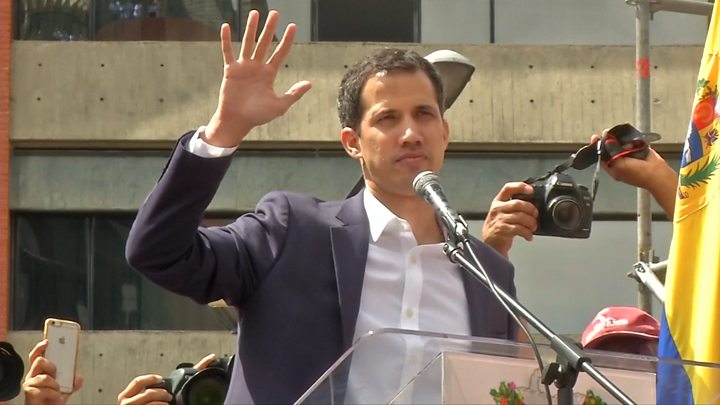
Históricamente fragmentada, la oposición venezolana ha logrado generar una sinfonía inédita en torno a la figura del presidente de la Asamblea Nacional, Juan Guaidó, que el pasado 23 de enero se proclamó mandatario interino y fue inmediatamente reconocido por Estados Unidos y los principales países de la región, salvo México. Una composición que no cuenta con un solo director de orquesta, sino que es fruto de una gran alianza, de un acuerdo político gestado durante meses en el que predominan dos figuras a partir de las cuales se articula el toma y daca con el que se ha logrado cercar como nunca antes al régimen de Maduro: el expresidente de la Asamblea Nacional Julio Borges (Primero Justicia) y el líder político Leopoldo López (Voluntad Popular, también el partido de Guaidó).

Sunday, April 29, 2018

MIENTRAS MACRON SEDUCE A TRUMP, CONTINUA LA FRIALDAD CON MERKEL


Merkel intenta limar asperezas con Trump en Washington, eclipsada tras la visita de Macron


20 minutos.es
28 de abril de 2018

Resultado de imagen para Trump con Macron y Merkel fotos

La visita de la canciller alemana, Angela Merkel, a Washington para reunirse con el presidente norteamericano, Donald Trump, no ha servido para acabar con las diferencias estructurales que existen entre los dos líderes, que no obstante han mostrado cercanía independientemente de las tensiones. Además, el encuentro ha quedado eclipsado por la cálida recepción que recibió tres días antes el mandatario francés, Emmanuel Macron. "Necesitamos crear una relación recíproca, que no tenemos aún. Estamos trabajando en ello y queremos que sea más justa y la canciller también lo quiere", ha declarado Trump en la rueda de prensa conjunta que ha dado junto a la mandataria alemana. Al contrario que su homólogo francés, Merkel ha optado por no establecer una relación personal con el presidente de Estados Unidos, por lo que el tono de su visita, de apenas un día y mucho más concisa, ha contrastado de sobremanera con la de Emmanuel Macron.

Eso sí, Merkel logró que su segunda reunión con Trump en Washington fuera más cordial que la primera, celebrada hace más de un año y marcada por múltiples señales de tensión personal, pero no pudo esquivar las comparaciones con los efusivos besos y abrazos que Trump compartió con Macron durante su visita de Estado el pasado martes. Aún así, tanto Trump como Merkel se esforzaron en enterrar los recuerdos de su primer encuentro, en el que el líder estadounidense rehusó darle la mano ante las cámaras a la canciller alemana. "Tenemos una relación realmente excelente. En realidad, hemos tenido una relación excelente desde el principio, pero alguna gente no lo entendió", dijo Trump al comienzo de su reunión con Merkel. Esta vez, Trump sí le estrechó la mano y la definió como "una mujer muy extraordinaria", pero no transmitió la impresión de tener química con Merkel, con la que ha tenido desacuerdos sobre todo tipo de temas, desde el futuro de la Unión Europea (UE) y la OTAN hasta la inmigración y el comercio. 


Doble presión a Trump 

Como Macron unos días antes, Merkel acudía a Washington con el objetivo de convencer a Trump de que exima permanentemente a la Unión Europea (UE) de los aranceles al acero y aluminio, y de que no se retire del acuerdo nuclear con Irán, firmado en 2015 por EE UU junto a Alemania, Francia, China, Rusia y el Reino Unido. 

Los líderes no dieron pistas sobre ningún posible avance en el primer tema, apenas cuatro días antes de que caduque la exención temporal que Trump ha concedido a la UE y a otros aliados, entre ellos México, Canadá, Argentina y Brasil. "Hemos hablado sobre el estado de las negociaciones y nuestras respectivas evaluaciones sobre cómo están las cosas, y la decisión depende del presidente (Trump)", se limitó a indicar Merkel. Trump, por su parte, evitó hablar sobre los aranceles y se limitó a denunciar el elevado déficit comercial con la Unión Europea (UE) y la necesidad de hacer "más justa" y "recíproca" esa relación.

El líder estadounidense también insistió en que Alemania y otros países europeos deben pagar su "parte justa" a la OTAN, es decir, al menos el 2% de su producto interior bruto. "La OTAN es maravillosa, pero ayuda más a Europa que a nosotros, así que ¿por qué estamos pagando nosotros la gran mayoría de sus costes?", preguntó Trump. Merkel replicó que, aunque Alemania aún no llegue a ese 2%, es "el segundo contribuyente de tropas a la OTAN" y ha hecho "muchos avances en los últimos años, aunque desde la perspectiva del presidente (Trump) no hayan ocurrido lo suficientemente rápido". 

Acuerdo nuclear con Irán 

La canciller hizo una concesión a Trump al reconocer que el actual acuerdo nuclear iraní "no es suficiente" para asegurarse de que "se contienen las ambiciones de Irán" en la región, en concreto su "influencia geopolítica en Siria" y otros países. "(El acuerdo) no es perfecto. Es una pieza de un mosaico, un bloque sobre el que podemos construir una estructura", afirmó.

Merkel confirmaba así que está abierta a reforzar el pacto de 2015, pero no aclaró si respalda la propuesta de Macron para negociar un nuevo acuerdo más amplio con Teherán. En enero, Trump amenazó con retirarse del acuerdo con Irán si los países europeos firmantes del pacto de 2015 (Francia, Reino Unido y Alemania) no negociaban con él cuanto antes un acuerdo paralelo que corrigiera los "defectos" del arreglo original.

Trump planea anunciar si sigue en el acuerdo antes del 12 de mayo, y no ha dado pistas sobre cuál será su decisión, pero Macron ya ha pronosticado que se retirará del acuerdo por razones internas. Merkel y Trump hablaron también sobre Ucrania, y la canciller alemana aseguró que las diferencias con EE UU sobre ese tema son mínimas, y que es necesario tanto "mantener "buenas relaciones con Rusia" como defender la "integridad territorial" ucraniana.

Aunque esta semana quedó claro que Trump tiene un favorito en el eje europeo y no es Merkel, algunos observadores apuntaron que quizá a la canciller alemana no le interesaba proyectar el mismo grado de cercanía que Macron con el presidente estadounidense, dado que este es extremadamente impopular en Alemania. "Si miras a los números (de popularidad) en Alemania y otros países, puede que no les guste Donald Trump, pero tienen que entender que eso significa que estoy haciendo un buen trabajo, porque estoy representando a Estados Unidos", dijo Trump en la conferencia de prensa, mientras Merkel le miraba con extrañeza. 

Sunday, November 19, 2017

ENTREVISTA A GILLES KEPEL

Gilles Kepel: “Francia está tratando de evitar una guerra entre Arabia Saudita e Irán”

“La voluntad del presidente Macron es crear una posición mediadora en Medio Oriente y hacerlo en nombre de Europa”, sostiene el politólogo, experto en Islam y mundo árabe, que acompañó al mandatario francés en su última gira por la regiónCLAUDIA PEIRO, PARA INFOBAE, DOMINGO 19/11/2017.


Un primer resultado de esta iniciativa francesa es seguramente la visita que el renunciante primer ministro libanés Saad Hariri, instalado en Arabia Saudita desde su dimisión, está realizando a Francia.
El politólogo Gilles Kepel, uno de los mayores especialistas europeos en Islam y mundo árabe, es un testigo privilegiado de la geopolítica actual: acaba de acompañar al presidente de su país, Emmanuel Macron, en una gira cuyo objetivo era la inauguración del Louvre de Abu Dhabi -el 11 de noviembre pasado- y que tuvo luego una escala no programada en Riad, la capital de Arabia Saudita, para una reunión con el príncipe heredero tras el golpe asestado por éste a parte de la elite local para concentrar el poder.
Invitado a nuestro país por el Centro Franco Argentino de Altos Estudios que dirige Guillaume Boccara, Kepel comenta dos buenas noticias: una es la caída del califato de Raqqa y Mosul, otra la derrota de lo que llama terrorismo yihadista de tercera generación en Francia. Pero una tercera noticia nada buena es que la tensión entre Arabia Saudita e Irán está en su máximo nivel.
Autor, entre otros, de El faraón y el profeta (1988), La revancha de Dios (1991), El Oeste de Alá (1995), La Yihad: expansión y declive del islamismo (2002), Las políticas de Dios (2006) y El terror entre nosotros. Una historia de la yihad en Francia (2016), Kepel es director de la Cátedra de Excelencia Medio Oriente Mediterráneo de la Universidad Paris Ciencias y Letras (PSL) en la Escuela Normal Superior.
"No sólo he visto esa serie sino que soy uno de los personajes", responde a la consulta de Infobae acerca de si Le bureau de légendes (Oficina de infiltrados), el gran éxito de la televisión francesa sobre espionaje y geopolítica que espera su cuarta temporada, reflejaba con fidelidad el rol de los servicios de inteligencia y la diplomacia francesa en la zona caliente de Medio Oriente y en el conflicto en Siria en especial.
En esta entrevista con Infobae, su visión sobre el terrorismo yihadista que ha golpeado a su país en los últimos años y sobre los recientes acontecimientos en Medio Oriente. Además, una referencia a su participación, casi involuntaria, en la serie Le bureau des légendes.

Sunday, September 17, 2017

MERKEL, TRAS LOS RECORDS DE ADENAUER Y KOHL


Indispensable Angela

Merkel enfrenta su cuarto mandato desde una centralidad que empezó siendo alemana y ahora es ya europea y global

LLUIS BASSETS, DIARIO EL PAIS, MADRID, SABADO 16 DE SETIEMBRE DE 2017.


Así como hay una superpotencia indispensable, Estados Unidos, según la ex secretaria de Estado Madaleine Albright, también hay un personaje político europeo indispensable, según el semanario The Economist, y este es Angela Merkel. Si no fuera por la obsesión alemana por la discreción y por su reticencia al protagonismo, Merkel sería reconocida como la líder del mundo libre, especialmente desde que Obama dejó la Casa Blanca y le sustituyó el presidente más atrabiliario, errático e irresponsable que haya encabezado el Gobierno de Washington.

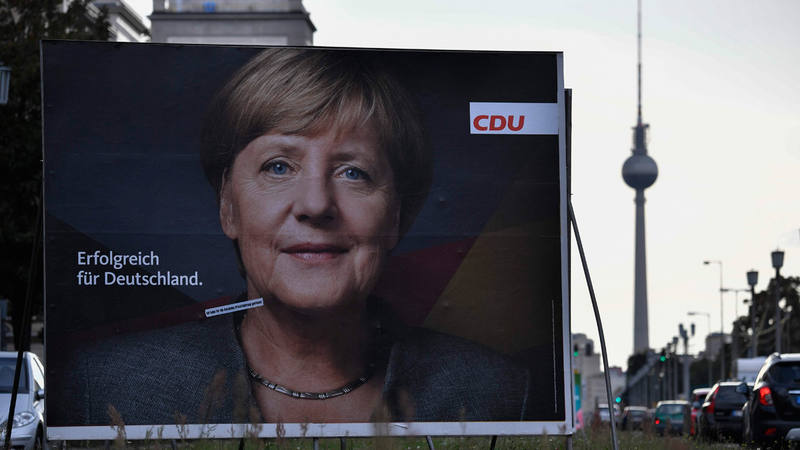
El próximo domingo los alemanes tendrán la oportunidad de darle por cuarta vez una mayoría parlamentaria, algo prácticamente asegurado a la vista de las encuestas, en las que las listas socialdemócratas, con su candidato Martin Schulz a la cabeza, se hallan a una distancia inalcanzable —entre 15 y 17 puntos por detrás— para aspirar a algo más que entrar como socios minoritarios en un gobierno de gran coalición. La única incógnita que dilucidarán los electores será la fórmula de gobierno, en función de la composición del Parlamento, pero no la centralidad de la coalición conservadora CDU-CSU y de la figura indispensable de Merkel.
La tonalidad del cuarto mandato de Merkel en la cancillería dependerá de los socios que se vea obligada a escoger entre las tres opciones posibles en un mapa parlamentario en el que no se dan mayorías de gobierno en solitario. La opción más clara son los liberales del FDP, el socio habitual de la CDU-CSU en la coalición burguesa durante los años de la Alemania de Bonn, con los que también Merkel hizo gobierno en su segundo mandato entre 2009 y 2013. Para que esta fórmula sea posible los liberales deben salir del bache en el que se metieron hace cuatro años, cuando se quedaron sin representación parlamentaria por primera vez desde la fundación de la actual república.
Siempre está a mano la gran coalición, la fórmula que mejor refleja el consenso central de la política alemana, que lleva a gobernar juntos a los dos partidos concebidos para actuar como adversarios, uno en el Gobierno y el otro en la oposición, con el inconveniente de que dan cancha política a quienes serán los extremos, la izquierda radical Die Linke y el partido anti inmigración AfD (Alternative für Deustchland).
Hay todavía una tercera fórmula inédita, en la que una insuficiente mayoría parlamentaria conservadora-liberal se vería completada por los diputados verdes, dando lugar a la Jamaica, una improbable coalición en la que ondean, como en la bandera de la isla caribeña, los colores negro (CDU-CSU), amarillo (FDP) y verde (Die Grüne). Para Merkel, tendría el atractivo de estrenar socio de coalición con el partido que gobernó con su antecesor Schröder y dio a Alemania un destacado ministro de Exteriores como Joschka Fischer, en el gabinete que mejor representó la llegada al poder de la generación revolucionaria del 68. Sentar juntos a liberales y verdes es algo con una dificultad objetiva en los programas contradictorios de ambas formaciones, especialmente respecto a los refugiados y a las emisiones contaminantes de los automóviles, pero también en una cuestión de culturas políticas opuestas e incluso enemigas.
Con 12 años de experiencia como canciller a sus espaldas y otros cuatro por delante, Merkel superará pronto a Konrad Adenauer, que permaneció 14 años al frente de la república de Bonn (entre 1949 y 1963), e igualará a quien fue su mentor, el canciller de la Alemania unida, recientemente fallecido, Helmut Kohl. Si el primero inauguró una Alemania en paz y el segundo consiguió reunificarla, Merkel se ha encontrado con el reto de responsabilizarse del rumbo de Europa entera en la época de mayores turbulencias para el proyecto de integración, que coincide también con la quiebra del liderazgo mundial de Estados Unidos.
El récord de permanencia en la cancillería llegará en 2021, cuando Merkel cumpla 67 años, todavía a seis de alcanzar la edad de Adenauer cuando fue investido como el primer canciller de la República Federal. Aunque muchos especulan con su jubilación al término del próximo mandato, nada está escrito sobre la eventualidad de un quinto mandato al que se presentaría con la edad de Hillary Clinton cuando aspiró a la presidencia de EE UU. Esta eventualidad, ahora remota, dependerá de dos factores: de su capacidad para superarse a sí misma en su balance de gobierno, de forma que se encuentre entonces en buen estado de forma política y de imagen pública; y del punto en que se halle el centro derecha, en cuanto a cohesión y liderazgos alternativos, ahora inexistentes.
Merkel, a diferencia de Adenauer y Kohl, ha adquirido envergadura gracias a las crisis existenciales con las que ha tropezado. No es lo mismo la oportunidad de un momento inaugural, como la Hora Cero que presidió Adenauer, o la caída del Muro, que correspondió a Kohl, que la dificultad de dos crisis como la del euro y la de los refugiados, que han hecho gravitar el peligro de desaparición sobre la propia idea de Europa.
Buena parte del éxito de Merkel tiene que ver con la solidez del sistema político e institucional alemán, en el que ella ha conseguido ocupar e identificarse con el centro ideológico e incluso topográfico. Pero también cuenta su personalidad, reflexiva y dubitativa, pragmática y posideológica, capaz de arriesgar pero alejada de visiones y fantasías (esa vision thing, que no tenían tampoco ni Bush padre ni Helmut Kohl) y con un sentido moral que la alejan del cinismo y de la arrogancia tan característicos de la profesión política masculina.
Una reciente encuesta del Pew Research Center, realizada en 37 países, revela el impacto global de la canciller, en contraste con el desprestigio de Donald Trump, Vladímir Putin y Xi Jinping. Un 42% de la mediana mundial de las encuestas confía en Merkel frente a un 31% que expresa su desconfianza, cifras que en el caso de Trump son del 22% y el 74%, respectivamente. En Europa, el grado de confianza llega al 60%, con la particularidad de que el Pew subraya el notable apoyo con que cuenta la canciller en la opinión de izquierdas.
Un exceso de expectativas puede también traducirse en nuevas decepciones, sobre todo cuando quien la espera son la Unión Europea en la salida de la crisis y el mundo sin presidente de Estados Unidos. Le sucedió a Obama solo llegar a la Casa Blanca y le puede suceder a Merkel en su cuarta investidura como canciller. Las tareas alemanas que tiene ante sí no son menores y no podrá desatenderlas en nombre de unos liderazgos europeos y globales que suscitan más reticencias que entusiasmos entre sus compatriotas.
La economía se halla en excelente forma pero todavía vive en buena parte del impulso reformista de su antecesor Gerhard Schröder. El país no tiene las infraestructuras que necesita, producto entre otras cosas de su aversión al gasto y al endeudamiento. Siendo un gigante industrial, la rama más puntera que es la digital se halla subdesarrollada. El prestigio de su industria automovilística se halla erosionado por el fraude de las emisiones. Sigue cayendo la capacidad adquisitiva de los trabajadores peor pagados, en una buena demostración de que Alemania no se sustrae al incremento global de las desigualdades que ha presidido la reciente crisis. Y es muy inquietante su demografía declinante con una población cada vez más envejecida.
A pesar de las exigencias interiores, hay demanda de Merkel en Europa —con Macron a la espera de dar juntos el gran impulso europeo— y la hay en el mundo, con esos liderazgos populistas y autoritarios, Trump, Putin, Xi Jinping, que hacen todavía más urgente una brújula orientada por el derecho internacional y por los valores europeos que son los de Angela Merkel.

ARTICULO RELACIONADO DE TU INTERES 

MERKEL QUIERE EVITAR NUEVAS ELECCIONES Y BUSCA ACUERDO CON EL SPD

Sunday, August 13, 2017

CHARLOTTESVILLE: OTRA POSTAL DE LA DECADENCIA NORTEAMERICANA


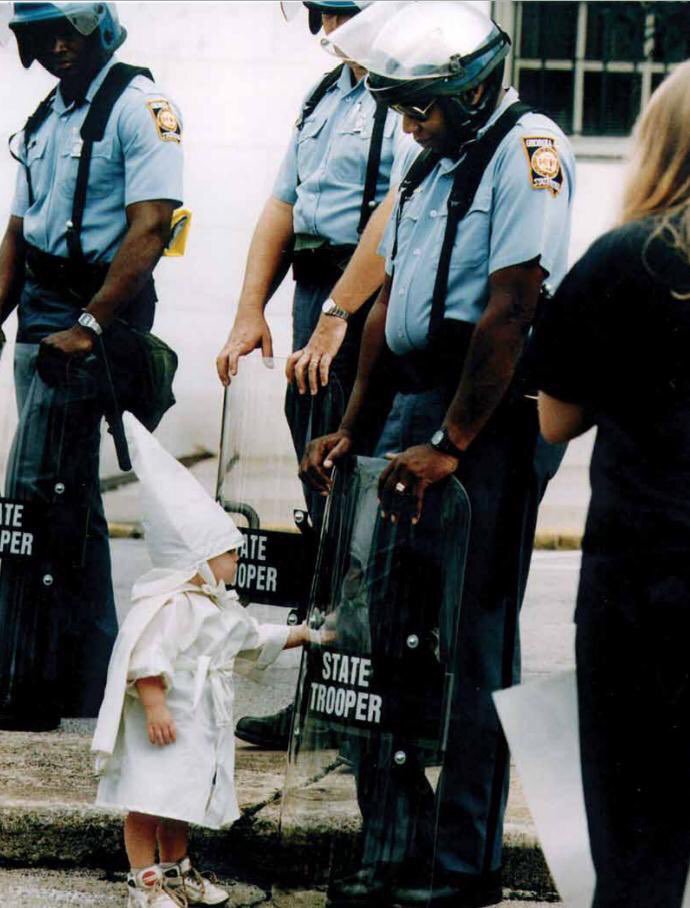
Ayer, en la localidad de apenas 35.000 habitantes, Charlottesville (Estado de Virginia), un auto en carrera desenfrenada por una de las arterias de esa ciudad, atropelló a una multitud de personas, matando a tres e hiriendo a otras 19. Lo hizo en el contexto de una marcha de los supremacistas blancos, quienes portaban banderas racistas del Klu Klux Klan, de la Confederación sureña y símbolos neonazis, yendo al encuentro de la contramarcha de "liberals" y progresistas postmodernos, que reivindican valores como la pluralidad religiosa y moral, entre otros.


Esta vez, no fue un atentado de un musulmán radicalizado, cualquiera sea su lugar de procedencia (Arabia Saudita, Chechenia, Afganistán). Esta vez, fue un americano blanco, un joven de 20 años, oriundo de Ohio, que lleno de odio y resentimiento contra las minorías que el mismo país y su Constitución dejaron crecer y progresar, prefirió inmolar a quienes no piensan como él. Es otro signo inequívoco del desmoronamiento axiológico del otrora Imperio? No se hallan en cuestionamiento los mismos valores que lo engrandecieron? Recordemos que todo esto se da en el contexto de la era Trump, otro factor que podría ser interpretado en clave de decadencia.

En cualquier caso, parece ser también el grito desesperado de la cada vez más minoría blanca, representada por esta "alt-right" trumpiana, pero ya en el ocaso, frente a otras razas, más vigorosas en términos demográficos, como la latina. Una minoría blanca a la que, por propia decisión, están consumiendo la desocupación, el fanatismo televisivo y religioso, la obesidad, las drogas, el alcoholismo y la infertilidad, entre otros flagelos. Lejos quedó atrás el empuje propio de las familias aventureras, conquistando el Lejano Oeste, conduciéndolos al "sueño americano" en la segunda mitad del siglo XIX, como en los filmes hollywoodenses de la década del cincuenta. De ello, ya nada queda.

Es que tal vez, sea ésa la Estados Unidos que va muriendo y se resiste a hacerlo. Quizás esté naciendo "otra", con otros contenidos, con otros contornos, por qué no, más semejante a la resto del continente, que le tocó hegemonizar.