Why Are India
and China Fighting?
Nuclear
powers New Delhi and Beijing engage in a skirmish marking the first combat
deaths along their border in more than four decades.
FOREIGN POLICY,
BY JAMES PALMER, RAVI AGRAWAL | JUNE 16, 2020, 3:41 PM
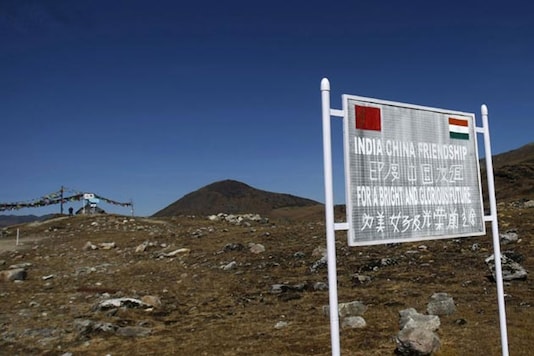
In a major
setback to recent measures to de-escalate tensions, India and China engaged in
a deadly skirmish along their border on Monday night. While details of the
clash are still emerging, the incident marks the first combat deaths in the
area since 1975.
An Indian
Army statement acknowledged the death of an officer and two soldiers, with
subsequent reports attributed to officials confirming 17 other soldiers
succumbed to injuries—reports that Foreign Policy has not independently
verified. Both sides confirm that Chinese soldiers were also killed, but the
number is unknown. (China is traditionally reluctant to report casualty
figures, and it erases some clashes from official history.) Critically, neither
side is reported so far to have fired actual weapons; the deaths may have
resulted from fistfights and possibly the use of rocks and iron rods. It’s also
possible, given the extreme heights involved—the fighting took place in Ladakh,
literally “the land of high passes”—that some of those killed died due to
falls.
What is the
origin of the conflict?
Despite their
early friendship in the 1950s, relations between India and China rapidly
degenerated over the unresolved state of their Himalayan border. The border
lines, largely set by British surveyors, are unclear and heavily disputed—as
was the status of Himalayan kingdoms such as Tibet, Sikkim, Bhutan, and Nepal.
That led to a short war in 1962, won by China. China also backs Pakistan in its
own disputes with India, and China’s Belt and Road Initiative has stirred
Indian fears, especially the so-called China-Pakistan Economic Corridor, a
collection of large infrastructure projects.
The current
border is formally accepted by neither side but simply referred to as the Line
of Actual Control. In 2017, an attempt by Chinese engineers to build a new road
through disputed territory on the Bhutan-India-China border led to a 73-day
standoff on the Doklam Plateau, including fistfights between Chinese and Indian
soldiers. Following Doklam, both countries built new military infrastructure
along the border. India, for example, constructed roads and bridges to improve
its connectivity to the Line of Actual Control, dramatically improving its
ability to bring in emergency reinforcements in the event of a skirmish. In
early May this year, a huge fistfight along the border led to both sides
boosting local units, and there have been numerous light skirmishes—with no
deaths—since then. Both sides have accused the other of deliberately crossing
the border on numerous occasions. Until Monday’s battle, however, diplomacy
seemed to be slowly deescalating the crisis: The two sides had opened
high-level diplomatic communications and appeared ready to find convenient
off-ramps for each side to maintain face. And both countries’ foreign ministers
were scheduled for a virtual meeting next week.
Both
countries also have a highly jingoistic media—state-run in China’s case, and
mostly private in India’s—that can escalate conflicts and drum up a public mood
for a fight. Press jingoism, however, can also open strange opportunities for
de-escalation: After an aerial dogfight between India and Pakistan in 2019,
media on both sides claimed victory of sorts for their respective countries,
allowing their leaders to move on.
Compounding
the problems is the physically shifting nature of the border, which represents
the world’s longest unmarked boundary line; snowfalls, rockslides, and melting
can make it literally impossible to say just where the line is, especially as
climate change wreaks havoc in the mountains. It’s quite possible for two
patrols to both be convinced they’re on their country’s side of the border.
Has there
been similar violence in the past?
There have
been no deaths—or shots fired—along the border since an Indian patrol was
ambushed by a Chinese one in 1975.There have been no deaths—or shots
fired—along the border since an Indian patrol was ambushed by a Chinese one in
1975. But China saw significant clashes with both India and the Soviet Union
during the late 1960s, at the height of the Cultural Revolution. In India’s
case, that culminated in a brief but bloody clash on the Sikkim-Tibet border,
with around hundreds of dead and injured on each side. On the Soviet border,
fighting along the Ussuri River saw similar numbers of dead, but tensions
escalated far higher than with India, leading to fears of a full-blown war and
a possible nuclear exchange that were only alleviated by the highest-level
diplomacy. In part, those clashes were driven by political needs on the Chinese
side; officers and soldiers alike felt the need to demonstrate their Maoist
enthusiasm, leading to such actions as swimming across the river waving Mao
Zedong’s Little Red Book.
What could
happen next?
India has
announced that “both sides” are trying to de-escalate the situation, but it has
accused China of deliberately violating the border and reneging on agreements
made in recent talks between the two sides. China’s response was more
demanding, accusing India of “deliberately initiating physical attacks” in a
territory—the Galwan Valley in Ladakh that is claimed by both sides—that has
“always been ours.” Army officers are meeting to try to resolve the situation.
Why India and
China Are Sparring
The two
nuclear powers have long had their differences. But the pandemic has led to
some frayed nerves—and revealed longer-term ambitions.
While the
2017 Doklam crisis was successfully defused—and was followed by a summit
between Chinese President Xi Jinping and Indian Prime Minister Narendra Modi in
Wuhan, China—recent events could easily spiral out of control. If there are
indeed a high number of deaths from Monday’s skirmish, pressure to react and
exact revenge may build. The coronavirus has produced heightened political
uncertainty in China, leading to a newly aggressive form of “Wolf Warrior”
diplomacy—named after a Rambo-esque film that was a blockbuster in China but a
flop elsewhere. Chinese officials are under considerable pressure to be
performatively nationalist; moderation and restraint are becoming increasingly
dangerous for careers.
On the Indian
side, there is increasing nervousness about how Beijing has encircled the
subcontinent. China counts Pakistan as a key ally; it has growing stakes in Sri
Lanka and Nepal, two countries that have drifted away from India in recent
years; and it has made huge infrastructure investments in Bangladesh.
Meanwhile, much has changed since the last time India and China had deadly
clashes in the 1960s and ’70s, when the two countries had similarly sized
economies; today, China’s GDP is five times that of India, and it spends four
times as much on defense.
There will
likely be a business impact following the latest clash. Indians, for example,
have recently mobilized to boycott Chinese goods, as evidenced by a recent app
“Remove China Apps” that briefly topped downloads on India’s Google Play Store
before the Silicon Valley giant stepped in to ban the app.
Heightened
tensions also put Indians in China at risk. Although numbers are somewhat
reduced due to the coronavirus crisis, there is a substantial business and
student community in the country. During the Doklam crisis, the Beijing police
lightly monitored and made home visits to Indians in the city.
An escalated
crisis doesn’t necessarily mean a full-blown war.An escalated crisis doesn’t
necessarily mean a full-blown war. It could mean months of skirmishes and angry
exchanges along the border, likely with more accidental deaths. But any one of
those could explode into a real exchange of fire between the two militaries.
The conditions in the Himalayas themselves severely limit military action; it
takes up to two weeks for troops to acclimate to the altitude, logistics and
provisioning are extremely limited, and air power is severely restrained. (One
worrying possibility for more deaths is helicopter crashes, such as the one
that killed a Nepalese minister last year.)
In the event
of a serious military conflict, most analysts believe the Chinese military
would have the advantage. But unlike China, which hasn’t fought a war since its
1979 invasion of Vietnam, India sees regular fighting with Pakistan and has an
arguably more experienced military force.
Is there a
permanent solution?
China
resolved its border squabbles with Russia and other Soviet successor states in
the 1990s and 2000s through a serious diplomatic push on both sides and mass
exchanges of territory, and they’ve been essentially a nonissue since then. But
although the area involved was much larger, the Himalayan territorial disputes
are much more sensitive and harder to resolve.
For one
thing, control of the heights along the borders gives a military advantage in
future conflicts. Resource issues, especially water, are critical: 1.4 billion
people depend on water drawn from Himalayan-fed rivers. And unlike the largely
bilateral conflicts along the northern border, multiple parties are involved:
Nepal, Bhutan, China, Pakistan, and, of course, India. Add on top of that
China’s increasing power and nationalism, matched by jingoism on the Indian
side, and the prospects of a long-term solution look small.
James Palmer
is a deputy editor at Foreign Policy. Twitter: @BeijingPalmer
Ravi Agrawal
is the managing editor of Foreign Policy. Twitter: @RaviReports


