Thursday, November 6, 2014

LIBYA POST GHADDAFI, IN CHAOS
Libya: Where are the dividing lines? |
Rival political and armed groups continue to fight for power, as analysts say Libya could slip into civil war.
Nouri Verghese, l jazeera, 08 Sep 2014/ 06 Nov 2014
|
Asked to form a salvation government on August 25, Omar al-Hassi presented his cabinet a week later to the country's much weakened General National Congress, Libya's outgoing parliament, in Tripoli, the capital.

"We reject extremism and terrorism," said al-Hassi in a televised speech last week. "I am not with a specific group, party, operation or city but stand for a government for all Libyans."
But about 1000km away, in the eastern city of Tobruk, sits a rival parliament - the House of Representatives, headed by Prime Minister Abdullah al-Thinni - recognised by most of the international community. Libya's new parliament, dominated by self-styled secular and nationalist candidates, was formed after the heavy defeat of Islamist candidates in June elections.
"It's hardly an exaggeration to say Libya has two parliaments and two governments," Oliver Miles, a former UK ambassador to Libya, told Al Jazeera.
The House moved to Tobruk after armed groups supportive of the General National Congress began to overrun the capital. Fighters under Libya Dawn, an umbrella of several armed groups, took control of the capital's major arteries and airport after months of fighting against rival fighters largely from the mountain stronghold Zintan, southwest of Tripoli.
But it is "absolutely wrong" to see one side as "liberals" and the other as a homogeneous group of "Islamists", said Zoheir Hamedi, a researcher at the Arab Centre for Research and Policy Studies in Doha.
In the National Congress camp, explained Hamedi, Muslim Brotherhood members stand alongside Salafists, as well as members of Libya's Amazigh (Berber) movement. In the House of Representatives camp, many figures have come together in opposition to the contentious political isolation law, which banned anyone involved with the former regime from political participation.
It is "difficult to see [Haftar] as a liberal and the other side only as Islamists that are all jihadists," he said.
Who's fighting whom?
The cleavages present in Libya's political predicament act as a microcosm of the fight between the country's myriad armed groups.
In the latest stage in fighting, forces loyal to Khalifa Haftar bombed armed groups in Benghazi dominated by Ansar al-Sharia, an Islamist militia that has gained ground towards the city's military airport over the past two weeks.
Four months ago, Haftar, a Gaddafi-era general who defected in the 1980s and moved to the US, pledged he would purge Benghazi of "terrorists" with the launch of "Operation Dignity". The move prompted heavy fighting against militias who came together under the Shura [Consultative] Council of Benghazi, another umbrella Islamist organisation formed in June.
Haftar and his self-declared Libyan National Army - backed by a loose coalition of eastern tribal groups eager for increased autonomy, former Gaddafi army soldiers, and a number of politicians in the House of Representatives - made rapid progress, gaining control of parts of Benghazi before moving toward Tripoli in the west.
Soon, however, armed groups including Ansar al-Sharia and Libya Shield 1, a group formed of anti-Gaddafi forces that fought in 2011, slowed Haftar's progress in the east. In Tripoli, fighters under the Libya Dawn banner - which includes Libya Shield Forces, who played a leading role in the 2011 uprising against Gaddafi, and armed groups from the port city of Misrata, south-east of Tripoli - expelled Qaaqaa and Sawag fighters, Haftar allies who originate from rival Zintan, south-west of the capital.
Driven by ideology?
When Haftar moved his troops into Benghazi, he tried to frame his move as a fight against terrorism and linked his activities to the global war on terror, said Vijay Prashad, professor of International Studies at Trinity College. "His message is 'I am a Libyan', a strong message that differentiates himself from what he would consider the fissiparous tendencies of the militias," Prashad told Al Jazeera.
But Osama Kubbar, former vice-president of the Supreme Council of Revolutionaries, a coalition of armed groups, politicians and Islamists with links to Misrata,considers groups fighting against Haftar as "freedom fighters" struggling against counter-revolutionary forces. "The vast majority [of people fighting against Haftar and his allies are regular Libyans without ideology. They want pride and dignity," he said.
Haftar's operation has labelled all opponents, including moderates, as terrorists, said Anas el Gomati, head of Libya's only independent thinktank, El Sadeq. The result is that these groups have come together in opposition to Haftar, "probably [because they] see each other as their enemy's enemy", Gomati said.
On the other side, Haftar was able to gain support in the east because many in Cyrenaica and Benghazi have been unhappy about central government, which has left them feeling politically disenfranchised and economically marginalised, Gomati said. "They don't want to break up the state, but they want more devolution," explained Miles, the former ambassador.
Similar ideological positions have drawn together groups such as the February 17th Martyrs and Ansar al-Sharia in Benghazi. In Tripoli, the Chamber of Command of Libya Revolutionaries, affiliated with some members of the army staff, has fought alongside the Misrata armed groups, headed by the battle-hardened popular revolutionary figure Salah Badi.
This does not translate, however, into a united fighting front of so-called Islamist groups across the country. Varying groups are "aligned but they're not the same", said Jason Pack, president of Libya-Analysis.com and a researcher at Cambridge University.
At the end of August, it was reported that Dawn of Libya rejected any desire to align with Ansar al-Sharia. Pack told Al Jazeera that fighters are not going back and forth between groups across the country. Nonetheless, while "ideology is not the most important factor, alliances play out because of ideological similarities," he said.
Arguing against a common framework of understanding the Libyan armed conflict, Professor Prashad told Al Jazeera that it is not a question of 'Islamists' versus 'secularists'. "It's impossible to say this is not ideological," but "within each of these militias there is a range of people", he said, including remnants of the Libyan Islamic Fighting Group, an armed group who opposed Gaddafi during the 1990s and played a role in the uprising against him in 2011.
The struggle for resources
The fight playing out today in Libya is also motivated by a struggle for resources.
Having filled the political vacuum left after Gaddafi's overthrow, competing armed groups received government-funded salaries in an attempt to draw the country's kaleidoscope of fighters into the political system. "The militias began to grow enormously", said former Ambassador Miles, and have developed an appetite for a continued inflow of resources.
"This is what it's really all about," said Ali Errishi, former Libyan minister for immigrations and expatriate affairs, explaining that putting armed groups "on the payroll... enabled them and financed trouble".
In the past days, it has been announced that Libyan oil production has risen to more than 725,000 barrels a day, more than six times the output level two months ago. Since the end of a blockade of Libya's oil ports by fighters loyal to leader Ibrahim al-Jathran, who has fought for greater independence for Libya's eastern region, al-Jathran has rejected the legitimacy of the National Congress in Tripoli.
Who will benefit from this new arrangement remains unclear. Errishi told Al Jazeera that oil revenues pass through the country's central bank. With members of Libya Dawn guarding the gates to the central bank, Errishi added that "the central bank is controlled by whomever is controlling Tripoli".
On September 2, Libya's central bank made the rare move of warning warring factions to respect its independence. "The central bank is the last defence line of state institutions and it is very important that it stays far away from political struggles," the bank said in a statement.
External influences
Discussing the role of the international community, a number of commentators including researcher Professor Prashad told Al Jazeera that it is important not to overestimate the importance of international actors in the conflict, who are secondary to the internal political configuration.
The UAE, which is home to Mahmoud Jibril, a leading politician opposed to Libya's Islamist groups, has been accused by the US of bombing sites held by Misrata forces with the help of Egypt.
Bordering Libya to to the east, Egypt's alleged involvement, which its government has denied, would constitute "a continuation of the counter-revolution in Egypt. This is a message to all Arab people that [the Egyptian government] will not accept a change in the political status quo in the Arab world," said researcher Hamedi. Discussing alleged interference by Egypt, Professor Prashad speculated that there is an attempt to "fully marginalise the strong showing of the Muslim Brotherhood in Libya."
It has also been alleged that Qatar, which plays host to Ali Salabi, a leading spiritual figure with close ties to the Muslim Brotherhood, has provided weapons and support to Brotherhood-affiliated groups battling former general Haftar.
"The UAE and Qatar are both playing a small role ... They are not major international powers," said Hamedi.
Nonetheless, thinktank Director Gomaty said the international community is sowing divisions by treating the Libya conflict in terms of a wider regional struggle, which has seen the UAE, Saudi Arabia and Egypt align against Qatar and Turkey in their support for the Muslim Brotherhood and its affiliates.
On Sunday, the House of Representative in Tobruk expelled Sudan's military attache from Libya, accusing Khartoum of sending munitions to Libya Dawn in Tripoli through Libyan airspace.
With the displacement of 100,000 people due to fighting in Tripoli and Benghazi, however, the Libya crisis may not yet have taken its worst turn. "If we see more brigades going to one side over the other," said researcher Hamedi, "this will lead to civil war. The role of the regional environment is to help the domestic equation reach a deal."
Today, Libya's Supreme Court has announced the dissolution of the UN-backed elected parliament, which has taken refuge in the eastern city of Tobruk, while another parliament vying for legitimacy is stationed in the capital Tripoli.
The decision, announced on Thursday, came in light of a request by a Tripoli parliament member to rule on the constitutionality of the June 25 vote that led to the creation of Prime Minister Abdullah al-Thinni's government in the North African country.
"The Constitutional Circuit in the Supreme Court has ruled on Thursday to accept the appeal concerning the illegality" of developments leading to the elections, the news agency LANA reported,
Al Jazeera's Mahmoud Abdul-Wahed, reporting from Tripoli, said the court ruling renders al-Thinni's government "unconstitutional".
He also reported that supporters of the Tripoli-based legislature gathered in Tripoli to celebrate the court decision.
The court's decision, which sets the stage for more political chaos in the divided country, casts a shadow on the future of al-Thinni's government currently fighting armed groups as it seeks to restore law and order.
Speaking to Al Jazeera from London, Jason Palk, an expert on Libya, said that despite the political impasse, the court decision could still pave the way for international mediators to step up negotiations with the rival governments.
Al-Thinni and his government, isolated in the far eastern city of Tobruk near the Egyptian borders, has little control over Libya's three main cities.
The Tobruk-based legislature called an emergency meeting to review the court ruling.
OLA NACIONALISTA HUNGARA: REESCRIBIENDO EL PASADO
Historia se escribe con O de Orbán
Hungría presenta un pasado inmaculado en el que su primer ministro es un héroe
JERÓNIMO ANDREU (ENVIADO ESPECIAL) Budapest DIARIO EL PAIS, MADRID6 NOV 2014 -
Schmidt dirige la Casa del Terror, el museo sobre el nazismo y el comunismo en Hungría Considerado la institución histórica más popular del país con 70.000 visitantes semanales. Y hay que agradecerle que no se ande con rodeos al identificar a sus enemigos: “Los comunistas tenían hasta hace poco el monopolio en el análisis de la Historia y no aceptan perderlo. Sin poder político ni medios de comunicación, era su último reducto. Pero la izquierda está pereciendo, y eso es bueno”.
Una acotación: para Schmidt son muchos los “comunistas” sueltos por el mundo, en concreto, todos los que no son “de derechas”, como se define a ella misma. En la lista entran “esos comunistas que se llaman liberales”, también buena parte de la intelectualidad europea y, por supuesto, los historiadores que defienden la metodología científica y un acercamiento neutral al pasado. “¿Una Historia neutral? ¿Qué es neutral en la vida?”, se pregunta Schmidt.
En Hungría el comunismo cayó hace 25 años, pero la controversia sobre la herida histórica sigue abierta con una virulencia terrible. Este año se ha discutido acerca de un memorial al Holocausto en el que se presenta a Hungría como víctima de Alemania y no su aliada durante la guerra ni las deportaciones de judíos. También sobre otro proyecto de Schmidt: un homenaje a los niños asesinados en el Holocausto que ha disgustado a parte de la comunidad hebrea. Y, por supuesto, sobre la decisión del Gobierno de Viktor Orbán de elegir los libros de texto que se usan en las escuelas.
Pero en la Casa del Terror es donde mejor se entiende el cisma. Su sede, en la elegante avenida Andrássy de Budapest, fue cuartel tanto de los nazis húngaros como de la policía comunista. El museo luce una estética propia de cómic, con luz baja, música tétrica, y teatralizaciones en las que al sonido de un tiro le sigue el de un cuerpo al caer al agua. En una habitación con dos percheros en una plataforma giratoria, una chaqueta nazi se convierte en una comunista dando a entender que los autores de todos los crímenes fueron los mismos. Y no pertenecían al pueblo húngaro.
Schmidt es una figura cercana al primer ministro del país, Viktor Orbán. Tan cercana que ha sido una de sus asesoras oficiales, y ahora ejerce como primera historiadora del país. “El pasado nazi ya fue duramente castigado”, cuenta: “Pero no el comunista. Durante 25 años eso ha sido frustrante para la sociedad. En 2002 abrió este museo, y esa fue la primera vez que los perpetradores sintieron miedo”.

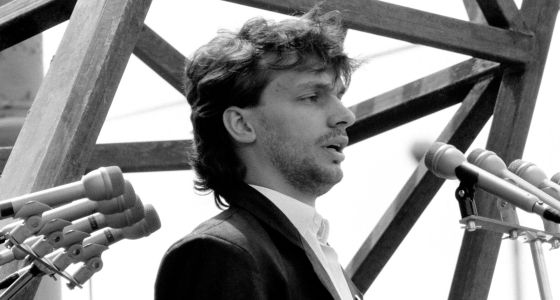
Tanto los partidarios de esta Historia oficialista como los de acercarse a la memoria desde un punto de vista menos militante, coinciden en que la disciplina se ha convertido en un “campo de batalla”. Y uno de los grandes objetivos de esa lucha por la verdad es definir el papel que desempeñó Orbán en la salida del socialismo. El episodio central del debate se remonta al 16 de junio de 1989, cuando se celebró en la plaza de los Héroes de Budapest un funeral por las 3.000 víctimas de una rebelión anticomunista en 1956 que murió ahogada en sangre. Ese día, a los pies del gigantesco monumento que recuerda a los siete jefes de las míticas tribus magiares, un Orbán de 26 años estuvo entre los diversos oradores que subieron a la tribuna. Casi nadie conocía a aquel chico de pelo largo que dirigía a la asociación juvenil Fidesz. Lo observaban severas las estatuas de Elod y Tas, con sus cascos, cuernos y alas. Un Huba de bronce subido a un caballo con una cornamenta de ciervo como ronzal, clavaba en él la mirada vacía. Ante los ojos de los millones de húngaros que lo seguían por televisión, Orbán leyó unos folios en los que pedía la salida de los rusos.
Los entrevistados de uno y otro bando están de acuerdo en que fue un buen discurso, pero no en su trascendencia. Resume la posición de los académicos clásicos el profesor de Ciencias Políticas Andras Bozoki, que ejerce en la CEU, una universidad privada financiada por el magnate George Soros: “Fue un discurso muy importante, sobre todo simbólicamente. Pero los historiadores gubernamentales están fetichizándolo. Hubo al menos siete u ocho pasos en el proceso de fin del régimen: el de Orbán fue uno más”. A esto, Schmidt opone: “Orbán fue el héroe de la caída del comunismo”. Y continúa: “Los comunistas están celosos de él. Si preguntas en la calle, nadie se acuerda de otro. Fue muy valiente. Y era joven y guapo”.
Por eso, en la última sala de la Casa del Terror hay una sala llamada Adiós con tres televisores. El primero muestra el discurso de Orbán; el segundo, a los soldados rusos abandonando el país; el tercero, a Orbán inaugurando el Museo y anunciando que el país cerraba la puerta del siglo XX. Istvan Rev, historiador también de la CEU, se muestra irónico con esta lectura: “Es una actuación admirable. Nuestro primer ministro consiguió que el verbo se hiciera carne, y luego cerró el siglo”. Pero tras la sonrisa se siente cansado ante tantas ficciones históricas que idealizan al húngaro frente a la presión extranjera. “Es fácil gustarle a la gente con este victimismo, pero necesitas valor para aceptar tu Historia”. Las cosas en su opinión son más complejas: “En Hungría es difícil encontrar una familia que no tenga ningún miembro ni nazi ni comunista”.
Schmidt descarta estas críticas de un manotazo: “El problema aquí no es el Holocausto [ni otros periodos]. Lo que pasa es que no quieren hablar del comunismo, porque yo podría preguntarles: ‘¿qué hacíais vosotros por esos días?”.
Los profesores aseguran que un refugio en la universidad privada es un raro milagro para un investigador, porque las instituciones públicas no permiten estudios rigurosos, y las distorsiones históricas ya llegan a la Historia antigua y la medieval. En las escuelas primaria y secundaria incluso una gran corporación de profesores controla a los maestros. Y la industria de los libros de texto se ha nacionalizado y, desde este curso, los docentes sólo pueden elegir entre dos manuales propuestos por el Gobierno. Estos libros incluyen afirmaciones como que los húngaros son más espirituales, con una historia más exitosa que sus vecinos, o que ver CNN y beber Coca Cola es superficial.
Bulcsú Hunyadi, analista del think tank Political Capital, asegura que “muchos padres están inquietos porque sus hijos reciben una educación muy conservadora, pero ni ellos ni los profesores pueden protestar”. Rev considera que las dinámicas de confrontación están influyendo sobre los jóvenes: “Los líderes del partido ultraderechista Jobbik son antiguos estudiantes de Historia. La gente con este tipo de tendencias encuentra un refugio en el campo de la Historia porque, siguiendo el ejemplo del Gobierno, uno puede alterar radicalmente el pasado. Los radicales adoran cambiar el curso de la Historia, incluso retrospectivamente”.
Mientras esta lucha parece tener un vencedor claro en las aulas, los libros y las mentes, la Unión Europea asiste confusa a todo lo que viene de Hungría. Uno de sus miembros contraviene muchos de los principios fundacionales de los Veintiocho, pero al mismo tiempo sonríe y se presenta como uno más del club. En la plaza de los Héroes el viernes pasado se celebraba un acto militar en honor a un mando europeo de visita. Desfilaban tres unidades de quince hombres sable en ristre. Entre el sonido del tráfico, una banda interpretaba los himnos de Hungría y la UE.
Wednesday, November 5, 2014
POLITICA ARGENTINA A INICIOS DE NOVIEMBRE
La política mundial es tremendamente volátil respecto a agendas y liderazgos y la argentina no escapa a dicho ritmo. Hace dos meses, lideraba cómodamente las encuestas el gran ganador de las parlamentarias del año pasado, el alcalde de Tigre y diputado nacional, otrora oficialista, Sergio Massa, luego, sorprendió en octubre, el Jefe de Gobierno de la ciudad capital, Mauricio Macri y en los últimos días, remontó vuelo, el gobernador de la Provincia de Buenos Aires, Daniel Scioli. Cada uno de esos ascensos y caídas, guardaron correlación con el ritmo de la macroeconomía. Cuando ésta parecía descontrolarse, producto del adverso fallo Griesa y el aumento de la inflación, las posibilidades de los dos primeros se incrementaron. Cuando la Presidente volvió al centro del escenario, dándole todo el poder a su Zar de Economia, Kicillof y éste apoyando al nuevo Presidente del BCRA, Vanoli, el sciolismo, a pesar de su azaroso matrimonio de conveniencia con el kirchnerismo duro, recobró vida. Sin embargo, las inundaciones del último fin de semana, con dispar resultado negativo en Provincia y la capital del país, perjudicó a los dos candidatos bonaerenses, enfrascados en una durísima puja mediática y benefició a Macri, el gran abanderado de la gestión. Nuevas circunstancias, como otra somatización de la Presidenta, encierra riesgos ineludibles para un oficialismo preparado para afrontarlos, incluso, liderando temas inéditos en la agenda, como lo hizo con la ley de presupuesto y las reformas del Código Civil y responsabilidad de los funcionarios. Tras un diciembre, donde se espera calma en las calles aunque no en los mercados, enero parece ser un mes clave en el contexto de una negociación final con los holdouts, que se sume a los swaps chinos, la licitación del 4G y el nuevo marco regulatorio para telefónicas y cable, que inyecten los dólares suficientes para alcanzar el Rubicón de junio a octubre de 2015. Así, Argentina transcurrre un tramo final de un ciclo, que se niega a ser terminal o agónico. El fantasma de Isabel, Alfonsín y De la Rúa, pesa demasiado en las huestes del kirchnerismo, que pretende dar señales de una vitalidad inusitada, incluso superando la situación adversa que a partir de anoche, afrontará Obama, en otro contexto institucional, en Estados Unidos. Si logra sortearlo, este capítulo formará parte de la épica K.

Subscribe to:
Posts (Atom)