Sunday, March 15, 2015

Friday, March 13, 2015
BIN LADEN, EN SU REFUGIO DE TORA BORA
El último abrazo a Osama Bin Laden en Tora Bora
Fotos difundidas ahora muestran cómo vivía el líder de Al Qaeda y su relación con Al Suri
José María Irujo, DIARIO EL PAIS, MADRID, 13 MAR 2015

Un abrazo en las frías cuevas de Tora Bora (Afganistán) en otoño de 2001 y una misión: diseñar la nueva yihad, la bomba sucia, la guerra química y bacteriológica. Ese fue el encargo que recibió Mustafá Setmarian, alias Abu Musab al Suri, de 57 años, sirio español casado con una madrileña, cuando abrazó a Osama Bin Laden y besó su mejilla. Los norteamericanos habían invadido Afganistán tras los ataques del 11 de septiembre y el líder de Al Qaeda se había refugiado con sus principales acólitos en las montañas. “Me reuní por última vez con el jeque Osama, que Dios le proteja, en noviembre de 2001 y me comprometí a la yihad. Me dio un beso, un brazo y me encargó diseñar la nueva yihad”, escribió Setmarian para sus seguidores en su boletín electrónico.
Ahora, 14 años después, las fotografías difundidas por la fiscalía de distrito de Nueva York demuestran que este sirio de "cabello pelirrojo, 1,70 de altura, ojos verdes y barba de corte elegante" —así le describía la policía española en los años ochenta en un documento oficial— no mentía.
Hoy, Bin Laden está muerto —capturado por los marines en su refugio pakistaní de Abottabad (Pakistán)— y Setmarian, desaparecido tras ser detenido en octubre de 2005 en Pakistán. El fundador de Al Qaeda en España, nacido en Alepo (Siria) e hijo de un maestro de escuela, pertenecía a los Hermanos Musulmanes cuando recaló en Madrid. Tenía un puesto de objetos árabes en el Rastro y viajaba compulsivamente a Pakistán. Se casó con la madrileña Helena Moreno, la hija de un obrero convertida al islam, y escaló puestos en Al Qaeda después de trasladarse a Londres a trabajar con Abu Qutada, el icono de los salafistas en Europa, y establecerse en Kabul trabajando para los talibanes y para el mula Mohamed Omar. El siguiente salto fue la dirección de los campos de entrenamiento de Derunta y Al-Ghuraba, donde entrenaba a los terroristas sirios en venenos y sustancias químicas.Cuando se cumplen diez años desde la detención de Setmarian en Pakistán y su entrega a los norteamericanos, su paradero es un misterio. Al igual que otros, fue engullido por los agujeros negros de la CIA. EL PAÍS reveló fichas militares secretas de los presos de la cárcel de Guantánamo (Cuba) donde se aseguraba que Mustafá había sido entregado al Gobierno sirio de Bachar el Asad.
Algunas informaciones sin confirmar aseguraron que fue puesto en libertad por el régimen sirio en venganza al Ejecutivo norteamericano cuando se inició la guerra en Siria. Helena, su esposa y madre de cinco hijos, profesora en un país árabe, lo negaba la semana pasada a este periodista y calificaba estas informaciones de “tortura” para ella y su familia. “No sé nada de mi marido desde que fue detenido hace diez años”, se reafirma. El CNI y la policía española, tampoco dan crédito a su puesta en libertad y creen que sigue preso en las oscuras cárceles sirias.
Bin Laden está muerto y Mustafá, uno de sus mejores discípulos, desaparecido, pero el legado de ambos continúa. Los lobos solitarios que han comenzado a actuar en distintas partes del mundo son la herencia de Mustafá Setmarian. En su extenso tratado sobre la yihad urbana escribió que la célula más peligrosa y clandestina es la que integra uno mismo. Algunos están siguiendo sus órdenes.
WHERE IS PUTIN? ILL? VICTIM OF A COUP D' ETAT? DEAD? OR NEWLY FATHER OF A BABY IN SWITZERLAND?
"Putin is nothing if not capricious. He enjoys keeping people waiting ... and guessing, it's part of a display of the trappings of power," Ian Bremmer, president of the Eurasia Group, told Business Insider.
Read more: http://www.businessinsider.com/whats-happening-to-putin-2015-3#ixzz3UIffy3hp
Read more: http://www.businessinsider.com/whats-happening-to-putin-2015-3#ixzz3UIffy3hp
LA PEOR HERENCIA DEL KIRCHNERISMO

Un deporte tradicional en Argentina es el debate estéril de los economistas ortodoxos y heterodoxos al final de cada ciclo gubernamental, debatiendo sobre la tan mentada herencia de cada gobierno democrático. Una vez, en los últimos meses del kirchnerismo, vuelve a discutirse en términos de descontrol del gasto público y estancamiento productivo versus preservación del consumo y difusión de políticas de inclusión.
Precisamente, ayer la Presidenta Cristina F. anunció un nuevo aumento del Plan Progresar que beneficiará ahora con 900 pesos mensuales, a 1,2 millones de jóvenes, que pretenden seguir sus estudios universitarios o están al frente de hogares con hijos pequeños. El gobierno, a lo largo de esta década, ha hecho de este tipo de instrumentos, una de sus banderas privilegiadas, con el objetivo de beneficiar a un sector muy vulnerable laboral y educativamente. Sin embargo, llega la hora de preguntarse si tanta insistencia desde el Estado, ya sea a nivel de políticas como en los discursos oficiales, rinde sus frutos y si finalmente, por el contrario, no se terminará convirtiendo en una verdadera rémora en sí misma, proyectando sus efectos a generaciones futuras.
Así como una de las peores lacras de esta década, algo que los 40 millones de argentinos parecen haber olvidado, es decir, el saqueo de las arcas jubilatorias de las AFJPs, aquí mal difundido como estatización de los fondos privados -en realidad, de los ahorros de 9 millones de argentinos, que otra vez, dependeremos de los mendrugos que le quepan al Estado cuando dentro de dos o tres décadas, arribemos a la edad legal de retiro o plazo de años de servicio-, la propuesta inicialmente atractiva y benéfica de ayer, parece fluir en la misma sintonía. Porque detrás de la obsesión por "incluir" o "universalizar", quedan los efectos perversos. No hay menciones a "esfuerzos", "sacrificios", "trabajo", "constancia", "merecimientos", ni siquiera "transitoriedad" y mucho menos, "futuro", en el relato oficial. Hay sólo "derechos" y "reparación" y, por supuesto, un enorme reproche a los gobiernos del pasado y amenazas a los futuros.
Pero cuando nos encontramos con realidades habituales en el paisaje social argentino, como la enorme cantidad de gente joven que abandona sus estudios secundarios y universitarios, la cantidad de madres jóvenes solteras que habitan hasta las canchas de fútbol, los niños y adolescentes que piden limosna o duermen en las calles, parques y bares, los mismos que caminan como sonámbulos, drogados bajo el efecto de estupefacientes o alcohol de dudosísima calidad, etc. etc., para no hablar de la violencia, que muchas veces se genera a partir de dichas conductas, esta población, "estigmatizada", "discriminada", "victimizada" según este gobierno, es en gran parte, recipiendaria de aquella fenomenal transferencia de ingresos. Cuál es el resultado de la misma?
O acaso, es el mismo Estado que está favoreciendo conductas sociales irresponsables, además de condenar a la dependencia definitiva y al conformismo degradante e indigno, a millones de mujeres y jóvenes, que se habituarán a recibir "desde arriba" y a reclamar en el futuro, "hacia arriba"? Cuál es la ejemplaridad social que se transmite para los muchos otros jóvenes, de clase baja, media y hasta alta, para quienes, los padres, cada vez menos, exigen o se autoexigen, por brindarse ellos mismos un futuro mejor, pero cuando visualizan esos mensajes desde el poder, tienen todo el derecho, ellos también, a esperar el correspondiente "maná del cielo"? Señores. economistas, no será ésta, la peor herencia que nos quede de semejante década, en el país que puede alimentar a medio mundo, con su capacidad productiva intacta? Me pregunto.
BRITISH POLLUTION AND SOVIET INHERITANCE IN KAZAKHSTAN
KAZAKHSTAN POISONED LEGACY
AL YAZEERA, FEBRUARY 19
AL YAZEERA, FEBRUARY 19
How are British mining companies impacting the Central Asian nation's worsening environmental track record?
The Central Asian state of Kazakhstan is one of the most polluted nations in the world, much of it a toxic consequence of years of decrepit Soviet-era heavy industry.
But have the more recent actions of a British-owned mining and minerals company made things worse?
People in Shymkent, a city in the south of the country, certainly seem to think so.
People & Power sent filmmakers Richard Pendry and Robin Forestier-Walker to find out why.
FILMMAKER'S VIEW
By Robin Forestier-Walker
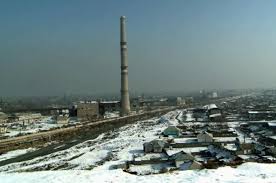
Shymkent is a drab and largely unremarkable town, except for one thing – its highly polluted environment. The dust blowing through its streets and the soil beneath the feet of its inhabitants contain such high concentrations of lead and other toxic elements - cadmium, antimony and arsenic - that they would surely generate a major scare if detected anywhere else.
Here they just cause endemic health problems that the local people are forced to live with. Take lead poisoning, for example, the most obvious ill effect. It is simply rife here – particularly among young children.
The culprit: a decrepit lead smelting plant right in the heart of the city. Built in the 1930s at the height of Soviet industrialisation, it went on to play a crucial role in the USSR’s fight against Nazi Germany – making most of the tens of millions of bullets fired by the Red Army during World War II. But while the factory was celebrated in propaganda films during and after the war as a paradigm of socialist achievement, little was ever said about its truly appalling environmental record, not even when Kazakhstan achieved independence in 1991.
Financial pressures forced the smelter's closure in 2008. It was the city’s major employer and key to the local economy. When it shut, many locals mourned the loss of their jobs. But few regretted the passing of the dreadful particle-filled black smog that used to belch out of its crumbling chimneys and waste pipes.
However, as some soon discovered, the plant's toxic legacy remained.
Jeff Temple is a British chemical engineer who settled in the area some years ago. In 2008, a few months after the smelter’s closure, he volunteered to help build a children’s playground at a site about a kilometre away from the plant. To be on the safe side, he first decided to take some soil samples from the plot and get them analysed. The results, he told us, were deeply shocking.
"We had poisons almost that you could mine for. Lead was about 60 times the legal limit; cadmium 40 times and arsenic was 50 times the legal limit of Kazakhstan," he said.
What Jeff had discovered on his own initiative, others were finding out more officially: a 2012 study by the International Turkish Kazakh University revealed that 52 percent of the local children it tested had lead levels far in excess of national (let alone international) permissible levels. And according to further research by the International Task-force for Children's Environmental Health, as many as 100,000 young people in Shymkent may have been adversely affected by lead pollution.
Lead poisoning
There is no acceptable level for lead in the body, according to the World Health Organisation. The heavy metal poisons all developing organs including the brain. Among children especially, it arrests intellectual development, stunts physical growth and affects behaviour. At higher levels it can kill.
Imagine the consternation then, in 2010, when local families switched on their TV sets and learned that the dilapidated plant was to re-open. A company called Kazakhmys, the country's largest copper producer, which is also listed on the London FTSE 250 stock index (formerly it was among the FTSE 100), announced at a ceremony in Shymkent to mark the start of the project that it would be running the operation.
The decision was taken that Kazakhmys will itself take on the operational and financial management of the lead smelter in order to avoid losses and make the maximum possible profit, Kazakhmys executive director of metallurgy, Yerzhan Ospanov, told a local TV crew.
Although the regional authorities were presumably happy about the work this would bring to Shymkent, there were some concerns about the wisdom of this decision. During the same televised opening ceremony, the local governor asked Kazakhmys' executives what they were going to do about the plant’s environmental problems. On camera, Eduard Ogay, the CEO of Kazakhmys Copper, replied that they would "work on" the environmental hazards. But then he seemed to row back from that commitment when he said it would be expensive.
| It was a real smog ... Black smoke. I didn’t understand. My throat started to sting. I quickly went home and closed all the windows. |
Either way, nothing seems to have been done by Kazakhmys. Despite the smelter’s appalling track record as a major cause of health-threatening pollution, no advance environmental assessment of the consequences of re-opening was carried out – even though under both UK and Kazakhstan law this was a crucial legal requirement. Nor, it seems, was anything done to alleviate the pre-existing problems. Retrofitting new filters to the plant could have massively reduced emissions. But that never happened. Instead, from 2010 until 2012, the plant worked on meeting the Kazakhmys order – regardless of the fact that the local sanitation department, responsible for environmental matters, had refused to give it permission to operate.
Before too long, local people were once again feeling the effects of the smelter’s pollution. "It was a real smog,” said one resident after an especially bad day. "Black smoke. I didn’t understand. My throat started to sting. I quickly went home and closed all the windows.”
We asked the company to explain the lack of an environmental assessment and what, if anything, its shareholders (which include a number of major UK pension funds) knew about its involvement with the smelter? Why did the plant continue to operate without a licence from the sanitation department? In light of the plant's well-known track record as a source of health damaging emissions and pollutants, we also wanted to know whether Kazakhmys' shareholders were ever warned of any potential liabilities that might arise from processing its waste there.
It seemed important to ask these and other questions because when we started looking at the circumstances surrounding Kazakhmys’ involvement with the Shymkent smelter, we found that connections between the two actually seemed to stem back to 2007, when the plant had previously been open. Kazakhmys’ own public documents stated the firm was sending toxic dust from its copper smelting operations. Managers later claimed in local media interviews that the aim was to recover lead and precious metals such as rhenium and gold.
Yet in 2011 Vladimir Kim, the President of Kazakhmys Corporation and the company's top shareholder, said in public: "The only connection between Kazakhmys and this plant [is] that we are delivering lead dust ... That plant should be closed."
This struck us as curious because of that very unequivocal statement made on local TV back in 2010 when the plant re-opened – when Ospanov said that "Kazakhmys will itself take on the operational and financial management of the lead smelter in order to avoid losses and make the maximum possible profit".
Contradictory statements
So which was correct? What lay behind these contradictory announcements?
The company declined to answer most of our questions and refused to grant us an interview. It would only give us a brief statement.
It said: "Kazakhmys has never owned or operated the plant, but we have supplied material to it for relatively brief periods. The supply was partly at government request in order support employment. We have not sent any material there since mid-2012 and we believe the plant has now closed."
The company claims that the plant had actually been run by a completely separate and unconnected Kazakhstan company called A Mega Trading.
Yet when our investigations took us to A Mega Trading’s offices in Almaty, Kazakhstan commercial capital, we found that links do appear to exist. We discovered, for example, that a Mr Vladimir Jumanbayev, the commercial director of Kazakhmys PLC, owns a company called Vertex - and interestingly, A Mega Trading's offices are in the same building as those of Vertex offices, as are the offices of various Kazakhmys internal departments.
We found out that A Mega Trading's 'financial supervisor' had previously worked for the aforesaid Mr Jumanbayev at Vertex. We also discovered that A Mega Trading's manager at the smelter was a senior Kazakhmys engineer, and that its deputy director was the brother of Ospanov.
Mere coincidences? Perhaps, but it seems unlikely. Nonetheless, the company was unwilling to explain what lay behind these connections. Instead it continued to maintain that it had had no role in the lead smelter’s financing and operation.
The Shymkent plant did eventually close in late 2012, and the people of the city may have been saved from more lead poisoning, although the legacy of pollution remains and it could continue to harm the local children for years to come.
Residents are understandably concerned that those problems might have been exacerbated when the plant spluttered back into life for Kazakhmys in 2010 – especially if little heed was paid to environmental problems. They want to know who profited, who was responsible and what compensation may be due. International human rights organisations such as Global Witness have also taken up their cause and are calling for the City of London’s financial regulators to investigate.
As our film makes clear, there can be serious consequences for directors of UK-listed companies that fail to take account of the environmental impact of their operations and which fail to disclose earnings and potential liabilities to shareholders. In some cases such failures can lead to criminal charges and even prison sentences. Whether or not any such penalties can be applied in relation to the Shymkent lead smelter may now be up to the UK authorities to decide.
Source: Al Jazeera
Subscribe to:
Posts (Atom)