Friday, May 8, 2020

Wednesday, January 8, 2020
TRUMP: WAR AGAINST IRAN?
The Killing of Qassem Suleimani Is Tantamount to an Act of War
By Robin Wright, The New Yorker, 2020, January 3

On orders from President Trump, the United States killed Major General Qassem Suleimani, the leader of Iran’s élite Quds Force and the mastermind of its military operations across the Middle East, in an overnight air strike at Baghdad’s International Airport. The assassination was the boldest U.S. act in confronting Iran since the 1979 revolution, tantamount to an act of war. A brief statement from the Pentagon described it as a “decisive defensive action” designed to protect U.S. personnel abroad. But the strike represented a stunning escalation between Washington and Tehran, and it may well have the reverse effect. Iran almost certainly will want to respond in some lethal form, whether directly or through its powerful network of proxies in the region. U.S. embassies and military bases—and thousands of American personnel across the Middle East and South Asia, and potentially beyond—were instantly vulnerable. On Friday, the State Department ordered all Americans to leave Iraq.
On Friday, Iran’s Supreme Leader, Ayatollah Ali Khamenei, declared three days of public mourning and warned that “harsh vengeance awaits those criminals behind martyrdom of General Suleimani.” He moved quickly to name Brigadier General Esmail Gha’ani, who had worked closely with Suleimani, as the new Quds Force commander. Mohammad Javad Zarif, Iran’s U.S.-educated Foreign Minister, who spent two years negotiating the 2015 nuclear deal with the United States, called the American air strike an act of international terrorism. “The US bears responsibility for all consequences of its rogue adventurism,” he tweeted. Iran’s state-controlled television characterized the assassination as the U.S.’s “biggest miscalculation” since the Second World War. “The people of the region will no longer allow Americans to stay,” it said.
Iran’s revolutionary regime often makes boastful threats, but the murder of Suleimani alarmed veteran U.S. military and diplomatic officials who have served in the Middle East. “It is almost impossible to overstate the importance of this,” the retired general David Petraeus, who led U.S. forces in Iraq and later served as the director of the C.I.A., told me. Suleimani was Petraeus’s nemesis during the eight-year U.S. war in Iraq. “Iran has to be in shock right now. Its version of the National Security Council will be on overdrive,” he said. “But there’s a whole universe of possibilities now, everything from proxy retaliation, kidnappings of American citizens, actions against coalition partners, even an attempt to do something in the U.S. We certainly have large force concentrations in the region, too.”
Was the U.S. attack an act of war? Douglas Silliman, who was the U.S. Ambassador to Iraq until last winter and is now the president of the Arab Gulf States Institute in Washington, told me that the death of Suleimani was the equivalent of Iran killing the commander of U.S. military operations in the Middle East and South Asia. “If Iran had killed the commander of U.S. Central Command, what would we consider it to be?” he said. John Limbert, one of fifty-two Americans who were taken hostage in Iran in 1979, told me that he was happy Suleimani was gone, but quickly added, “This is not going to end well.”
Suleimani, a flamboyant former construction worker and bodybuilder with snowy white hair, a dapper beard, and arching salt-and-pepper eyebrows, gained notice during the eight-year war with Iraq, in the nineteen eighties. He rose through the Revolutionary Guard to become head of the Quds Force—an Iranian unit of commandos comparable to the U.S. seals, Delta Force, and Rangers combined—in 1998. He was the most feared and most admired military leader in the region. He famously rallied followers with flowery jihadi rhetoric about the glories of martyrdom. “The war front is mankind’s lost paradise,” Suleimani was quoted as saying, in 2009. “One type of paradise that is portrayed for mankind is streams, beautiful nymphs and greeneries. But there is another kind of paradise.” The front, he said, was “the lost paradise of the human beings.” Thousands of followers died under his leadership.
Over more than two decades, Suleimani, a Shiite, had more impact than the leaders of either Al Qaeda or isis, which are both Sunni movements, in shaping the face of the Middle East. To counter U.S. influence in Iraq between 2003 and 2011, he provided Iraqi militants with rockets, bombs, and explosively formed projectiles that could slice through the armor of an American M1 tank. “He has the blood of hundreds of Americans on his hands,” Petraeus said. The United States designated the Quds Force as a supporter of terrorism, in 2007, and Suleimani was personally sanctioned for complicity in a plot to kill the Saudi Ambassador to the United States, in 2011. That same year, he spearheaded a campaign, now in its ninth year, to save President Bashar al-Assad’s regime after civil war erupted in Syria. Suleimani also channelled arms and aid to Hezbollah in Lebanon, orchestrating its franchise operations in other Middle Eastern countries, and aided Houthi rebels in Yemen. He cultivated militia proxies in Pakistan and Afghanistan, thousands of whose members were deployed to fight in Syria. Suleimani gained fame for taking selfies—later posted on social media—on the front lines of regional conflicts where his Quds Force and their allies were deployed. Many went viral.
“I think people in the region saw him as untouchable,” Petraeus said. The only person more powerful in Iran was the Supreme Leader. And, in the Shiite region of the Middle East, there may have been no one more powerful than Suleimani when it came to tangible impact.
“The US just killed Iran’s Patton,” Ian Bremmer, the president of the Eurasia Group, tweeted shortly after the Pentagon issued its statement. Silliman said that Suleimani led a “huge and largely successful strategic advance by Iran through Iraq and Syria and Lebanon.”
After initially operating in the shadows, Suleimani grew rhetorically audacious in the past decade. In 2008, as the U.S. and Iran competed for influence in Iraq, the Iranian general relayed a verbal message to Petraeus through the then Iraqi President, Jalal Talabani, which said, “Dear General Petraeus, you should know that I, Qassem Suleimani, control the policy for Iran with respect to Iraq, Lebanon, Gaza and Afghanistan.” Suleimani’s point, Petraeus told me, was that the Americans had to deal with him—everywhere.
In 2018, Suleimani famously responded to the warning that Trump issued to the Iranian President, Hassan Rouhani. Trump, after a weekend at his golf resort in Bedminster, New Jersey, tweeted, “NEVER, EVER THREATEN THE UNITED STATES AGAIN OR YOU WILL SUFFER CONSEQUENCES THE LIKES OF WHICH FEW THROUGHOUT HISTORY HAVE EVER SUFFERED BEFORE. WE ARE NO LONGER A COUNTRY THAT WILL STAND FOR YOUR DEMENTED WORDS OF VIOLENCE & DEATH.” Suleimani belittled Trump. “It is beneath the dignity of our President to respond to you,” he said, in a speech. “We are near you, where you can’t even imagine. We are ready. We are the man of this arena.”When Suleimani was killed, Trump was at his Mar-a-Lago resort, in Palm Beach. Displaying rare restraint, he merely posted an American flag on his Twitter account.
In its statement, the Pentagon charged that Suleimani had, in recent months, orchestrated attacks on bases used by U.S. and allied nations as part of an international coalition fighting isis. He “was actively developing plans to attack American diplomats and service members in Iraq and throughout the region,” the Pentagon said.
Suleimani’s death capped a week of hostilities that escalated with lightning speed after a U.S. military contractor was killed in a rocket attack by Kata’ib Hezbollah, one of the most powerful Iranian-backed militias in Iraq, on December 27th. The attack was the group’s eleventh in recent weeks, the U.S. claimed. On December 29th, the Pentagon responded with five air strikes—three in Iraq and two in Syria—on Kata’ib Hezbollah’s bases. The group’s supporters responded by attacking the U.S. Embassy in Baghdad, which is the largest and most fortified diplomatic mission in the world.
“General Suleimani also approved the attacks on the U.S. Embassy in Baghdad that took place this week,” and the attacks on coalition bases in recent months, the Pentagon said, in its statement. It said that the assassination was aimed at deterring future Iranian assaults, noting pointedly, “The United States will continue to take all necessary action to protect our people and our interests wherever they are around the world.”
Kata’ib Hezbollah has been an increasingly important militia since it emerged, under Iranian tutelage, in 2004. After isis swept through Iraq, in 2014, it merged with dozens of other Shiite militias in the Popular Mobilization Forces to fight the Islamic State caliphate—with Iranian aid, arms, and Suleimani’s strategic advice. isis was the one issue on which Iran and the U.S. had common cause. Along with the rest of the P.M.F., Kata’ib Hezbollah was incorporated into the Iraqi military, in 2019, yet it continued to carry out its own operations—in defiance of the government and to the frustration of the United States. The militia has also been deployed in Syria as part of Iran’s support for the Assad regime.
The Pentagon provided no initial details on how the attack played out, but the Iranian media reported that Suleimani had just arrived at the Baghdad airport from Lebanon. The U.S. strike also killed Abu Mahdi al-Muhandis, the leader of Kata’ib Hezbollah and deputy chief of the P.M.F. He was “by far the most important P.M.F. leader tied to Iran,” Silliman told me. Iranian news agencies said that Suleimani and Muhandis were leaving the airport in separate cars when both were attacked by rockets fired from a U.S. helicopter. The Tasnim news agency, which has been tied to the Revolutionary Guard in the past, tweeted a photo of a bloodied hand wearing a large ring with an oval red stone, which Suleimani was often photographed wearing. The ring was how his body was identified, Iraqi officials said.
The timing was particularly awkward for the Iraqi government, which has long attempted a delicate balancing act between neighboring Iran and the United States. Since October 1st, protests have swept across the country demanding the ouster of the Prime Minister and the entire political class, and an end to corruption and economic inequality. The protests have also been noteworthy because of their unprecedented demonstrations against Iran’s influence in Iraq. In November, protesters set fire to Iranian diplomatic missions in the Shiite holy cities of Najaf and Karbala.
The U.S. killing of Suleimani and the air strikes on Kata’ib Hezbollah over the weekend are an embarrassment to Iraqi leaders and a challenge to Iraqi sovereignty. They come at a time when Baghdad is gripped by the deepest political crisis since the U.S. invasion ousted Saddam Hussein, in 2003. The Prime Minister, Adel Abdul-Mahdi, a Shiite who spent years in exile in Iran, stepped down and is now playing only a caretaker role. There are already calls for the Iraqi parliament to demand the withdrawal of some five thousand U.S. troops—and hundreds more from more than a dozen coalition neighbors—that are still waging a campaign against isis insurgents. In a tweet, in Arabic, Mahdi called the assassination of Suleimani an act of aggression against the “Iraqi state, its government, and its people.” In an ominous signal to Washington, he said the killing was a “breach of the conditions for the presence of U.S. forces in Iraq.” The Iraqi Parliament is due to debate the U.S. military presence and vote on whether it should continue when it reconvenes, but the Prime Minister has the ultimate say as Commander-in-Chief, Silliman said.
The reaction in Washington played out largely along party lines. Senator Tom Cotton, a Republican of Arkansas and staunch Trump supporter and military veteran, tweeted that Suleimani “got what he richly deserved, and all those American soldiers who died by his hand also got what they deserved: justice.” But top Democrats warned of the fallout—and future cost in American lives. The House Speaker, Nancy Pelosi, of California, said that the assassination “risks provoking further dangerous escalation of violence. America—and the world—cannot afford to have tensions escalate to the point of no return.” She and other Democrats charged that Trump attacked a high-level Iranian official without congressional authorization for the use of military force. Tom Udall, a Democrat from New Mexico and a member of the Senate Foreign Relations Committee, warned, “Such a reckless escalation of hostilities is likely a violation of Congress’s war-making authority—as well as our basing agreement with Iraq—putting U.S. forces and citizens in danger and very possibly sinking us into another disastrous war in the Middle East that the American people are not asking for and do not support.”
Ironically, Suleimani died in just the kind of covert operation that he orchestrated against the United States so often over so many years, with such deadly success. Yet, in his statement on the general’s death, Iran’s supreme leader warned, “His departure to God does not end his path or his mission.”
Wednesday, September 18, 2019
ISRAEL: BENNY GANTZ PODRA DERRIBAR A NETANYAHU?
¿Quién es Benny Gantz, el general retirado que quiere terminar con la era de Netanyahu?
Antes de lanzarse en la batalla electoral israelí en diciembre, este ex paracaidista de 59 años no tenía ninguna experiencia en política. Sin embargo, hoy lidera las encuestas con el partido que él mismo creó: el ‘Kahol Lavan’ o ‘Azul-blanco’.
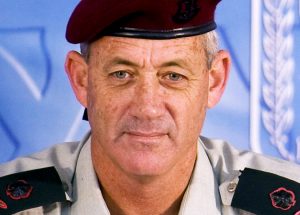
Benny Gantz, photo via Wikimedia Commons
Benny Gantz, ex jefe del Estado Mayor israelí y principal rival de Benjamín Netanyahu, es un hombre austero de palabras, reservado en sus gestos, disciplinado y atento a las opiniones de sus expertos. Así lo describen quienes le rodean en esta carrera electoral.
El general retirado nació en 1959 en un pueblo del sur de Israel, lugar que sus padres, ambos sobrevivientes europeos del Holocausto, ayudaron a construir.
Estudió Historia en la Universidad de Tel Aviv y luego realizó dos maestrías, una en Ciencia Política en la Universidad de Haifa y la otra en Gestión de Recursos Nacionales en la Universidad de Defensa Nacional en Estados Unidos.
Cuando ingresó al servicio militar eligió formarse como paracaidista y pronto se convirtió en el comandante de una unidad especial de la fuerza aérea. Luego, entre 2011 y 2015, llegó a liderar el Estado Mayor Conjunto de las Fuerzas Armadas de Israel.
Al igual que Netanyahu, sus estudios en Estados Unidos le permitieron establecer, aunque sin pretensiones, buenos lazos con el país norteamericano. Entre 2005 y 2009, fue el agregado militar de la embajada israelí en Washington.
Gantz, de ojos azules y casi dos metros de alto, hoy está casado y es padre de cuatro hijos. En estas elecciones promete trabajar por la unidad del país después de años de divisiones y "tolerancia cero" contra los corruptos. Esto, en un momento en el que Netanyahu se enfrenta a una posible inculpación por corrupción.
El general Benny Gantz quedó a escasos votos de Benjamín Netanyahu en los comicios de abril
“Somos los ganadores”, alcanzó a decir Gantz.
Durante el conteo de los votos en la jornada electoral del pasado 9 de abril, los resultados mantuvieron al ex general por encima de Netanyahu durante varias horas. Su partido, Azul y Blanco, recibió 1.125.881 votos, algo inimaginable algunos meses atrás, cuando su partido ni siquiera existía y él no era considerado como el líder de la oposición, sino un ex jefe del Estado Mayor del Ejército sin experiencia política.
Sin embargo, la diferencia con el Likud de Netanyahu fue de tan solo 15.000 votos, una cifra poco notable en un país de casi 9 millones de habitantes. Pero, a pesar de estar tan cerca, Gantz no pudo ocultar su desilusión y prometió luchar por quienes lo apoyaron y buscaban "un camino diferente".
Tras la imposibilidad de Netanyahu de formar su coalición de derecha para gobernar, la convocatoria a nuevas elecciones fue inevitable. Este martes 17 de septiembre se conocerá si hay un nuevo líder en la política israelí o si el actual Primer Ministro logra permanecer por séptima vez consecutiva a la cabeza del nuevo Estado.
¿En qué basa su nueva estrategia política para estas segundas elecciones?
Durante su primera campaña, Gantz se había mostrado como un político de centro, con un foco importante en la seguridad y un discurso en contra de la corrupción, pero a favor de la democracia.
En esta segunda campaña, sin embargo, Gantz adoptó una retórica más dura contra Hamás en Gaza, advirtiendo de una posible operación a gran escala, y un discurso más derechista en relación con los asentamientos judíos en Cisjordania.
Incluso, se mostró abierto a establecer un acuerdo con el partido de Avigdor Lieberman, un líder de extrema derecha, y cuya posible alianza le daría un eventual aumento de votos.
Con Reuters y EFE
Monday, September 16, 2019
EL GRAVISIMO ATAQUE AL CRUDO SAUDITA
El ataque al campo petrolero saudí cambia las reglas del juego en la confrontación del Golfo
El ataque a la planta de procesamiento de petróleo más grande del mundo el sábado por la mañana es una dramática escalada en la confrontación entre Irán y Arabia Saudita, incluso si los iraníes no dispararon los drones o misiles responsables.

Varios proyectiles golpearon la planta de Abiqaiq, iniciando una serie de incendios que rápidamente eliminaron casi la mitad de la producción de petróleo de Arabia Saudita, el 5% de la producción diaria mundial, y despertaron temores sobre la seguridad de los suministros mundiales de petróleo.
No está claro cuándo Abiqaiq, operado por el gigante saudí Aramco, volverá a estar completamente operativa.
Los rebeldes hutíes en Yemen se adjudicaron el ataque, diciendo que 10 drones habían atacado a Abiqaiq, así como al campo petrolero de Khurais. Pero los ataques de esta escala y precisión representarían un aumento repentino y notable en las capacidades de los hutíes, y ni Estados Unidos ni Arabia Saudita están convencidos de la atribución.
Estados Unidos descontó rápidamente la reivindicación hutí. El sábado por la tarde, el secretario de Estado Mike Pompeo tuiteó: “Irán ha lanzado un ataque sin precedentes contra el suministro de energía del mundo”. Y agregó: “No hay evidencia de que los ataques vinieron de Yemen”.
En respuesta, el ministro de Relaciones Exteriores iraní, Javad Zarif, acusó a Pompeo de participar en un engaño. Escribió en Twitter: “Habiendo fallado en la ‘presión máxima’, @SecPompeo está recurriendo al ‘engaño máximo’ de EE.UU. y sus clientes están atrapados en Yemen debido a la ilusión de que la superioridad de las armas conducirá a la victoria militar. Culpar a Irán no terminará con el desastre”.
Pero, ¿dónde se originó este ataque y quién estaba atrás?
Los hutíes han enviado docenas de drones y misiles balísticos de corto alcance contra Arabia Saudita en los últimos dos años. Muchos han sido interceptados por las defensas aéreas sauditas; otros han caído inofensivamente. Unos pocos han causado daños y víctimas limitados.
Los drones hutíes se basan en modelos iraníes, a menudo desarrollados a partir de la tecnología de Corea del Norte. En su mayoría son de corto alcance, hasta 186 millas (300 km). Sin embargo, un panel de expertos de la ONU informó en enero sobre el despliegue de drones de mayor alcance “que permitiría a las fuerzas hutíes atacar objetivos en las profundidades de Arabia Saudita y los Emiratos Árabes Unidos”.
El panel de la ONU dijo que tenía información de que uno se había estrellado dentro de las 18 millas (30 km) de Riad.
Aun así, el alcance máximo de este sistema, denominado UAV-X, sería entre 740 y 930 millas (1.200 y 1.500 km), dependiendo de las condiciones del viento. La distancia desde las partes de Yemen controladas por hutíes hasta Abqaiq es de aproximadamente 800 millas (1.300 km).
Una fuente con conocimiento del incidente le dijo al analista de seguridad nacional de CNN Peter Bergen el sábado por la noche que las indicaciones preliminares eran que los drones/misiles “no se originaron en Yemen y probablemente se originaron en Irak”. Una segunda fuente en la región del Golfo le dijo a CNN que, aunque todavía no había pruebas, las indicaciones eran que el ataque se originó en el sur de Irak.
La milicia pro iraní está bien arraigada en el sur de Irak, y la Fuerza Quds, la unidad de la Guardia Revolucionaria iraní a cargo de las operaciones en el extranjero, tiene presencia allí. A principios de este año, algunos analistas regionales evaluaron que un ataque con aviones no tripulados en una estación de bombeo en Afif en el norte de Arabia Saudita se originó en Irak. Pero no se presentaron pruebas contundentes.
El gobierno iraquí emitió el domingo un comunicado rechazando informes “sobre el uso de su tierra para atacar instalaciones petroleras sauditas”.
Los propios hutíes han sugerido, sin proporcionar ninguna evidencia, que recibieron ayuda del interior del reino para estos últimos ataques. Su portavoz, Yahya Saree, dijo que la operación siguió “una operación de inteligencia precisa y monitoreo y cooperación avanzados de personas honorables dentro del reino”.
Los analistas consideran que significa elementos de la población chiíta inquieta en la provincia oriental de Arabia Saudita. Abqaiq se encuentra entre el área predominantemente chiíta de Qatif y Ahsa, que tiene una importante población minoritaria chiíta. Pero advierten que es de interés de los hutíes tratar de provocar tensiones internas y parece descabellado que la gente local haya podido ayudar a tal ataque.
Dondequiera que se originó el ataque y quien apretó el gatillo, estos ataques son un cambio radical en lo que ya se ha convertido en una confrontación peligrosa, con el sabotaje de los buques mercantes en el Golfo y el grave deterioro de la situación en Yemen, así como varios ataques aéreos contra los campos de la milicia chiíta en Iraq en los últimos meses.
Aunque no confirmó que estaba detrás de los ataques, el primer ministro israelí, Benjamin Netanyahu, dijo que Israel está preparado para atacar a los actores pro iraníes donde sea que se los considere una amenaza, incluso en Irak.
Ningún ataque anterior, desde que comenzó el conflicto de Yemen hace cuatro años, ha interrumpido el suministro de petróleo. Este ha quitado 5,7 millones de barriles por día del mercado y demostró la vulnerabilidad del corazón de bombeo de la industria petrolera de Arabia Saudita.
Arabia Saudita ha invertido mucho en sistemas avanzados de defensa aérea. Ayham Kamal, del Grupo Eurasia, dice que “el problema crítico para el reino es estructural; la mayoría de los sistemas de defensa aérea de Arabia Saudita están diseñados para defenderse de las amenazas tradicionales y están mal equipados para enfrentar amenazas aéreas asimétricas como los drones”.
Esa vulnerabilidad aumenta cuando tantas partes esenciales de la infraestructura —”almacenamiento, procesamiento y trenes de compresores— se encuentran dentro de un área pequeña”, agrega.
Los ataques han atraído a la comunidad internacional, con Estados Unidos declarando que está listo para abrir su Reserva Estratégica de Petróleo si es necesario, y el presidente Donald Trump llamando al Príncipe Heredero de Arabia Saudita Mohammed bin Salman.
En la actualidad, hay abundante petróleo en el mercado. La OPEP y su aliado productor, Rusia, han reducido la producción este año para mantener los precios. Pero Arabia Saudita es normalmente el “productor de swing” de la organización con la capacidad de reducir o aumentar el flujo según sea necesario. Esa habilidad está limitada por ahora.
Mucho depende de los informes de daños, y qué “soluciones” podrían ser posibles para restaurar la producción total y calmar los nervios de los mercados. “Los elementos más críticos de la infraestructura petrolera de Arabia Saudita incluyen varios despidos”, dice Kamal.
Cómo Arabia Saudita responderá de otras maneras, como redoblar su campaña militar contra los hutíes en Yemen, aún está por verse.
Aqeel Najim y Sara Mazloumsaki, ambos de CNN, contribuyeron a este informe.
Sunday, July 7, 2019
AFRICA GLOBALIZADA EN GRAN CAMBIO
África despega: retrato de la nueva cara del continente
Diario El País, Madrid, España
Domingo 7 de julio de 2019.

AMANECE y a través de la ventanilla se ve el disco rojo del sol al borde de la tierra, una corona de montes azules, el reflejo de un lago de acero. El avión flota y prosigue su descenso hacia una bruma de la que asoma un ensanche de viviendas de aire chino; luego surge la ciudad, del color de la arcilla, y la pista de aterrizaje. Cuando el artefacto toca tierra, la megafonía del vuelo 713 de Ethiopian Airlines procedente de Madrid anuncia la llegada al aeropuerto internacional Bole de Adís Abeba. Los pasajeros se estiran, recogen sus bultos, encienden los móviles. Un empresario agrícola alemán con una explotación de 300 hectáreas en el sur de Etiopía se despide de su colega de asiento, que dirige uno de los grandes hoteles de la ciudad. Han hecho buenas migas. Se vacía el avión y entre los restos queda algún ejemplar de The Economist que entregaron anoche las azafatas. En la portada lleva un titular muy oportuno: “La nueva disputa por África”.
Con un crecimiento demográfico explosivo, una clase media en expansión y cinco economías africanas entre las seis que más crecen del mundo, según el FMI (entre ellas, Ruanda, Etiopía y Costa de Marfil, visitadas en este reportaje), un cosquilleo optimista parece recorrer el continente. Las potencias muestran un interés similar al de la época colonial. Con una diferencia: China se encuentra hoy entre los mejor posicionados y los africanos podrían al fin salir ganando. Cierto que persisten altas tasas de desempleo y analfabetismo. Y que hay guerras y miseria, y cientos de miles de migrantes y refugiados. Pero esa no es la única cara. La otra, la que no suele aparecer en los titulares, se parece bastante a la que se reparte esta mañana por el aeropuerto de Adís Abeba, uno de los mayores conectores de África y un observatorio de esta región en movimiento.
Subscribe to:
Posts (Atom)